The Frontier of Longevity: Can Humanity Surpass the Centenary Mark?
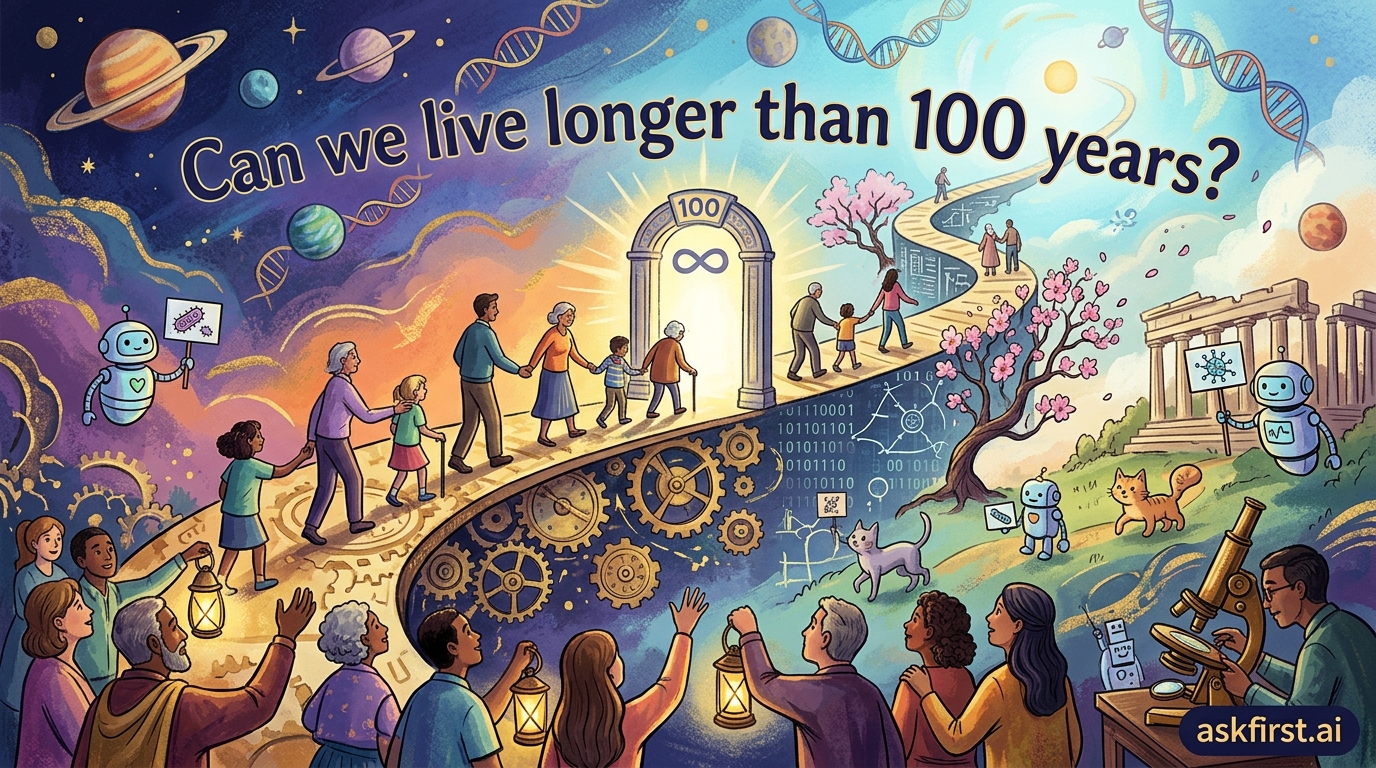
For the vast majority of human history, reaching the age of 100 was a statistical anomaly, an outlier reserved for the biological elite. However, as we navigate the mid-2020s, the demographic landscape is shifting. With advancements in gerontology, precision medicine, and nutritional science, the question is no longer "is it possible to live past 100," but rather "how can we ensure that these extra years are lived in vitality?" The pursuit of extreme longevity is no longer the domain of science fiction; it is a rigorous field of study grounded in biological reality.
The Biological Ceiling and the Hayflick Limit
To understand if we can live significantly longer than 100, we must first address the "Hayflick Limit." Discovered by Dr. Leonard Hayflick in 1961 at the Wistar Institute, this principle states that human cells can only divide a finite number of times—typically between 40 and 60 times—before they enter senescence. This is dictated by telomeres, the protective caps at the end of our chromosomes that shorten with every replication.
However, recent breakthroughs in cellular reprogramming, such as the work conducted by Dr. Shinya Yamanaka (Nobel Laureate in Physiology or Medicine, 2012), suggest that these limits are not necessarily permanent. By utilizing "Yamanaka factors," researchers have successfully rejuvenated aged cells in laboratory settings, effectively resetting their biological clocks. While we are years away from applying this to the entire human body, the theoretical possibility of bypassing the Hayflick Limit is now a subject of serious peer-reviewed inquiry.
The Role of "Blue Zones" and Epigenetics
If we look at existing data from the so-called "Blue Zones"—regions like Okinawa, Japan; Sardinia, Italy; and Nicoya, Costa Rica—we see that living past 100 is not merely a genetic accident but a result of environmental and lifestyle synergy. Dan Buettner, in his seminal work The Blue Zones: Lessons for Living Longer From the People Who've Lived the Longest, highlights that the common denominator among these populations is not a single "magic pill," but a combination of plant-based diets, constant low-intensity physical movement, strong social connectivity, and a sense of purpose (often referred to as Ikigai in Okinawa).
These lifestyle factors influence our epigenetics—the chemical modifications to DNA that turn genes on or off without changing the sequence itself. By optimizing our environment, we can effectively "silence" genes associated with chronic inflammation and age-related diseases. This suggests that even without advanced medical intervention, human longevity can be extended by optimizing how we interact with our environment.
The Pharmacological and Technological Revolution
Beyond lifestyle, we are entering an era of "geroprotective" medicine. Researchers like Dr. David Sinclair of Harvard Medical School, author of Lifespan: Why We Age—and Why We Don't Have To, argue that aging should be classified as a treatable disease rather than an inevitable decline. Sinclair’s work focuses on NAD+ precursors and sirtuin activators, which aim to repair DNA damage and improve mitochondrial efficiency.
Concrete examples of this shift include:
- Metformin and Rapamycin: These compounds are currently being studied in large-scale clinical trials (such as the TAME - Targeting Aging with Metformin trial) for their potential to delay the onset of age-related diseases like cancer, cardiovascular disease, and Alzheimer's.
- Senolytics: These are a class of drugs designed to selectively kill senescent cells—"zombie cells" that accumulate with age and cause chronic inflammation in surrounding healthy tissues.
- Artificial Intelligence in Drug Discovery: Companies like Insilico Medicine are using AI to map protein structures at unprecedented speeds, identifying therapeutic targets for age-related degeneration that were previously impossible to calculate manually.
The Distinction Between Lifespan and Healthspan
A critical nuance in this discussion is the distinction between lifespan (total years lived) and healthspan (years lived in good health). Living to 110 is a hollow victory if the final two decades are marked by cognitive or physical frailty. The goal of modern longevity science is to compress morbidity—meaning we aim to keep the body functioning at a high level for as long as possible, followed by a rapid decline, rather than a long, drawn-out period of disability.
We are seeing this in the burgeoning field of "Bio-optimization," where individuals utilize continuous glucose monitors (CGMs), DNA methylation testing, and personalized nutrition to mitigate risks before they manifest as disease. As noted by Peter Attia in his book Outlive: The Science and Art of Longevity, the strategy involves identifying the "Four Horsemen" of death—cardiovascular disease, cancer, neurodegenerative disease, and type 2 diabetes—and aggressively managing them decades before they become life-threatening.
Conclusion
Can we live longer than 100 years? The answer is an empirical "yes." We are already witnessing a record number of centenarians and supercentenarians (those over 110). While the absolute maximum limit of the human lifespan remains debated—some researchers suggest it may be around 120 or 150 years—the evidence suggests that human potential is far more elastic than previously believed. By combining the ancestral wisdom of the Blue Zones with the cutting-edge pharmacological interventions of the 21st century, humanity is poised to redefine the aging process. The challenge of the coming decades will not be physical capability, but rather the societal, economic, and ethical restructuring required to accommodate a world where living to 100 becomes a standard expectation rather than a rare achievement.