The Evolutionary Mystery of Olfactory Adaptation
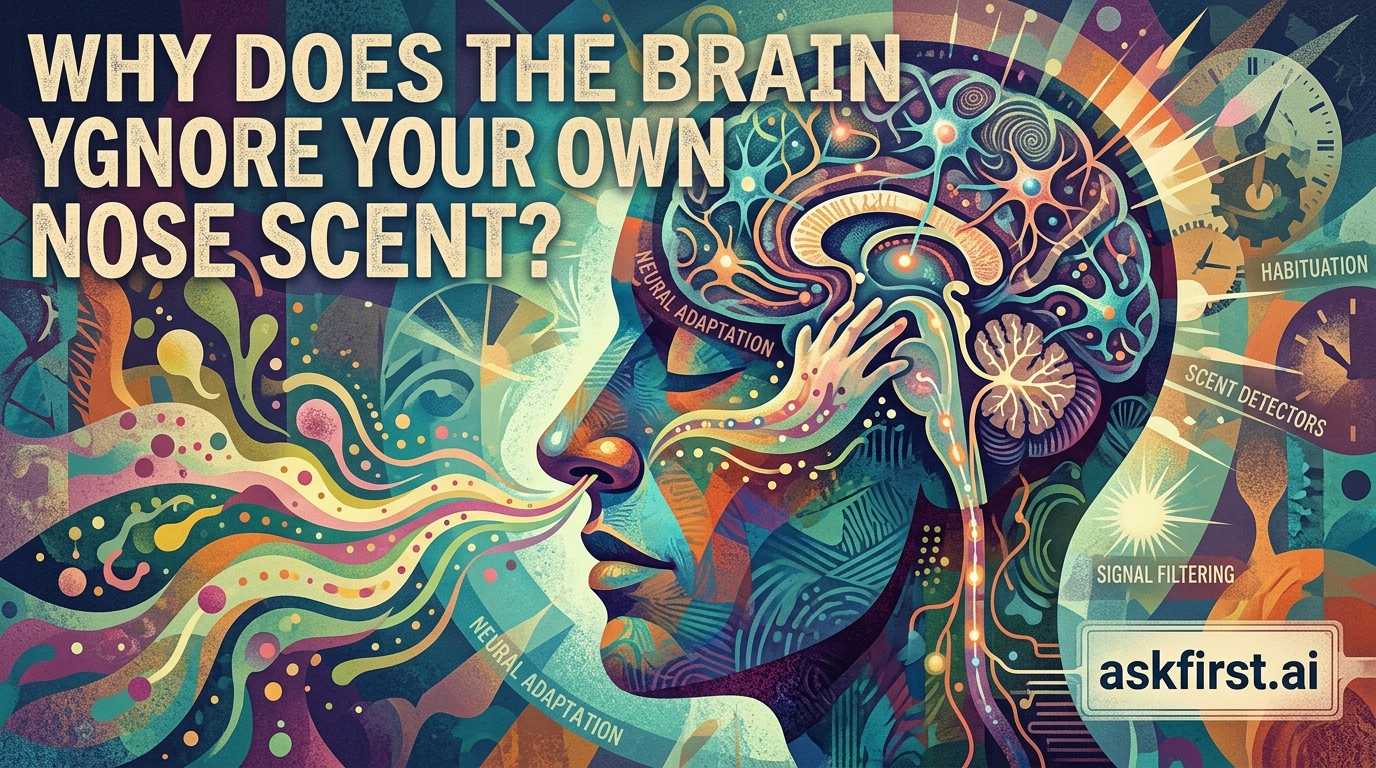
Have you ever wondered why the scent of your own body remains perpetually invisible to your nose? This phenomenon is a marvel of neurological efficiency known as olfactory adaptation or, more colloquially, 'nose blindness.' From an evolutionary standpoint, the brain functions as a high-performance filtering system designed to prioritize novelty and potential threats over stagnant background data. If the olfactory system remained constantly alert to every odoriferous molecule originating from the body, the human brain would face severe sensory overload.
The Mechanism of Sensory Habituation
At the cellular level, the process begins in the olfactory epithelium located at the top of the nasal cavity. When airborne molecules bind to olfactory receptors, they trigger an electrical signal that travels to the olfactory bulb. However, if a specific odor remains constant—such as the unique chemical profile of one's own skin, microbiome, or breath—the receptor neurons gradually cease firing in response to those specific signals. This is a protective mechanism. If the brain processed the smell of one's own nose with the same intensity as a foreign scent, it would be impossible to detect environmental hazards like smoke, toxic gases, or rotting food.
Psychological and Neurological Filtering
Beyond simple cellular fatigue, the brain employs top-down processing to categorize stimuli. The olfactory cortex works in tandem with the limbic system to interpret smells. Because the scent of one’s own body is classified as a 'self-generated' and 'persistent' signal, the brain assigns it the lowest level of priority. This is similar to the way the brain ignores the feeling of clothing against the skin or the hum of a refrigerator in the kitchen. By suppressing these constant background signals, the brain frees up cognitive resources to focus on changing information. Research in sensory neurobiology confirms that this filtering process is essential for maintaining situational awareness in complex environments.
The Role of the Microbiome and Pheromones
Interestingly, the human scent is not purely biological; it is a complex cocktail produced by a symbiotic relationship with the skin microbiome. Trillions of bacteria live on the skin, metabolizing secretions into volatile organic compounds. Since the brain is programmed to recognize the 'signature' of this personal bacterial colony, it treats this signature as a baseline. When an individual enters a new environment, they may smell the scents of others or foreign objects, but their own baseline remains effectively 'deleted' from their conscious perception by the thalamus, which serves as the brain's gatekeeper for sensory information.
Why This Matters for Sensory Health
Understanding olfactory adaptation provides profound insight into human consciousness. It demonstrates that the 'reality' perceived is not an objective snapshot of the world, but a highly edited stream of information curated by neural circuits. This adaptation ensures survival by making the brain hyper-sensitive to change. When someone walks into a room and senses a strong, foul odor that the inhabitants do not notice, it is a prime example of this mechanism in action. The inhabitants have habituated to the scent, while the newcomer experiences a 'novelty peak' that forces immediate neurological reaction.
Practical Applications and Future Implications
This principle is widely applied in product development, such as home fragrance and cleaning supplies. Manufacturers understand that after a short period, users stop perceiving the fragrance of their laundry detergent. This is why many scents are designed to be released in bursts or changed periodically—to reset the olfactory system and circumvent the brain's natural tendency toward adaptation. In medicine, studying the failure of this habituation process can help researchers understand disorders related to olfactory hypersensitivity or specific neurological conditions where sensory gating is impaired. By mastering the art of ignoring the trivial, the brain ensures that the important details—the changes that could indicate danger or opportunity—never go unnoticed.