The Phenomenon of Earworms
The phenomenon of involuntary musical imagery, commonly known as an earworm, represents a fascinating intersection of auditory processing, memory, and cognitive psychology. When a melody or a fragment of a song loops incessantly within the mind, it demonstrates how the human brain manages sensory information. Research suggests that these cognitive glitches are not symptoms of a disorder but rather a normal, albeit frustrating, quirk of how the brain processes repetitive auditory patterns.
The Mechanics of Cognitive Loops
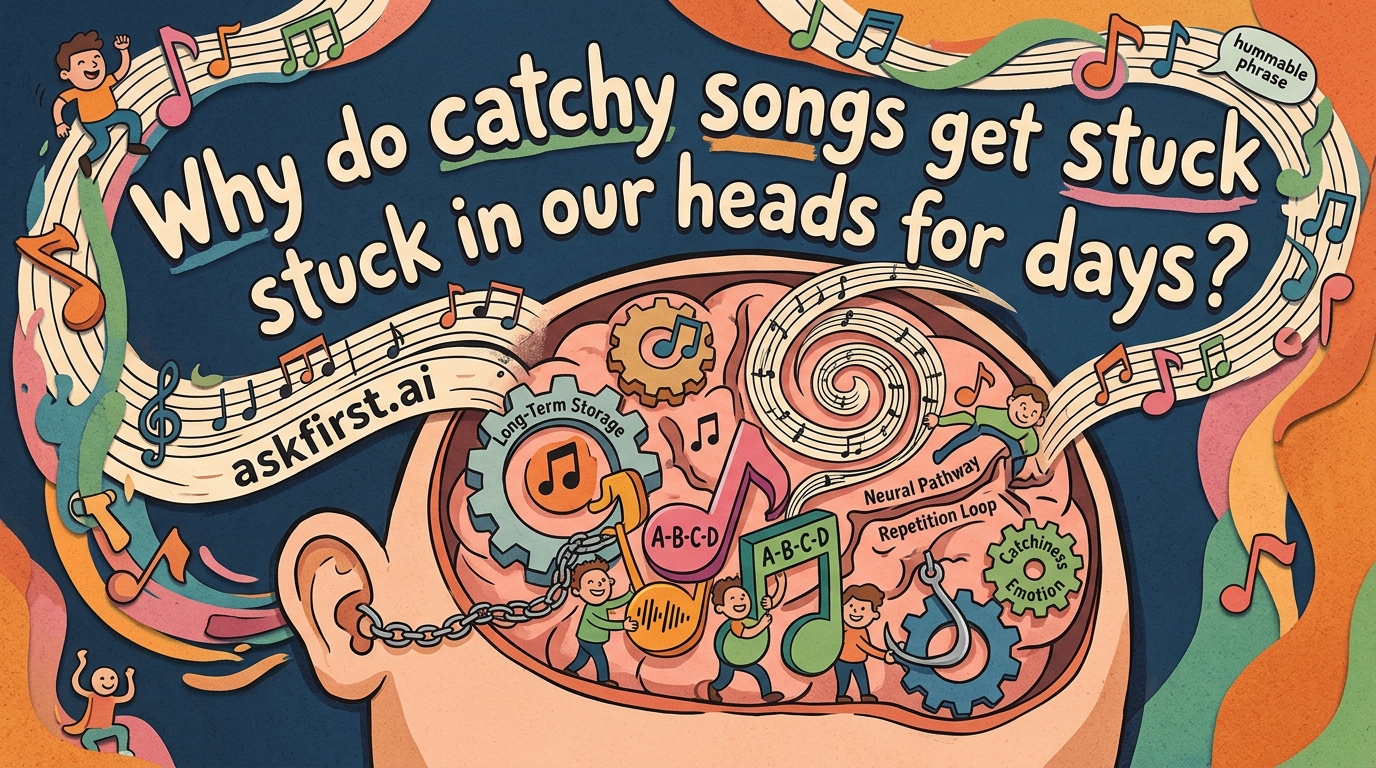
At the core of the earworm experience is the brain's desire for closure and pattern completion. Music is inherently structured with rhythms, predictable intervals, and melodic cadences. When a brain encounters a simple, repetitive melody—often characterized by an unusual rhythmic pattern combined with generic, simple intervals—it recognizes the pattern and attempts to predict what comes next. If a piece of music is incomplete or loops perfectly, the brain’s auditory cortex may continuously 'play back' the sequence to resolve the tension of the loop.
Studies led by researchers such as Dr. James Kellaris at the University of Cincinnati have identified several key ingredients that make a song 'sticky.' These include:
- Rhythmic Simplicity: Music that is easy to hum or tap along to.
- Repetitive Structure: Choruses or hooks that repeat frequently, creating an 'internal echo.'
- The Incongruity Principle: A melody that has a slight unexpected twist or a minor variation in a familiar pattern, which triggers higher levels of cognitive engagement.
The Role of Memory and Emotion
Memory plays a crucial role in why specific songs latch onto the psyche. The brain often retrieves musical fragments from long-term memory when a person is in a state of low cognitive load, such as while doing dishes, walking, or performing repetitive tasks. This is often called the 'boredom loop.' When the mind is not actively engaged in a complex task, it shifts into a 'default mode network,' a state of rest where dormant neural pathways are prone to activation. If a song has been heard recently, it sits at the top of the 'neural stack' and is easily triggered by associations.
Emotional context also determines the stickiness of an earworm. Songs associated with high-stress situations or moments of intense joy create stronger neural pathways. If a listener finds a piece of music pleasant or annoying, the amygdala and hippocampus—areas of the brain responsible for emotion and memory encoding—strengthen the neural trace, making that specific sound more likely to resurface.
Busting the Myths: Why Do They Happen?
It is a common misconception that earworms occur only when listening to popular radio hits. In reality, any rhythmic stimulus, including internal thoughts or even background hums, can initiate this process. Another pervasive myth suggests that earworms indicate a lack of focus or intellect; on the contrary, psychologists argue that the brain is simply exhibiting its natural inclination for pattern recognition. The brain is an information-processing machine that strives to store, categorize, and recall meaningful acoustic data. Music, due to its deep connection with human social history and communication, is prioritized in this storage system.
Strategies to Break the Cycle
Because earworms are rooted in the brain's attempt to complete a musical loop, getting rid of one often involves 'breaking' the pattern. Experts suggest several evidence-based techniques to stop the cycle:
- The Completion Strategy: Listening to the song in its entirety from start to finish. Often, the brain loops a fragment because it is stuck at a point of incompleteness; hearing the final resolve of the track can signal to the brain that the musical task is finished.
- Cognitive Distraction: Engaging in a high-intensity task that requires verbal processing. Solving word puzzles, reading challenging text, or holding a detailed conversation can force the brain to allocate resources away from the auditory cortex, effectively clearing the 'cache' where the earworm resides.
- The 'Cure' Song: Introducing a 'distractor' melody. This is a song that is cognitively engaging enough to override the previous loop but simple enough that it does not become an earworm itself. People often have a personal go-to song that serves as a mental reset button.
The Evolutionary Perspective
From an evolutionary standpoint, the ability to store and repeat musical sequences may have provided early humans with survival advantages. Musical ability is intrinsically linked to memory retention, rhythmic timing, and group cohesion. Songs were historically used to pass down complex survival information, mythologies, and social norms. The fact that the human brain evolved to be 'sticky' with melodies underscores the profound role that music has played in human social architecture. While modern earworms may be a nuisance during an afternoon of office work, they are ultimately artifacts of a brain designed to value, store, and utilize sound as a primary pillar of communication.