The Science of Twin Synchronicity
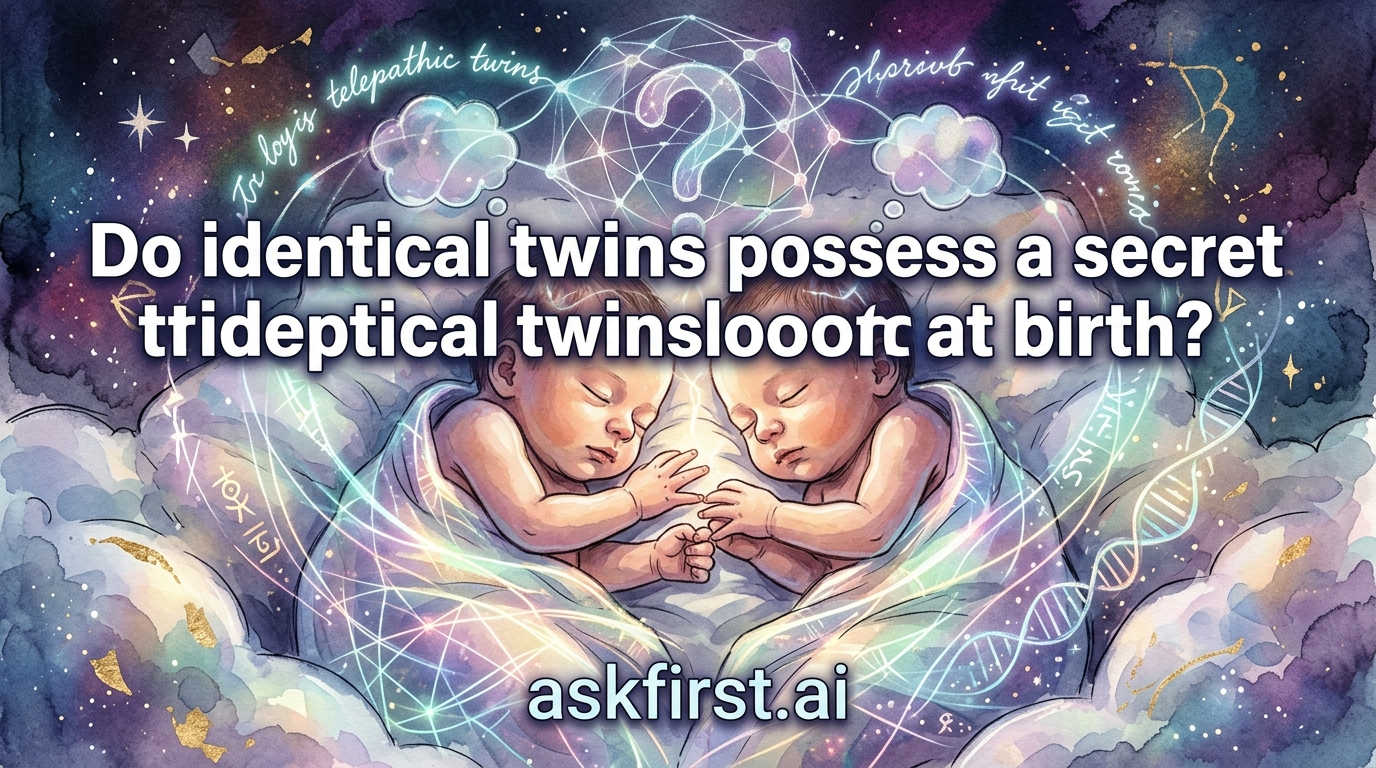
For centuries, the phenomenon of identical twins has fascinated scientists, philosophers, and the general public. Among the most enduring myths surrounding monozygotic twins—those who share 100 percent of their genetic material—is the idea that they possess a secret, supernatural telepathic connection, particularly at birth. While the allure of 'twin telepathy' is strong, the scientific reality is grounded in the fascinating intersections of shared developmental environments, behavioral mimicry, and statistical probability rather than paranormal capabilities.
Separating Myth from Reality
The perception of telepathy in twins often stems from anecdotal accounts of twins completing each other's sentences, sensing each other's moods across great distances, or reacting simultaneously to stimuli. Researchers in parapsychology have conducted numerous double-blind studies attempting to observe this phenomenon. To date, no peer-reviewed scientific study has successfully verified the existence of extrasensory perception (ESP) or telepathic communication between twins that operates independently of physical or non-verbal cues. If such a connection existed, it would contradict the fundamental laws of biology and physics as currently understood by modern science.
The Psychology of Close Bonds
What observers label as telepathy is usually a manifestation of extreme psychological intimacy. Because identical twins share a unique developmental trajectory—starting in the womb, continuing through birth, and often persisting throughout their lives—they develop a profound capacity to read each other's non-verbal cues.
- Hyper-Awareness of Micro-expressions: Twins often spend more time together than any other siblings, making them experts at reading one another's body language, micro-expressions, and tonal shifts.
- Coordinated Environments: They frequently occupy the same rooms and experience identical external events, leading them to have similar cognitive reactions to those stimuli.
- Shared Language Patterns: Many twins develop 'cryptophasia' or autonomous languages during childhood. This complex system of communication is often misinterpreted by outsiders as a telepathic language, when it is actually a highly efficient, learned dialect developed through close physical proximity and shared play.
The Role of Genetics and Neurobiology
Beyond psychology, the neurobiological similarities between identical twins are striking. Because they are products of the same zygote, they share the same DNA sequence, which influences brain structure, personality temperament, and cognitive processing speeds. When two individuals share nearly identical brain architectures, it is logically expected that they would respond to similar social or environmental stressors in remarkably similar ways.
When a twin 'senses' that their counterpart is upset, it is often not a telepathic signal, but an empathetic resonance. The biological baseline for empathy is influenced by genetics; since twins share these genetic markers, they exhibit highly synchronized empathetic responses. This means they are statistically more likely to feel what the other feels because they are, in effect, reacting to their own mirror image.
Cognitive Biases: The Confirmation Effect
It is essential to address the role of cognitive bias in maintaining the 'twin telepathy' myth. This phenomenon is heavily influenced by Confirmation Bias. People are highly likely to remember the one time a twin guessed what their sibling was thinking, but they rarely catalog the thousands of instances where the twin guessed incorrectly.
- Selective Memory: Human brains are wired to notice patterns. When coincidences occur, we label them as 'mystical' to simplify the explanation of a complex psychological reality.
- The Social Narrative: The cultural obsession with twins as 'magical' or 'connected' creates a self-fulfilling prophecy. Twins are conditioned by society to act in ways that confirm their perceived 'otherworldly' bond, reinforcing the behaviors that appear telepathic.
The Developmental Perspective
During the early stages of birth and infancy, the environment is strictly controlled for twins. They are often held, comforted, and stimulated in tandem. This early synchronization creates a foundation of co-regulation. When one twin cries, the other often follows. To a parent, this might seem like a secret message, but it is actually a standard mammalian response to a peer experiencing distress. The 'telepathy' is effectively an evolutionary adaptation to ensure that siblings within a litter or set maintain proximity and safety.
Conclusion
While the concept of telepathy between identical twins is a captivating narrative that speaks to the profound power of human connection, it is not a physiological reality. The 'secret connection' observed by so many is actually a blend of:
- Advanced Non-verbal Communication Skills: The ability to read minute environmental and emotional cues.
- Shared Genetic Architecture: Similar cognitive and personality structures leading to mirrored decision-making.
- Confirmation Bias: The psychological tendency to focus on successful 'mind-reading' incidents while ignoring failures.
The true wonder of twins does not lie in supernatural abilities, but in the extraordinary depth of human bond-building. Even without telepathy, the fact that two separate individuals can reach such a level of behavioral and emotional synchronization is a testament to the complexity and resilience of the human experience.