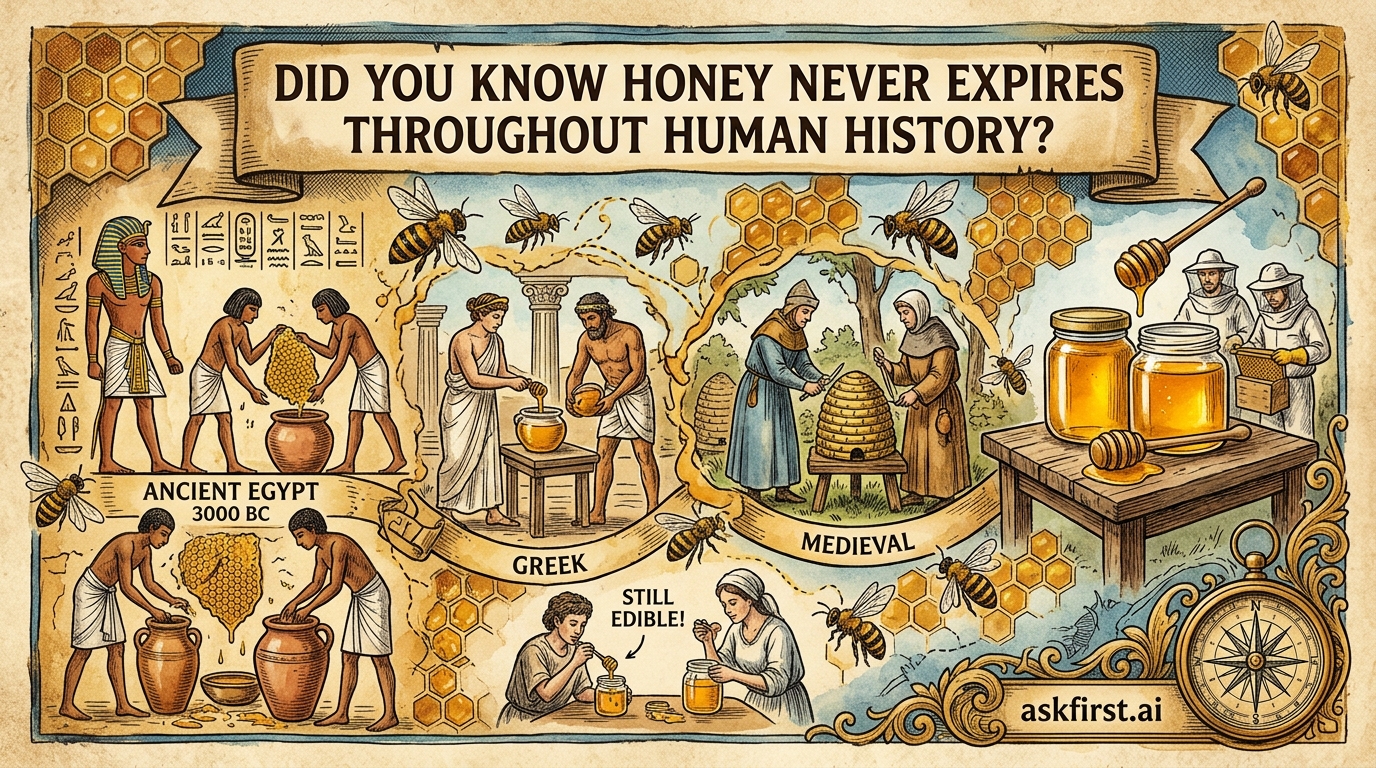
The preservation of honey is one of the most fascinating phenomena in the natural world. Often referred to as "liquid gold," honey is the only food substance on Earth that is essentially immortal. Archaeologists excavating ancient Egyptian tombs—most notably those dating back over 3,000 years—have discovered pots of honey that remain perfectly preserved. While the texture may have crystallized or darkened, the chemical composition remains intact, and the honey is technically still edible.
The Science of Immortality: Why Honey Doesn't Spoil
The longevity of honey is not a result of a single factor, but rather a perfect storm of chemical properties that create a hostile environment for bacteria, fungi, and other microorganisms that typically cause food spoilage.
1. Low Moisture Content (Hygroscopy)
Honey is naturally hygroscopic, meaning it contains very little water in its raw state. Most bacteria and microorganisms require water to thrive and reproduce. Because honey is so low in moisture, it essentially dehydrates any bacteria that attempt to colonize it. According to The Hive and the Honey Bee (published by Dadant & Sons), the osmotic pressure of honey is so high that it draws moisture out of the cells of any invading microbes, effectively killing them through a process of dehydration.
2. High Acidity (pH Balance)
Honey is naturally acidic, typically falling between a pH of 3.2 and 4.5. This level of acidity is sufficient to inhibit the growth of most bacteria. In his seminal work Honey: A Comprehensive Survey, author Eva Crane explains that this low pH environment, combined with other chemical factors, creates a barrier that prevents the proliferation of food-borne pathogens.
3. The Role of Hydrogen Peroxide
Perhaps the most intriguing aspect of honey’s preservation is the presence of hydrogen peroxide. When bees produce honey, they introduce an enzyme called glucose oxidase from their hypopharyngeal glands. When mixed with the nectar, this enzyme breaks down into gluconic acid and hydrogen peroxide. The hydrogen peroxide acts as a potent antimicrobial agent, effectively sanitizing the honey and preventing the growth of yeast or bacteria that might otherwise cause fermentation.
The Role of Beekeeping and Storage
While honey is naturally resistant to spoilage, its longevity is also dependent on how it is handled by humans. In their book Beekeeping for Dummies, Howland Blackiston and Kim Flottum emphasize that while raw, unfiltered honey is virtually immortal, the introduction of moisture or impurities can compromise its integrity.
If honey is harvested too early—before the bees have had a chance to "cap" the honeycomb with wax—the water content remains too high. This "green" or unripe honey can ferment. However, once the moisture content is reduced to below 18% (the industry standard for shelf-stable honey), the product is safe indefinitely.
Storage is equally critical. Honey is sensitive to temperature and light. If stored in a humid environment or left unsealed, honey will absorb moisture from the air. This process, known as fermentation, is the only real way honey "goes bad." If the moisture content rises above 20%, the dormant yeasts naturally present in honey can become active, leading to fermentation and a sour, vinegary taste.
Crystallization: A Misunderstood Process
Many consumers mistakenly believe that honey has "gone bad" when it turns cloudy or solidifies in the jar. This is entirely incorrect. Crystallization is a natural physical change, not a sign of spoilage. Because honey is a supersaturated solution—meaning it contains more sugar than the water can technically hold at room temperature—the glucose molecules eventually precipitate out of the liquid and form crystals.
According to Dr. Ron Miksha, author of Bad Beekeeping, crystallization is actually a sign of high-quality, raw honey. Industrial honey is often ultra-filtered and heated to prevent this process, but doing so strips away beneficial enzymes and pollen. To return crystallized honey to its liquid state, one simply needs to place the jar in a warm water bath (avoiding boiling temperatures to preserve the enzymes).
Conclusion
The enduring nature of honey is a testament to the evolutionary genius of the honeybee. By carefully balancing sugar concentration, acidity, and enzymatic activity, bees create a food source that transcends the limitations of time. From the burial chambers of the Pharaohs to the pantries of modern homes, honey remains a unique substance that defies the natural laws of decay. As long as it is kept in a sealed container and protected from moisture, honey will remain a safe, nutritious, and delicious staple for centuries to come. It is, quite literally, a gift from nature that refuses to expire.