The Science of Temporal Perception
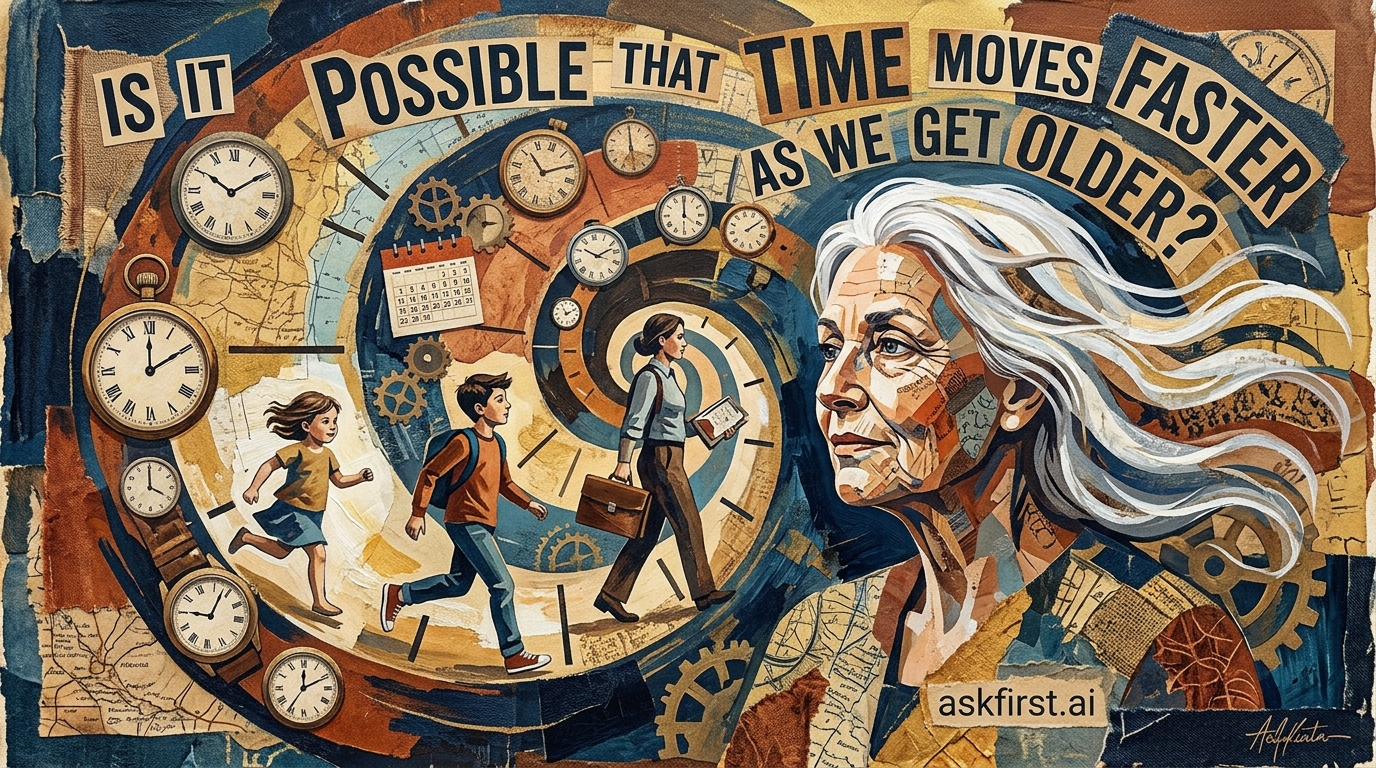
It is a widely held belief that time accelerates as we age, a phenomenon grounded in psychological and neurological principles rather than physics. Researchers suggest that our perception of time is heavily influenced by how we process new information and form memories.
Key Contributing Factors
- Memory Density: In childhood, every experience is novel, leading to high-density memory formation. As adults, routines become repetitive, causing the brain to store fewer distinct markers for time, making years feel like they pass in a blur.
- Neural Processing Speed: Some scientists hypothesize that as the brain ages, the speed at which it processes visual information slows down. This creates a physiological disparity between our internal clock and the external world.
- Proportional Theory: From a mathematical perspective, one year to a five-year-old represents twenty percent of their entire life experience. To a fifty-year-old, that same year is merely two percent, making it feel proportionally shorter.
How to Slow Down Time
To counteract this sensation, engaging in novel experiences is essential. By learning new skills, traveling to unfamiliar locations, or breaking rigid habits, the brain is forced to record new memories, effectively expanding the subjective perception of time.