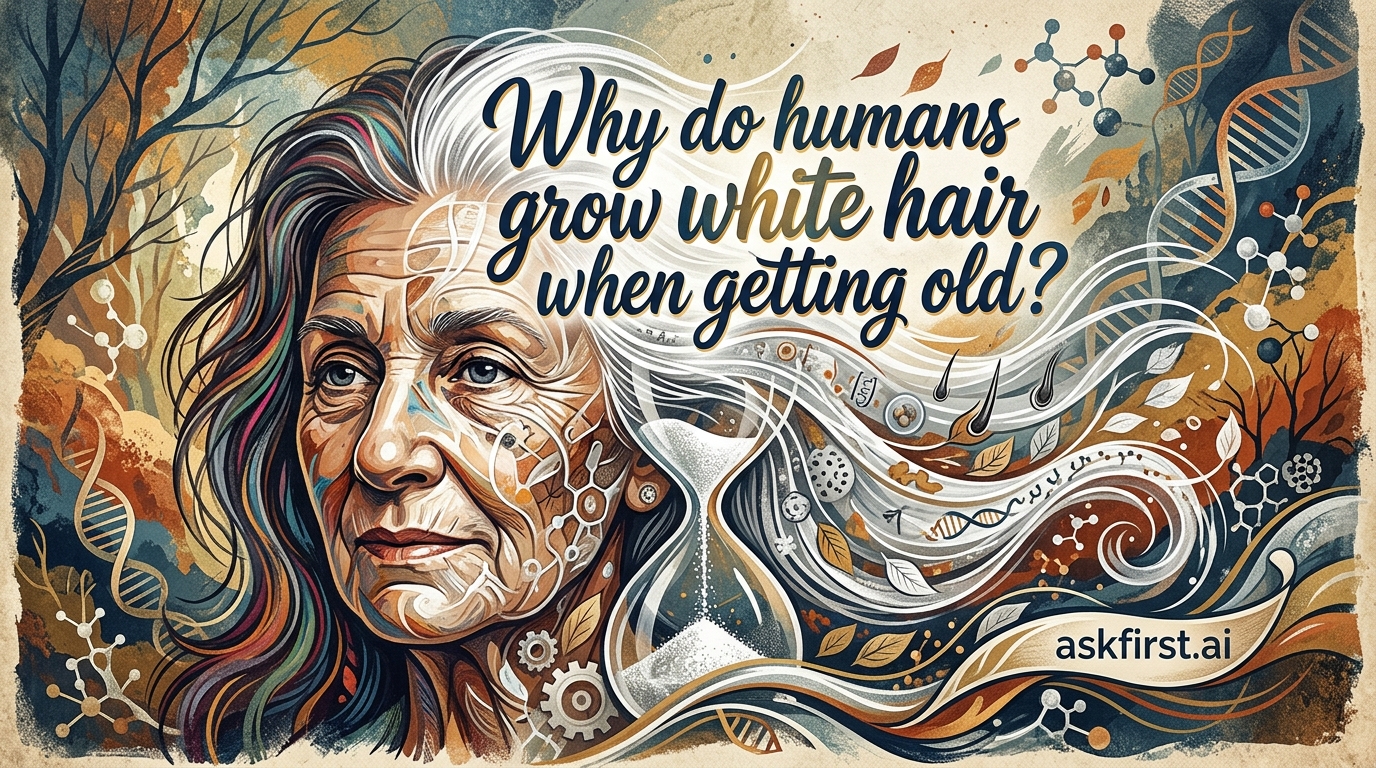
The phenomenon of hair graying, scientifically known as canities or achromotrichia, is a complex biological process that serves as a hallmark of human aging. While often viewed simply as a cosmetic change, the transformation of hair color from its natural pigment to white or gray is the result of intricate cellular mechanics, genetic programming, and environmental stressors. To understand why this happens, we must look at the anatomy of the hair follicle and the life cycle of the cells responsible for our identity.
The Anatomy of Pigmentation: The Role of Melanocytes
To comprehend why hair turns white, one must first understand how hair gains its color in the first place. Each hair follicle contains a specialized population of cells called melanocytes. These cells reside in the hair bulb, located at the base of the follicle. Throughout the growth cycle of a hair strand, melanocytes produce two primary types of melanin: eumelanin (which produces brown or black pigment) and pheomelanin (which produces red or yellow pigment).
These pigments are injected into the keratinocytes—the cells that form the hair shaft—as the hair grows upward. As long as these melanocytes remain active and healthy, the hair retains its natural color. However, as we age, these cells begin to decline in both number and functionality. This process is documented extensively in Fitzpatrick's Dermatology in General Medicine, a foundational text in the field, which explains that the "melanogenic activity" of the follicle is not infinite.
The Exhaustion of the Stem Cell Reservoir
The primary driver of graying is the depletion of melanocyte stem cells (McSCs). A groundbreaking study published in the journal Nature by researchers at NYU Langone Health, led by Dr. Mayumi Ito, discovered that these stem cells possess a unique ability to move between the hair follicle compartments. When we are young, these stem cells are highly mobile, transitioning between growth and resting states to produce pigment.
As time progresses, these stem cells become "stuck" in the follicle’s bulge and lose their ability to mature into pigment-producing melanocytes. Once the reserve of stem cells is exhausted, the follicle can no longer produce melanin. Consequently, the new hair that grows out is devoid of pigment. It is important to note that hair does not actually "turn" gray; rather, the new hair grows in without color. Because a head of hair consists of thousands of strands at various stages of their growth cycle, the transition appears to be a gradual "graying" process across the scalp.
The Oxidative Stress Hypothesis
Beyond simple cellular exhaustion, scientists point to the role of oxidative stress. Over time, the metabolic processes within the hair follicle generate reactive oxygen species (ROS), or free radicals. If the body’s natural antioxidant defenses—such as the enzyme catalase—are insufficient, these free radicals begin to damage the melanocytes.
In their book The Biology of the Skin, Dr. R.K. Freinkel and Dr. D.T. Woodley detail how hydrogen peroxide accumulation within the follicle can essentially "bleach" the pigment from the inside out. When catalase levels drop, hydrogen peroxide builds up, disrupting the synthesis of melanin and leading to the premature death of pigment cells. This explains why certain individuals may gray prematurely; their internal antioxidant systems may be less efficient at neutralizing these harmful byproducts.
Genetic Predispositions and External Factors
While aging is the primary trigger, genetics play the most significant role in determining when this process begins. Studies on twins have shown that the timing of graying is highly heritable. For instance, the IRF4 gene, identified by researchers at University College London, has been directly linked to the regulation of melanin production and the onset of gray hair.
Furthermore, environmental factors can accelerate this biological timeline. Smoking, for example, introduces massive amounts of oxidative stress to the body, which has been clinically proven to correlate with earlier onset of graying. Similarly, severe nutritional deficiencies, particularly a lack of Vitamin B12, can interfere with the health of follicles and lead to pigment loss. Stress, while often cited in folklore as the cause of "turning white overnight," is scientifically linked to the sympathetic nervous system's impact on stem cell depletion, as noted in a 2020 study by Ya-Chieh Hsu at Harvard University, which showed that high-stress states can trigger the rapid release of norepinephrine, causing stem cells to activate prematurely and exhaust their supply permanently.
Conclusion: The Natural Evolution of Aging
The transition to white hair is a testament to the finite nature of our biological systems. It is the result of a lifelong battle against cellular damage, the exhaustion of stem cell reserves, and the shifting genetic signals that govern our physical development. While the cosmetic industry offers countless dyes and treatments to mask this transition, the graying of hair remains an objective, biological reality of human maturity. It is not merely a sign of time passing, but a complex, well-documented orchestration of molecular biology—a visible map of the cellular aging process occurring beneath the surface of our skin. Understanding this process highlights the remarkable precision with which our bodies manage pigment production and the inevitable decline that accompanies the human lifespan.