The Psychology of Social Memory
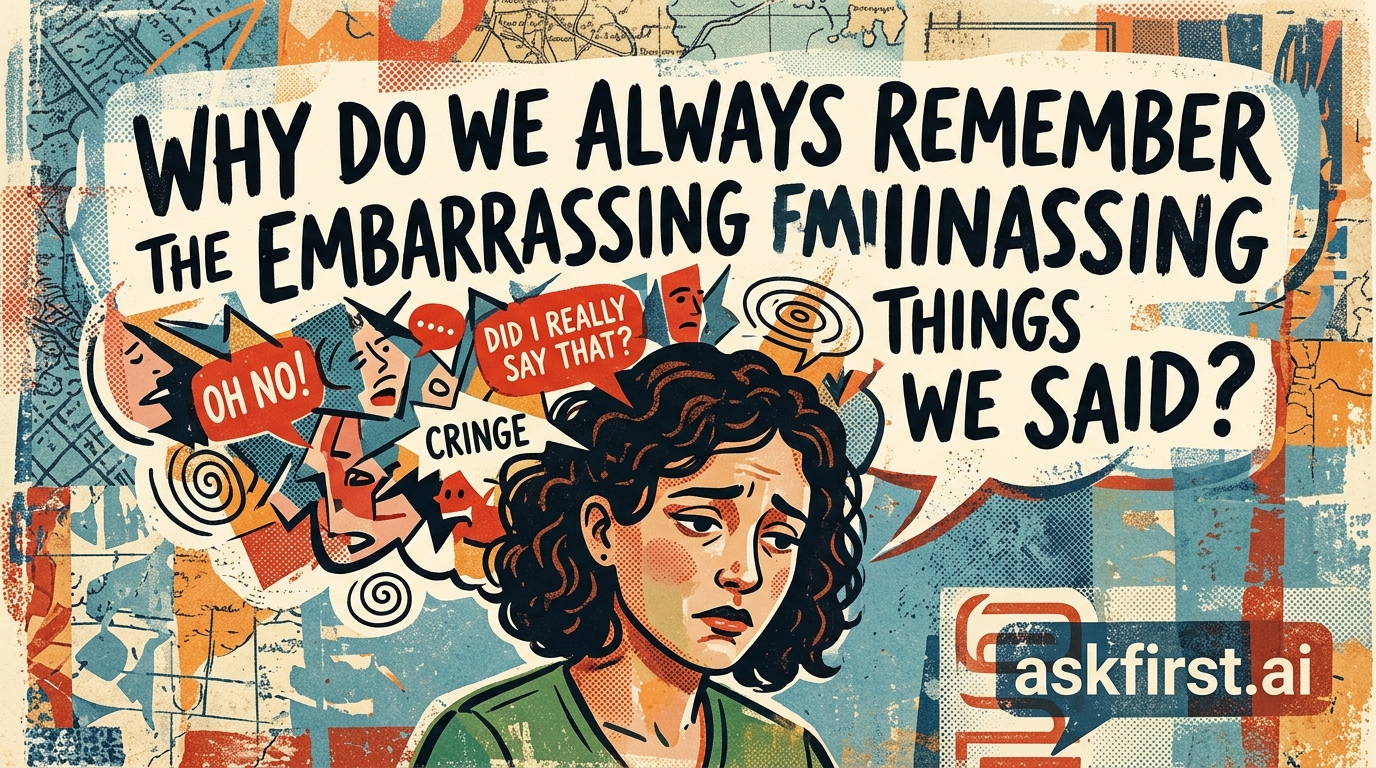
Human brains are hardwired for social survival, making the recollection of social errors remarkably vivid. This phenomenon occurs due to several evolutionary and cognitive mechanisms:
- The Negativity Bias: Evolutionary pressures prioritized threats to social standing over positive interactions. Remembering social mistakes served as a warning system to prevent future ostracization.
- Spotlight Effect: Individuals often overestimate how much others notice their behavior. While a person dwells on a minor slip-up, peers have likely already moved on, demonstrating that these memories are often disproportionate to reality.
Why These Memories Persist
These intrusive thoughts serve as a mental simulation tool. By mentally rehearsing past mistakes, the brain attempts to refine future social responses. However, this becomes maladaptive when it transitions into excessive rumination. To manage these memories effectively, focus on self-compassion and recognize that these intrusive thoughts are merely an automatic, albeit annoying, attempt by the mind to ensure social belonging.