The Proportional Theory
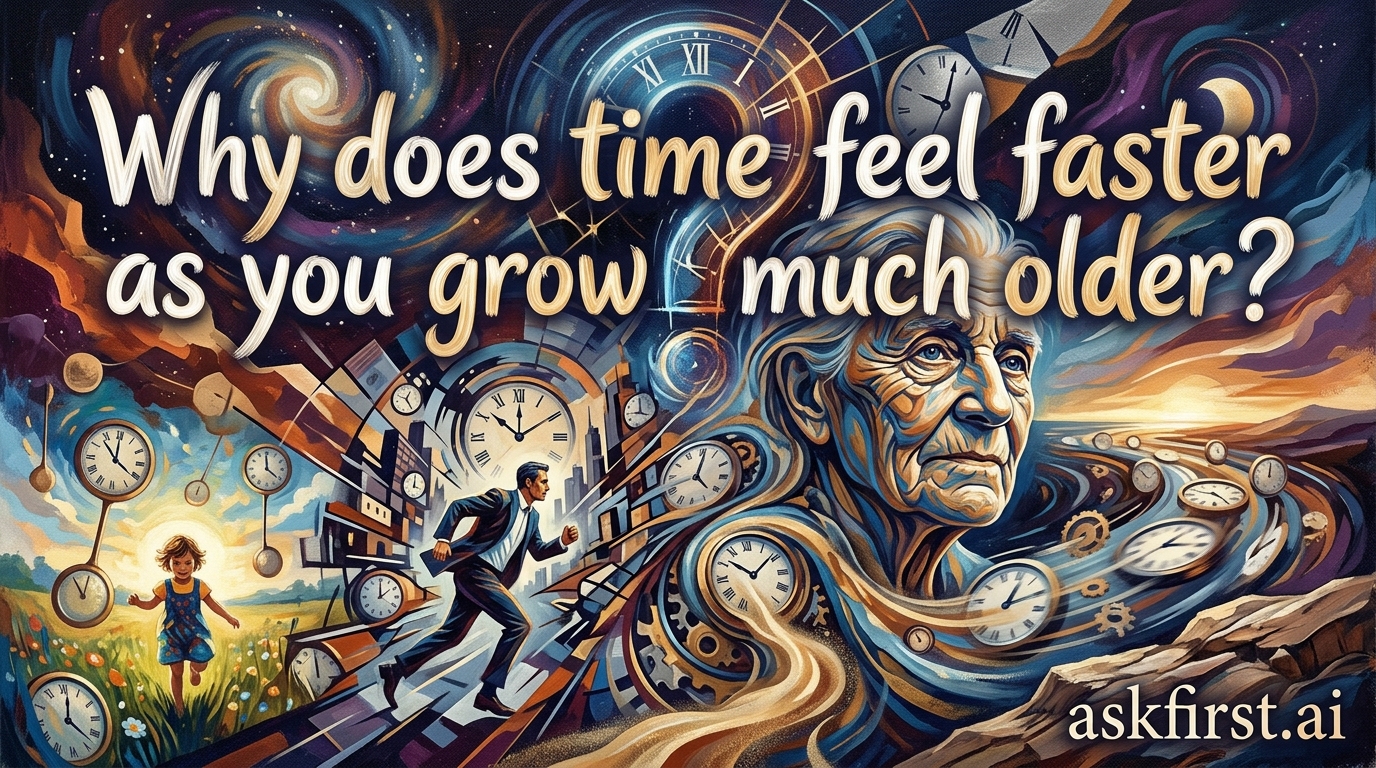
One prominent scientific explanation involves the proportional theory. As individuals age, each year represents a smaller fraction of their total life span. For a five-year-old, one year is 20 percent of their existence, whereas for a fifty-year-old, it is merely 2 percent, making the duration feel significantly shorter by comparison.
The Novelty Factor
- Encoding Memories: The brain processes unfamiliar experiences with intense detail. In youth, almost every day involves new environments and learnings, creating dense memory structures.
- Routine Automatism: As adults settle into established habits, the brain switches to 'autopilot' mode. Because routine experiences require less cognitive effort to store, they leave fewer 'time markers' behind, leading the mind to perceive the passing of time as a rapid blur.
The Cognitive Clock
Beyond simple perception, physiological factors play a role. The rate at which the brain processes visual images slows down with age. This shift in the internal biological clock creates a discrepancy between physical reality and cognitive interpretation, effectively making external events seem to rush by faster than in earlier, more vibrant stages of development.