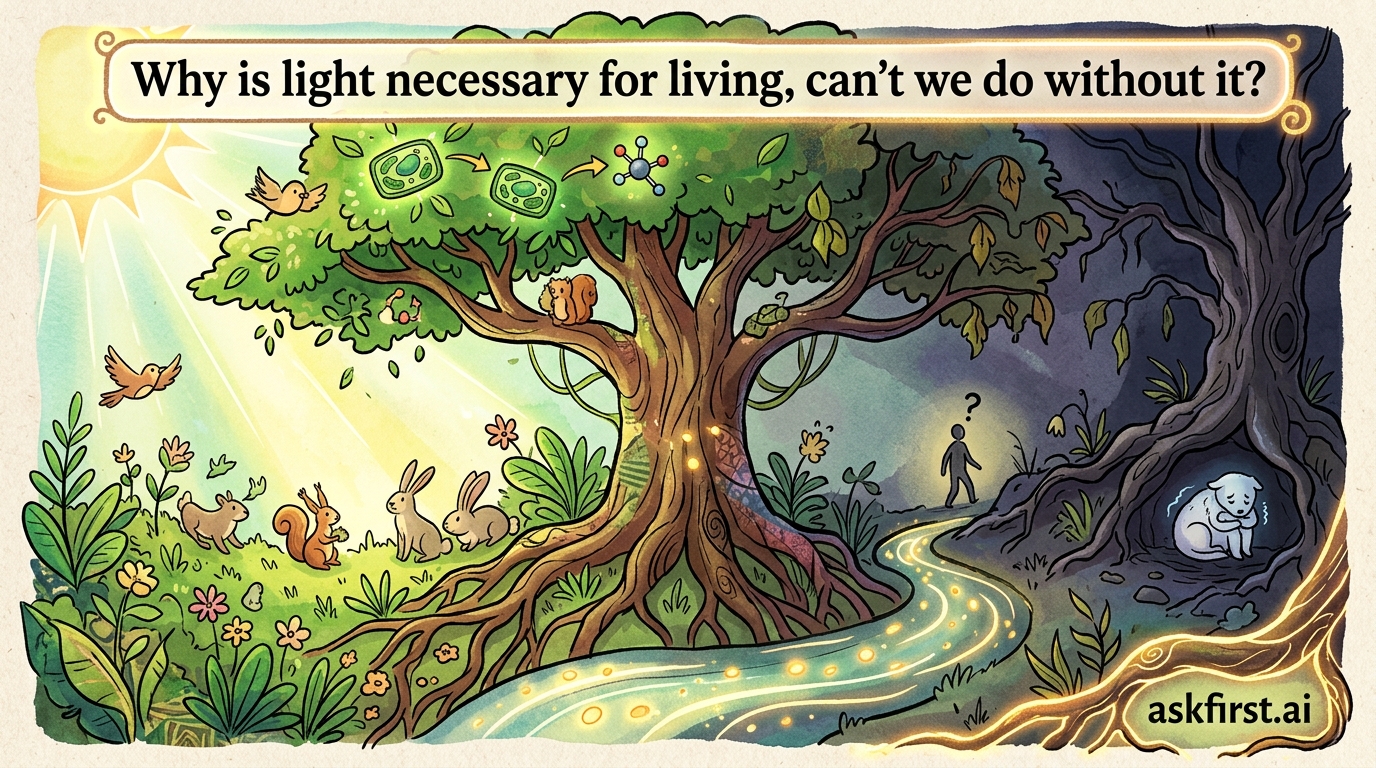
Light is a fundamental requirement for the vast majority of life on Earth, serving as the primary energy source for ecosystems and a vital biological regulator. While certain specialized organisms can survive in absolute darkness, the biosphere as a whole would collapse without light.
1. The Foundation of the Food Web
The most critical role of light is photosynthesis. Through this process, plants, algae, and cyanobacteria convert light energy into chemical energy stored in glucose.
- Primary Production: Virtually all food chains rely on these organisms to capture solar energy. Without light, plants would die, followed by the herbivores that eat them, and subsequently the carnivores that rely on those herbivores.
- Oxygen Production: Photosynthesis is the primary source of atmospheric oxygen. Without light-driven oxygen production, aerobic life—including humans—would suffocate.
2. Circadian Rhythms and Biological Clocks
Most complex organisms possess an internal biological clock known as a circadian rhythm.
- Hormonal Regulation: Light exposure, particularly through the eyes, regulates the production of hormones such as melatonin (which induces sleep) and cortisol (which promotes alertness).
- Physiological Synchronization: Light acts as a "zeitgeber" (time-giver), synchronizing internal metabolic processes, body temperature, and behavioral patterns with the 24-hour solar cycle. Chronic absence of light cues leads to severe disruption of these systems, resulting in immune suppression, metabolic disorders, and psychological distress.
3. Vitamin D Synthesis
In humans and many other vertebrates, light—specifically ultraviolet B (UVB) radiation—is essential for the synthesis of Vitamin D in the skin.
- Vitamin D is critical for calcium absorption and bone health.
- A total lack of light exposure leads to severe deficiencies, causing conditions such as rickets in children and osteomalacia in adults.
4. Exceptions: Can we do without it?
While life as we know it requires light, there are rare, specialized exceptions:
- Chemosynthesis: In deep-sea hydrothermal vents, organisms rely on chemical energy from volcanic minerals rather than sunlight. These ecosystems are entirely independent of the sun, but they represent a tiny fraction of total global biomass.
- Cave Dwellers: Some species have evolved to live in permanent darkness, often losing their vision and pigmentation over evolutionary timescales. However, these organisms are still part of a larger planetary ecosystem that is ultimately fueled by solar-derived energy (e.g., organic matter falling into caves from the surface).
Conclusion: While individual organisms can adapt to life in darkness, the global biosphere is fundamentally dependent on light. Without it, the energy cycle would break, the atmosphere would lose its oxygen, and the complex biological systems that support human life would cease to function.