The Psychology of Regret
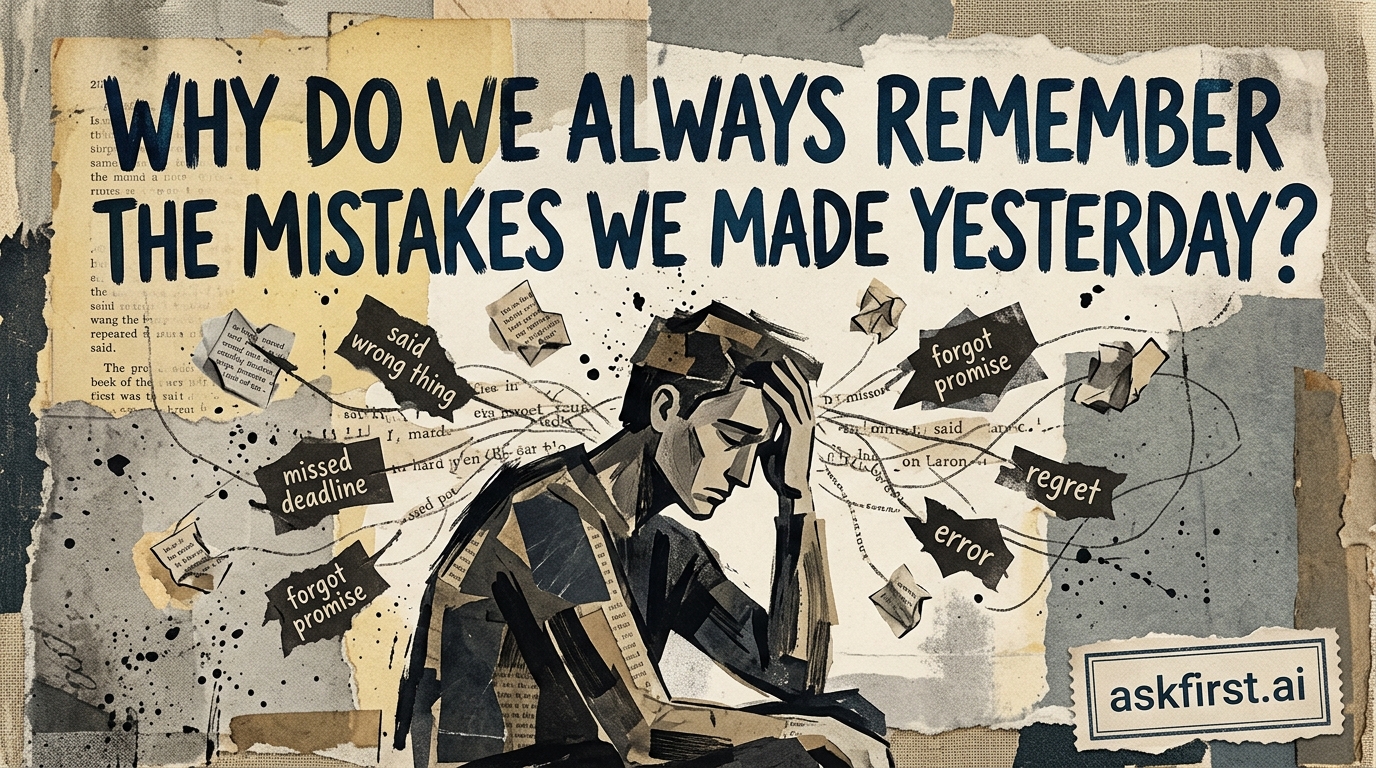
The human brain is evolutionarily wired to prioritize negative experiences over positive ones, a phenomenon known as the negativity bias. Remembering mistakes serves a crucial survival function: it ensures that patterns resulting in undesirable outcomes are scrutinized, analyzed, and eventually avoided in the future.
Why Mistakes Stick:
- The Zeigarnik Effect: Unfinished tasks or unresolved emotional errors create cognitive tension, causing the mind to dwell on them until closure is achieved.
- Social Vigilance: Our brains constantly assess social standing. Mistakes are perceived as potential threats to status, triggering a heightened alertness that embeds the memory deeper.
- Learning Mechanisms: The brain's reward prediction error system is significantly more active during failures than successes, cementing these moments into long-term memory for behavioral adjustment.
By reframing these memories as essential feedback loops rather than burdens, individuals can transform persistent recollections into powerful catalysts for personal growth and refined decision-making processes.