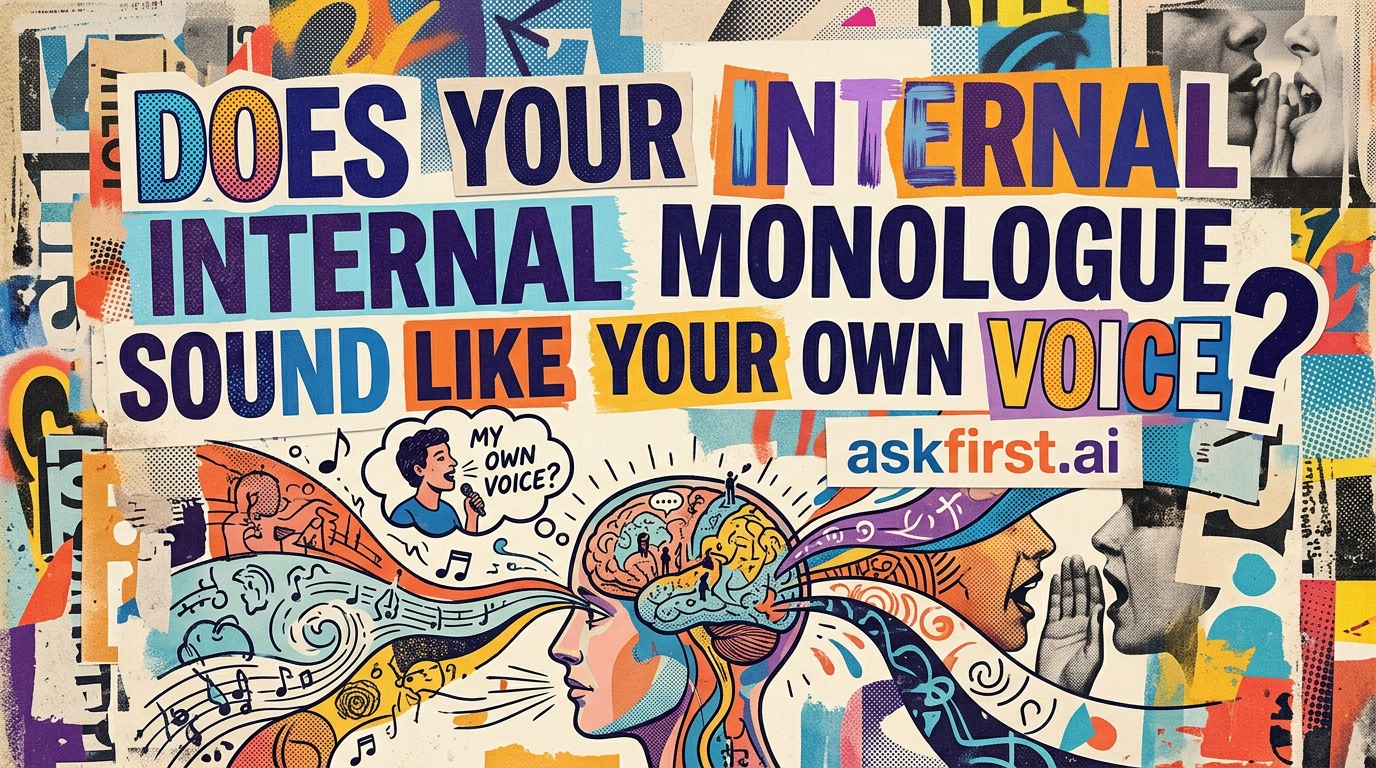
The Nature of Internal Speech
Research indicates that while many individuals perceive their internal monologue as a clear reflection of their own voice, this is not a universal experience. The phenomenon, often referred to as inner speech, varies significantly across the human population, highlighting the incredible diversity of human cognition and sensory processing.
Key Psychological Insights
- Subjective Variability: For some, the internal voice possesses a distinct timbre, pitch, and cadence identical to their audible speaking voice. For others, it exists as an abstract conceptual flow devoid of sonic qualities.
- Cognitive Differences: Studies suggest a correlation between inner speech patterns and working memory. Those who lack a persistent internal narrative may rely more heavily on visual or kinesthetic forms of thinking.
- Aphantasia and Anaduralia: The absence of a mental "sound" is sometimes linked to anaduralia, a condition where individuals do not experience auditory imagery. This is often paired with aphantasia, the inability to visualize mental images.
Why This Matters
Understanding these cognitive differences promotes empathy and self-awareness. Recognizing that mental experiences are not uniform helps demystify the human mind. Whether your thoughts are vocal, visual, or purely semantic, they represent the unique architecture of individual consciousness and personal perspective.