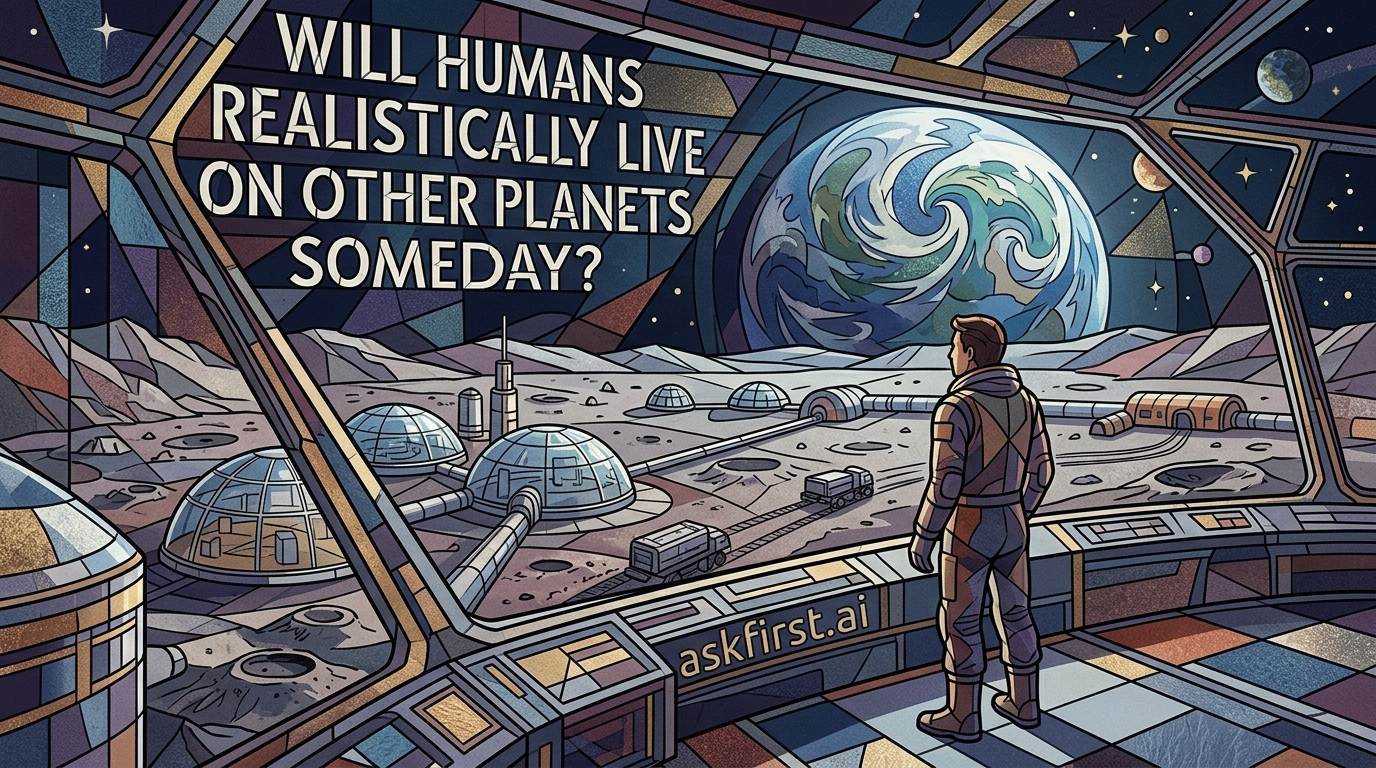
The feasibility of humans living on other planets is a subject of intense scientific study, bridging the gap between theoretical physics, aerospace engineering, and biology. While no human has yet set foot on another planet, the transition from exploration to colonization is considered a realistic, albeit multi-generational, goal.
Key Challenges to Planetary Colonization
For humans to establish permanent residency on planets like Mars, several insurmountable-seeming barriers must be addressed:
- Atmospheric Composition: Most planets in our solar system lack breathable oxygen. Colonists would require sophisticated Life Support Systems (LSS) to generate oxygen, recycle water, and scrub carbon dioxide.
- Radiation Protection: Outside the protective cocoon of Earth’s magnetic field and thick atmosphere, humans are exposed to lethal levels of galactic cosmic rays and solar radiation. Habitats would likely need to be built underground or shielded by thick layers of Martian regolith.
- Gravity Constraints: Long-term exposure to low gravity (Mars has 38% of Earth's gravity) is known to cause bone density loss, muscle atrophy, and vision impairment. It remains unknown whether human reproduction can occur safely in non-Earth gravity.
- Psychological Factors: The isolation, confinement, and communication delays—which can last up to 20 minutes one way—pose significant risks to mental health and autonomous decision-making.
The Case for Mars
Mars is currently the primary candidate for human habitation due to its relative proximity and environmental characteristics:
- Day-Night Cycle: A Martian day (a "sol") is 24 hours and 39 minutes, which is highly compatible with human circadian rhythms.
- Resource Availability: Data from rovers confirm the presence of water ice in the subsurface, which can be extracted for drinking, oxygen production, and fuel synthesis (via electrolysis).
- Terraforming Potential: While currently science fiction, theoretical models suggest that planetary engineering could eventually thicken the atmosphere and warm the planet, though this would take centuries or millennia.
Economic and Technological Drivers
The shift toward off-world living is being accelerated by the commercial space sector. The development of reusable rocket technology has drastically reduced the cost per kilogram of launching mass into orbit. Furthermore, the concept of In-Situ Resource Utilization (ISRU)—the practice of harvesting local materials for construction and fuel—is essential to making colonization economically viable, as transporting all necessary supplies from Earth is not sustainable.
Conclusion
Realistically, human presence on other planets will likely begin as research outposts, similar to those in Antarctica, before evolving into self-sustaining colonies. While technological hurdles remain significant, the transition to a multi-planetary species is viewed by many aerospace agencies and private entities as a necessary step for the long-term survival of the human race. The timeline for this transition is estimated to span the next 50 to 200 years.