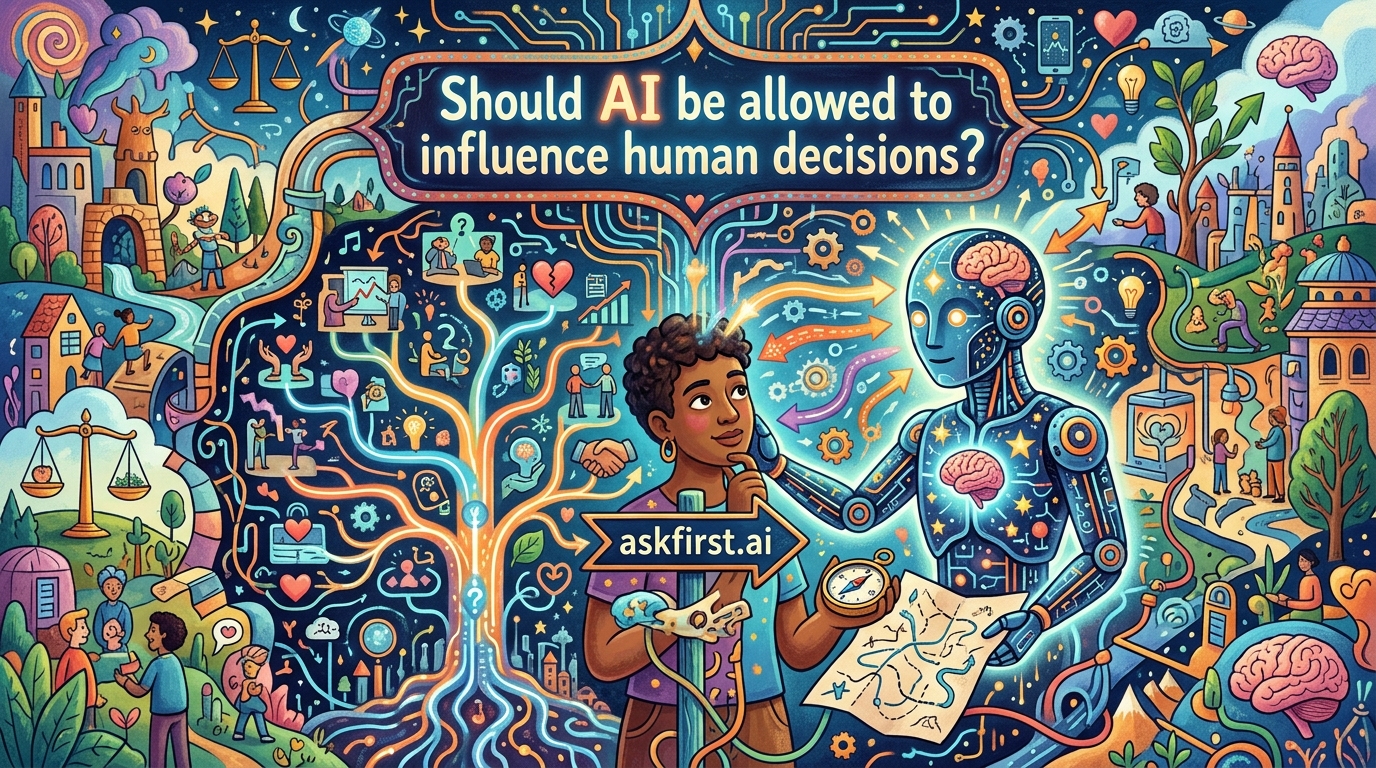
The question of whether automated systems should influence human decision-making is a subject of intense debate among ethicists, technologists, and policymakers. The discourse centers on the tension between efficiency gains and the preservation of human agency.
Arguments for AI Influence
Proponents argue that integrating algorithmic decision support provides significant advantages in complex environments:
- Data Synthesis: Humans are cognitively limited in their ability to process vast datasets. Algorithms can identify patterns, correlations, and risks that remain invisible to human observers.
- Consistency and Objectivity: Unlike humans, machines are not subject to physiological fatigue, emotional bias, or mood-based fluctuations, potentially leading to more standardized outcomes in fields like diagnostics or credit scoring.
- Precision: In high-stakes fields such as surgery or logistics, AI can perform calculations or execute precision tasks that minimize human error and optimize resource allocation.
Arguments Against AI Influence
Critics emphasize the systemic risks associated with delegating judgment to non-human entities:
- Algorithmic Bias: If training data contains historical prejudices, AI systems will likely codify and amplify those biases, leading to discriminatory outcomes in hiring, law enforcement, and lending.
- The "Black Box" Problem: Many advanced machine learning models, particularly deep neural networks, operate with a degree of opacity. If a system cannot explain its reasoning (lack of interpretability), it becomes impossible to hold it accountable for harmful decisions.
- Erosion of Autonomy: Over-reliance on automated recommendations can lead to "automation bias," where humans defer to the machine even when their own intuition or external evidence suggests otherwise. This risks the atrophy of critical thinking and professional expertise.
- Manipulation: Algorithms designed for engagement (such as those used in social media or advertising) are engineered to influence human behavior, often prioritizing profit over the well-being or informed consent of the individual.
Regulatory and Ethical Frameworks
To address these concerns, global regulatory bodies are increasingly moving toward a model of "Human-in-the-Loop" (HITL) systems. This framework dictates that:
- Transparency: AI systems must be explainable, allowing users to understand the logic behind a suggestion.
- Accountability: Legal liability must remain with human operators or organizations, ensuring that an algorithm cannot be used as a shield to evade responsibility.
- Governance: High-risk applications—such as autonomous weaponry, judicial sentencing, or critical healthcare decisions—require rigorous oversight and the ability for human overrides to be mandatory.
Ultimately, the consensus in the scientific community is that AI should function as a decision-support tool rather than a decision-maker. By augmenting human intelligence rather than replacing it, society aims to leverage the speed of computation while retaining the moral and contextual judgment that defines human decision-making.