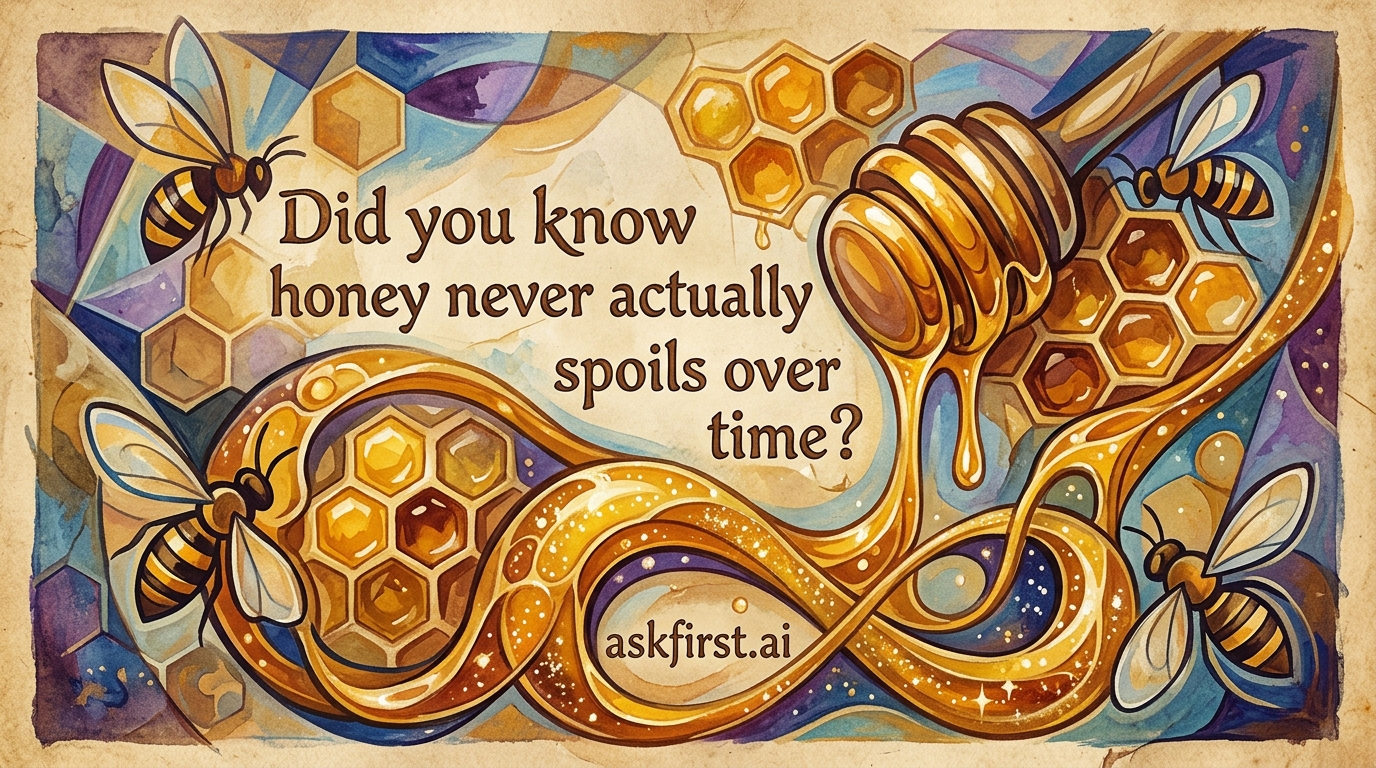
The Science of Eternal Honey
It is a remarkable fact of nature that honey possesses an indefinite shelf life. When properly sealed in a container, this golden substance can remain edible for centuries, or even millennia. Archaeologists have famously discovered pots of honey in ancient Egyptian tombs that remain perfectly preserved.
Why Honey Defies Time
Several unique chemical properties act together to prevent spoilage:
- Low Moisture Content: Honey is naturally hygroscopic, meaning it contains very little water. Bacteria and microorganisms struggle to survive in such an environment.
- High Acidity: With a pH typically between 3 and 4.5, the acidic environment inhibits the growth of unwanted microbes.
- Hydrogen Peroxide: Bees introduce an enzyme called glucose oxidase during the production process, which generates hydrogen peroxide as a natural byproduct to deter bacterial growth.
Practical Storage Tips
While honey is immortal, proper handling ensures the best quality:
- Keep it Airtight: Moisture is the enemy, so always ensure the lid is screwed on tightly after each use.
- Room Temperature: Store at ambient room temperature; there is absolutely no need for refrigeration.
- Crystallization: If the honey turns solid or cloudy, it is not spoiled. Simply place the jar in a warm water bath to gently return it to a liquid state.