The Psychology of Design
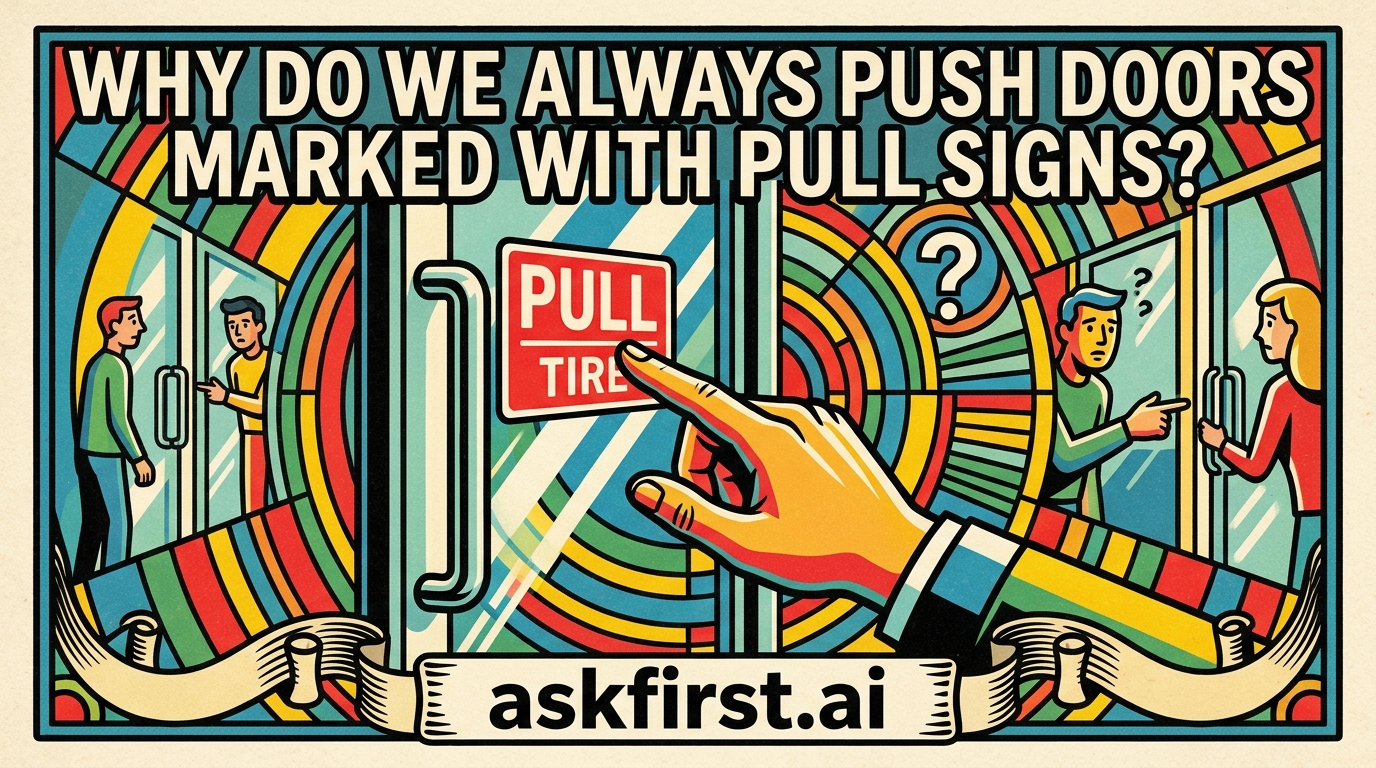
This phenomenon is fundamentally rooted in the concept of Affordance, a term coined by psychologist Don Norman. It describes how the physical properties of an object suggest how it should be used. Flat metal plates on doors are perceived by the human brain as surfaces to be pushed, regardless of the visual labeling.
Why the Confusion Persists
- Intuitive Bias: The human brain prioritizes tactile cues over linguistic instructions when moving quickly. A large, flat surface naturally triggers a pushing motion in the motor cortex.
- Cognitive Dissonance: When a sign conflicts with an object's physical affordance, the brain often defaults to the physical cue rather than the cognitive, textual one.
- Design Failures: Architects and designers frequently overlook the need for visible, ergonomic handles that clearly indicate a pulling action is required, forcing users to rely solely on signs.
Overcoming the Impulse
To bridge this gap, modern design advocates for intuitive interface signals. If a door must be pulled, the installation of a vertical handle serves as an unmistakable physical command. By aligning visual signage with the physical shape of the object, frustration is eliminated and efficiency is restored in high-traffic environments.