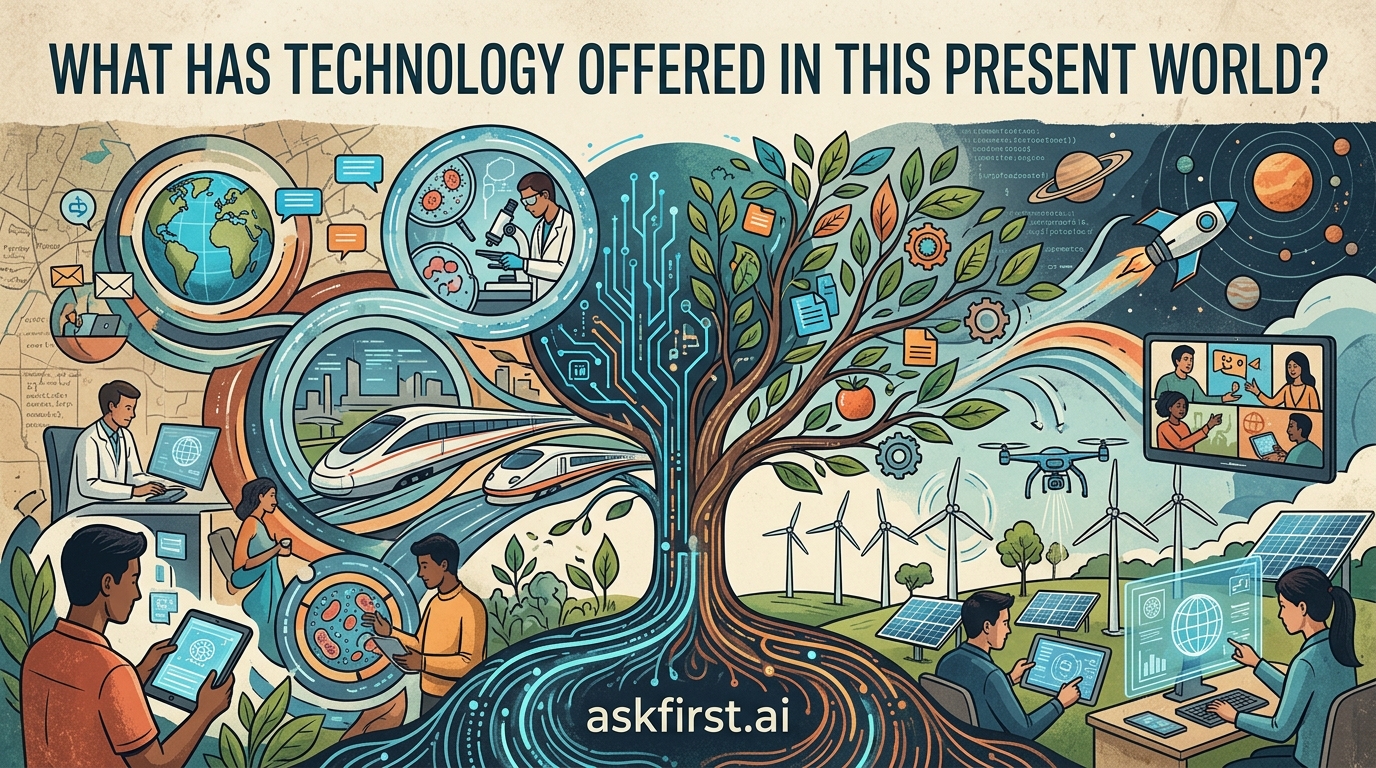
Technology has fundamentally reshaped the structure of modern civilization, influencing how humanity interacts, works, and perceives reality. Its contributions span across critical sectors, driving unprecedented efficiency and connectivity.
1. Global Connectivity and Communication
The advent of the internet and mobile technology has collapsed geographical barriers.
- Instant Communication: Real-time messaging, video conferencing, and social media platforms allow for instantaneous global interaction.
- Democratization of Information: Knowledge that was once sequestered in physical libraries is now accessible to anyone with an internet connection, fostering a global learning environment.
2. Advancements in Healthcare
Technology has dramatically extended human life expectancy and improved the quality of care.
- Precision Medicine: Genomic sequencing and AI-driven diagnostics allow for treatments tailored to an individual’s genetic makeup.
- Telemedicine: Remote consultations have made healthcare accessible to underserved or rural populations.
- Medical Innovation: Robotic surgery, advanced imaging (MRI, CT scans), and the rapid development of vaccines represent breakthroughs that save millions of lives annually.
3. Economic and Industrial Transformation
The digital economy has rewritten the rules of commerce and productivity.
- Automation: Robotics and Artificial Intelligence have streamlined manufacturing, reducing human error and increasing output in industrial settings.
- E-commerce: Global supply chains and digital marketplaces have shifted consumer behavior, allowing for a seamless exchange of goods and services worldwide.
- Remote Work: Cloud computing and collaborative software have decentralized the workplace, enabling flexible employment models.
4. Scientific Exploration and Sustainability
Technology serves as the primary tool for understanding the universe and addressing environmental challenges.
- Space Exploration: Advanced satellite technology and autonomous rovers are mapping the solar system and monitoring Earth's climate.
- Renewable Energy: Innovations in solar, wind, and battery storage technologies are critical in the global transition away from fossil fuels.
- Data Analytics: Big data allows researchers to model climate change patterns and develop mitigation strategies with high accuracy.
5. Enhanced Daily Efficiency
Modern life is defined by the integration of "smart" systems that manage routine tasks.
- Smart Infrastructure: IoT (Internet of Things) devices manage energy consumption in homes, optimize traffic flow in cities, and enhance security.
- Financial Technology (FinTech): Digital banking, mobile payments, and blockchain technology have revolutionized how wealth is stored, transferred, and secured.
While technology has provided these significant advancements, it also presents challenges, including the digital divide, data privacy concerns, and the need for ethical oversight in the development of autonomous systems. Nevertheless, it remains the primary engine of modern human progress.