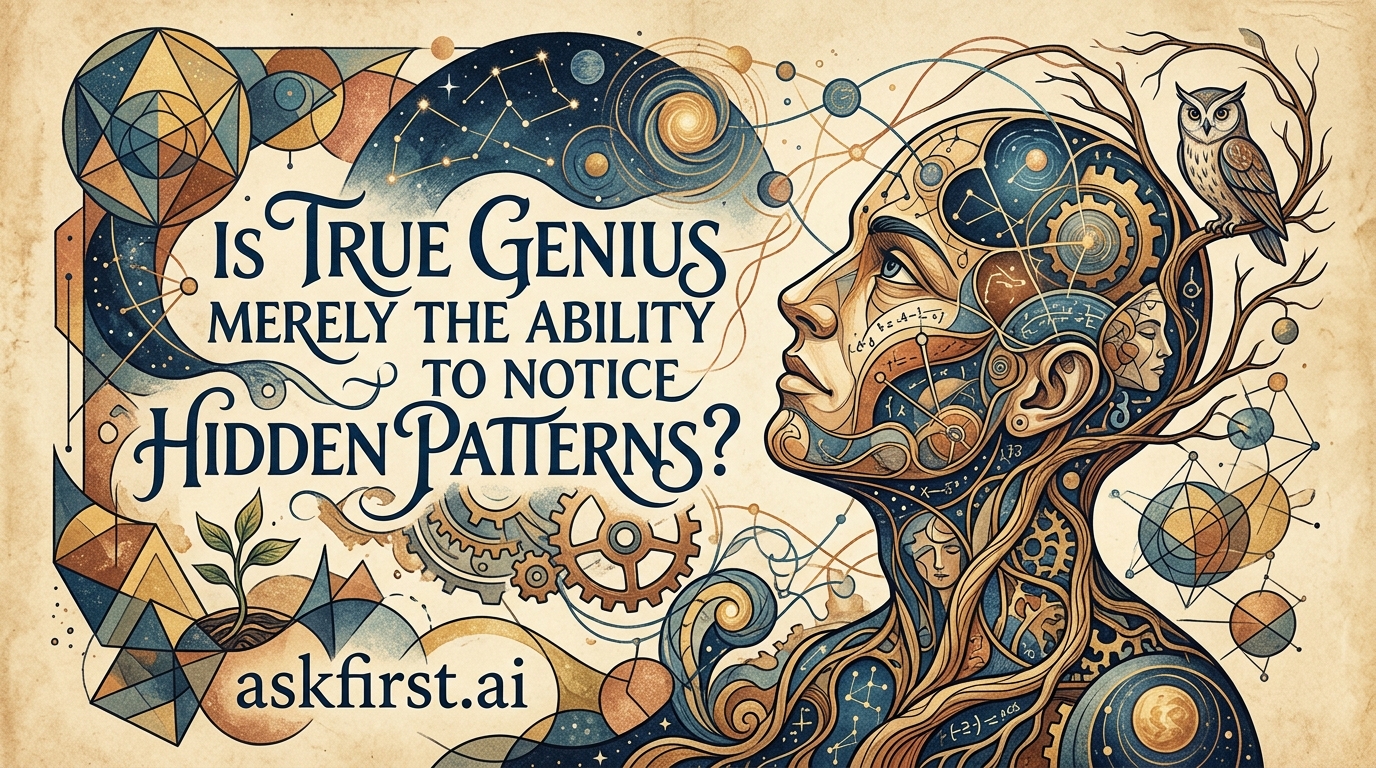
Defining the Nature of Genius
While identifying hidden patterns is a cornerstone of intellectual prowess, defining genius solely by this trait is an incomplete assessment. True brilliance often emerges from the convergence of several complex cognitive dimensions:
- Pattern Recognition: The foundational ability to perceive underlying structures within chaotic data.
- Synthesis of Concepts: The capacity to connect unrelated ideas from disparate fields to create entirely new paradigms.
- Originality and Innovation: The courage to challenge established norms and propose creative solutions that others have failed to envision.
Why Pattern Recognition is Not Enough
Pattern recognition is a reactive skill, whereas genius is frequently proactive. A machine or a high-functioning algorithm can detect sequences faster than any human, yet they lack the contextual intuition and emotional resonance required for transformative discovery. Genuine genius requires the synthesis of logic with imagination. It is the bridge between seeing what is hidden and envisioning what could potentially exist, turning abstract observations into tangible improvements for society at large. Ultimately, genius is the harmonious integration of analysis and creation, functioning together to reshape the human experience.