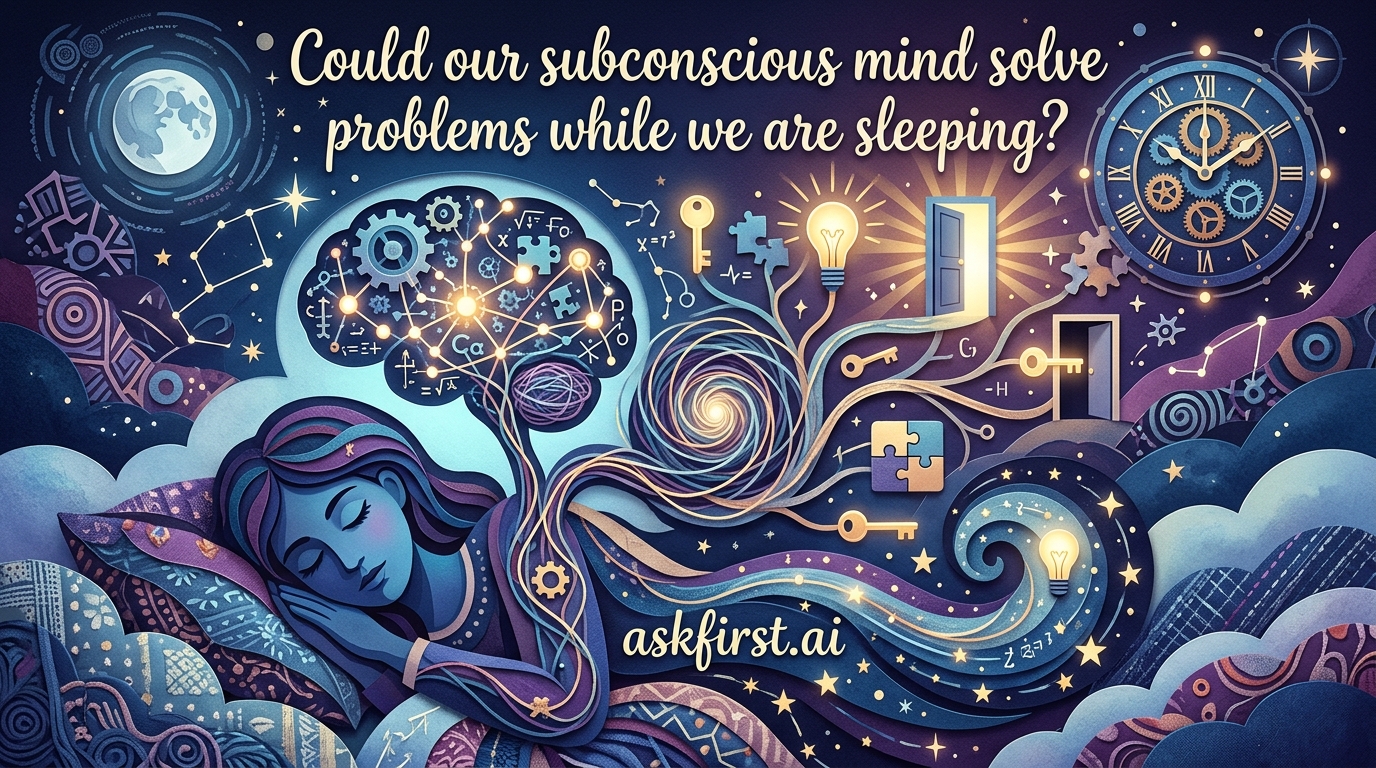
The Science of Nocturnal Cognition
Yes, the subconscious mind is remarkably active during sleep, frequently engaging in complex problem-solving that remains inaccessible during waking hours. Research suggests that the brain utilizes REM sleep to reorganize data and build unique neural connections, which often leads to 'Aha!' moments upon waking.
How It Works
- Memory Consolidation: The brain stabilizes recent experiences, stripping away irrelevant details to focus on core logic.
- Neural Synthesis: Distant concepts are cross-referenced, allowing for creative breakthroughs that logic-heavy daytime thinking might overlook.
- Emotional Processing: Sleep removes the emotional bias from a problem, providing a clearer perspective.
Strategic Benefits
Leveraging this phenomenon requires conscious priming. By reviewing a complex challenge immediately before resting, the mind is prompted to process that specific information during the cycles of deep sleep. This biological mechanism acts as a hidden supercomputer, turning downtime into a period of extreme intellectual productivity and creative discovery.