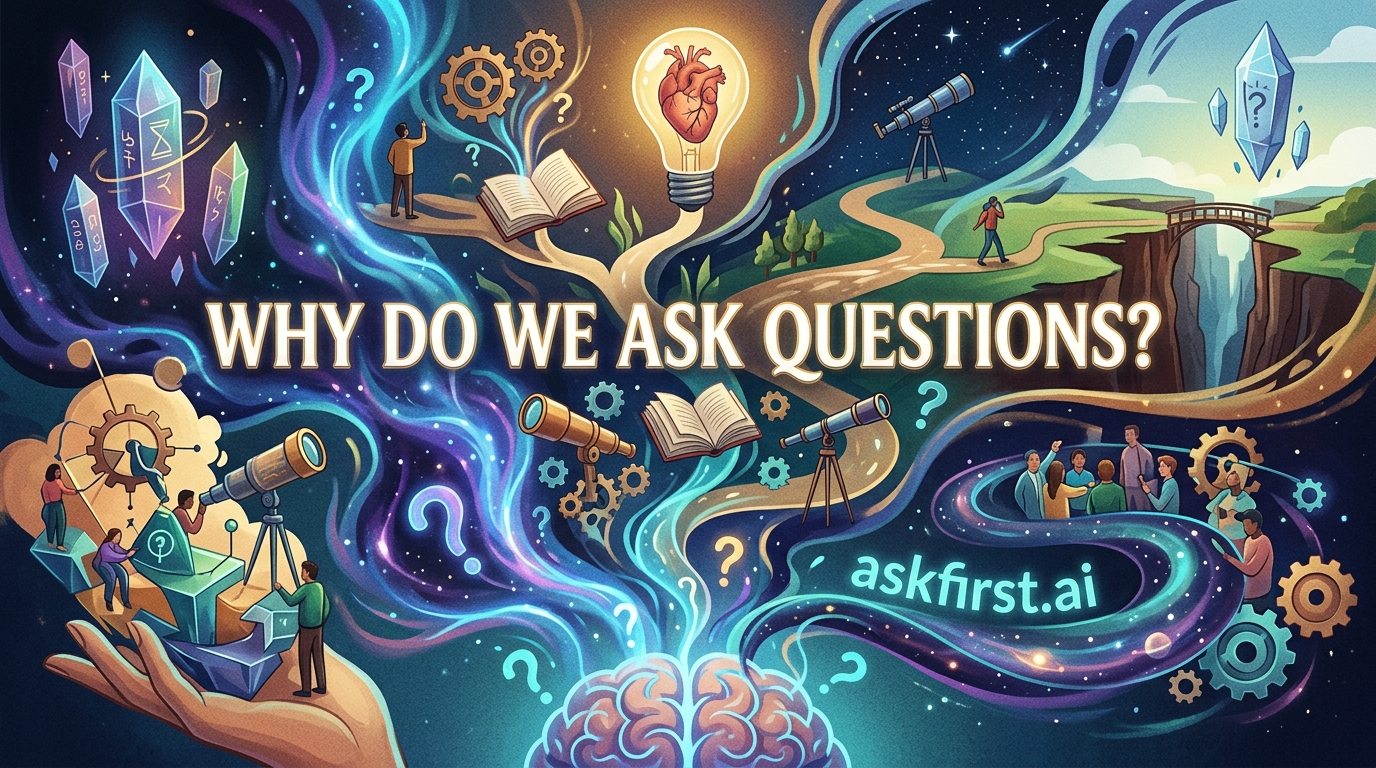
Asking questions is the fundamental mechanism by which humans acquire knowledge, navigate social environments, and solve complex problems. It serves as the primary bridge between ignorance and understanding.
The motivations behind questioning can be categorized into several core functions:
- Information Acquisition: The most direct purpose of a question is to bridge a "knowledge gap." When an individual identifies a discrepancy between what they know and what they need to know, they seek external data to complete their mental model of the world.
- Cognitive Development: Questioning is a vital tool for learning. By asking "why," "how," and "what if," individuals engage in critical thinking, which stimulates neural pathways and enhances the ability to analyze, synthesize, and evaluate information.
- Social Interaction and Bonding: Questions are essential tools for building rapport. Asking about someone’s experiences, opinions, or well-being signals interest and empathy. This facilitates social cohesion and allows individuals to align their perspectives with others.
- Problem Solving and Innovation: In scientific and professional contexts, questions are the catalysts for discovery. Identifying a specific problem—framed as a question—is the first step in the scientific method. It directs focus toward finding a solution and often leads to the development of new technologies or theories.
- Clarification and Validation: Questions are used to confirm that information has been received or understood correctly. This reduces ambiguity in communication and ensures that all parties involved in a task or conversation are operating on the same set of facts.
- Self-Reflection: Introspective questioning allows individuals to examine their own motivations, values, and behaviors. This practice is central to emotional intelligence and personal growth, enabling people to adjust their actions based on self-assessment.
Ultimately, the act of questioning is an evolutionary adaptation. By constantly interrogating their environment, humans have historically been better equipped to identify threats, locate resources, and adapt to changing conditions, thereby increasing their chances of survival and progress.