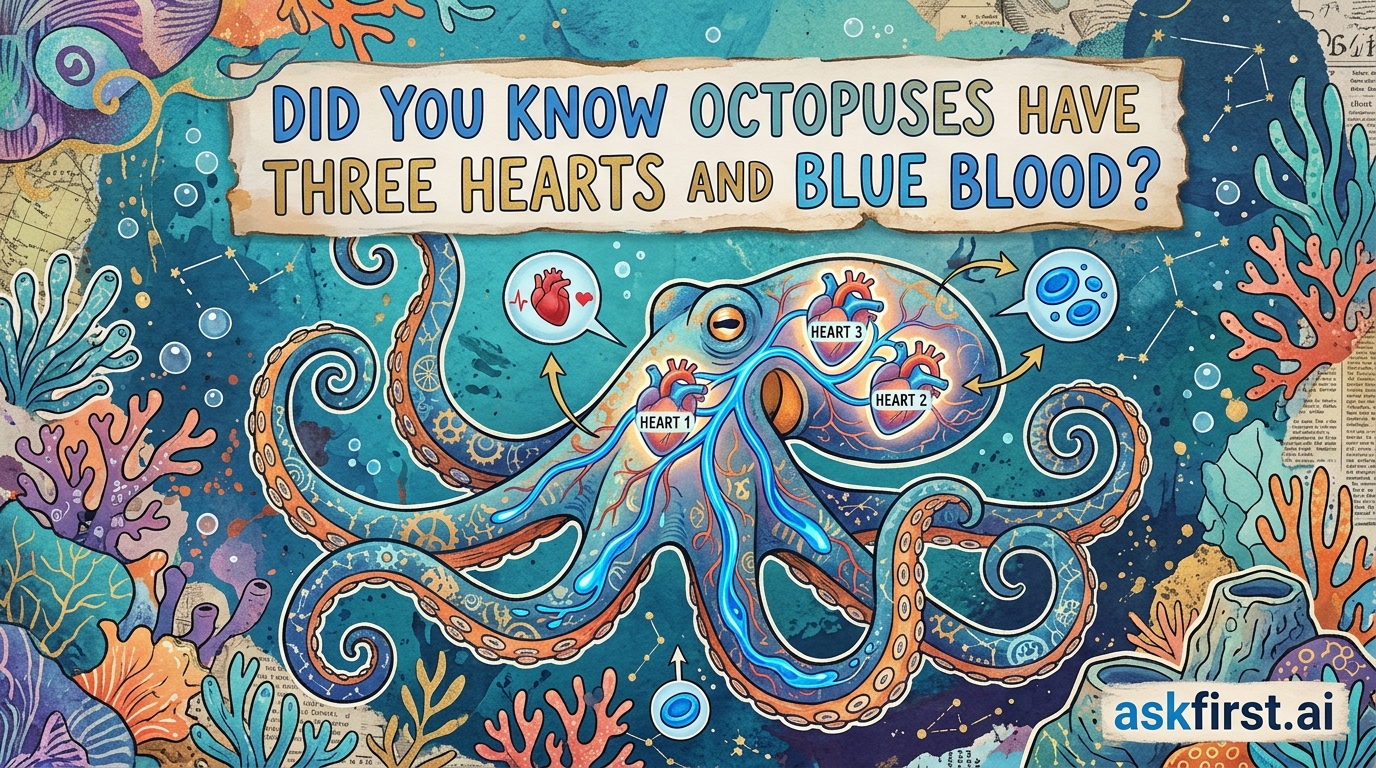
The Marvel of Cephalopod Physiology
Nature is filled with incredible evolutionary adaptations, and the octopus stands as one of the most fascinating examples. Their unique internal architecture is a testament to the mysteries of the deep.
Why Three Hearts?
- Systemic Heart: This primary organ circulates blood throughout the entire body.
- Branchial Hearts: Two additional hearts are dedicated solely to pumping blood through the gills, ensuring efficient oxygenation.
The Science of Blue Blood
Unlike humans who rely on iron-based hemoglobin, octopuses utilize hemocyanin—a protein rich in copper. This molecule serves as a highly efficient oxygen transporter in low-temperature, low-oxygen environments. When oxygenated, this copper-based blood appears vibrant blue, providing these cephalopods with a distinct physiological edge for deep-sea survival. This incredible biological design remains a stunning example of how life thrives in extreme marine conditions.