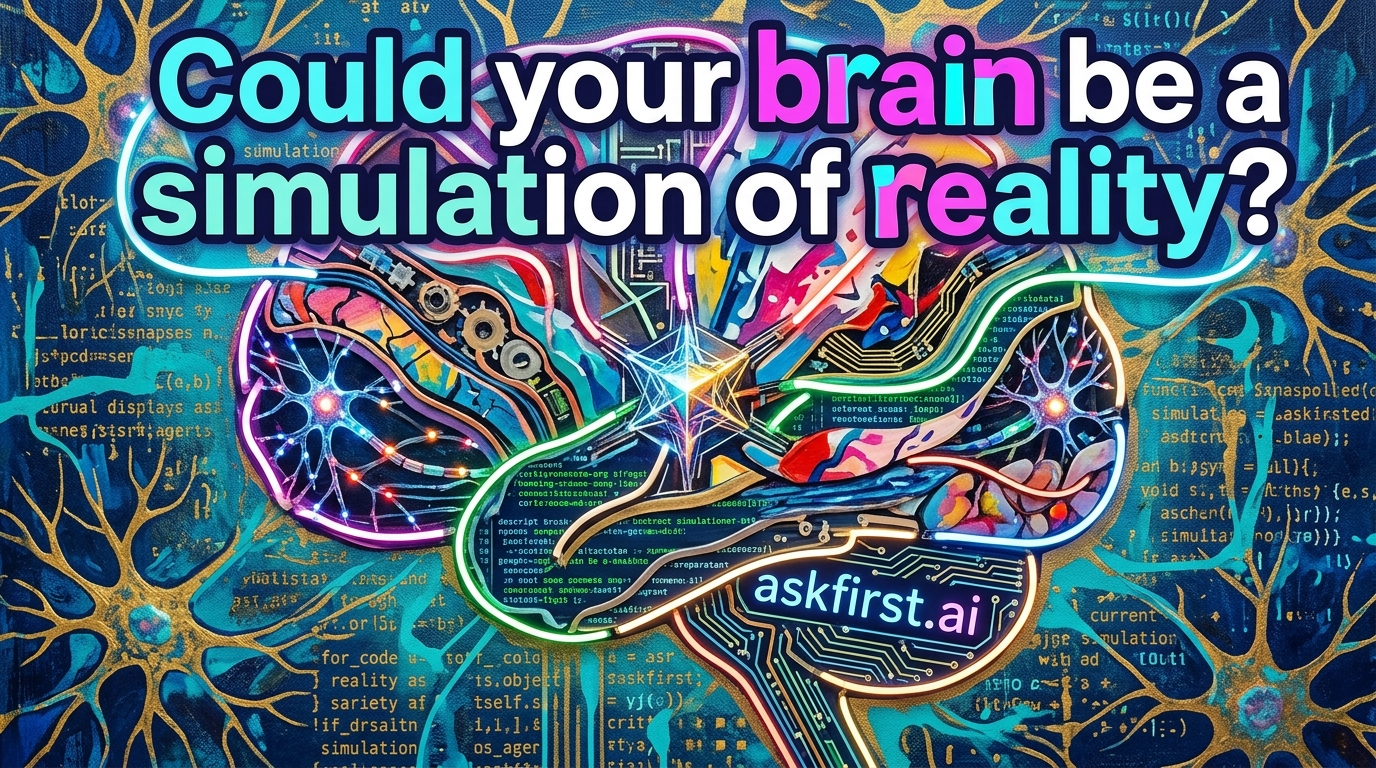
The Illusion of Perception
The human brain functions as an intricate biological processor, constantly decoding electromagnetic waves and chemical signals to construct a coherent 'reality.' Because every sensory experience is translated into neural impulses, the brain technically operates within its own internal model rather than interacting directly with the objective world.
Scientific Perspectives
- Neural Encoding: Sensory inputs are merely data streams. Once they reach the cortex, they are converted into subjective experiences like color, sound, and depth.
- The Construct Theory: Neuroscientists argue that what individuals perceive is a 'controlled hallucination'—a predictive model refined by past experiences to navigate the future effectively.
- Simulation Hypothesis: Philosophers suggest that if consciousness can be replicated, the distinction between a simulated reality and the 'true' world becomes epistemologically impossible to define.
Why This Matters
Understanding that reality is a mental synthesis encourages profound intellectual humility. By recognizing that the senses only report a filtered version of the universe, one gains the ability to challenge preconceptions and explore the limitless boundaries of human imagination and creative cognition.