The Marvel of Cephalopod Physiology
Nature is filled with incredible evolutionary adaptations, and the octopus stands out as a true biological masterpiece. This fascinating creature possesses traits that seem lifted directly from science fiction:
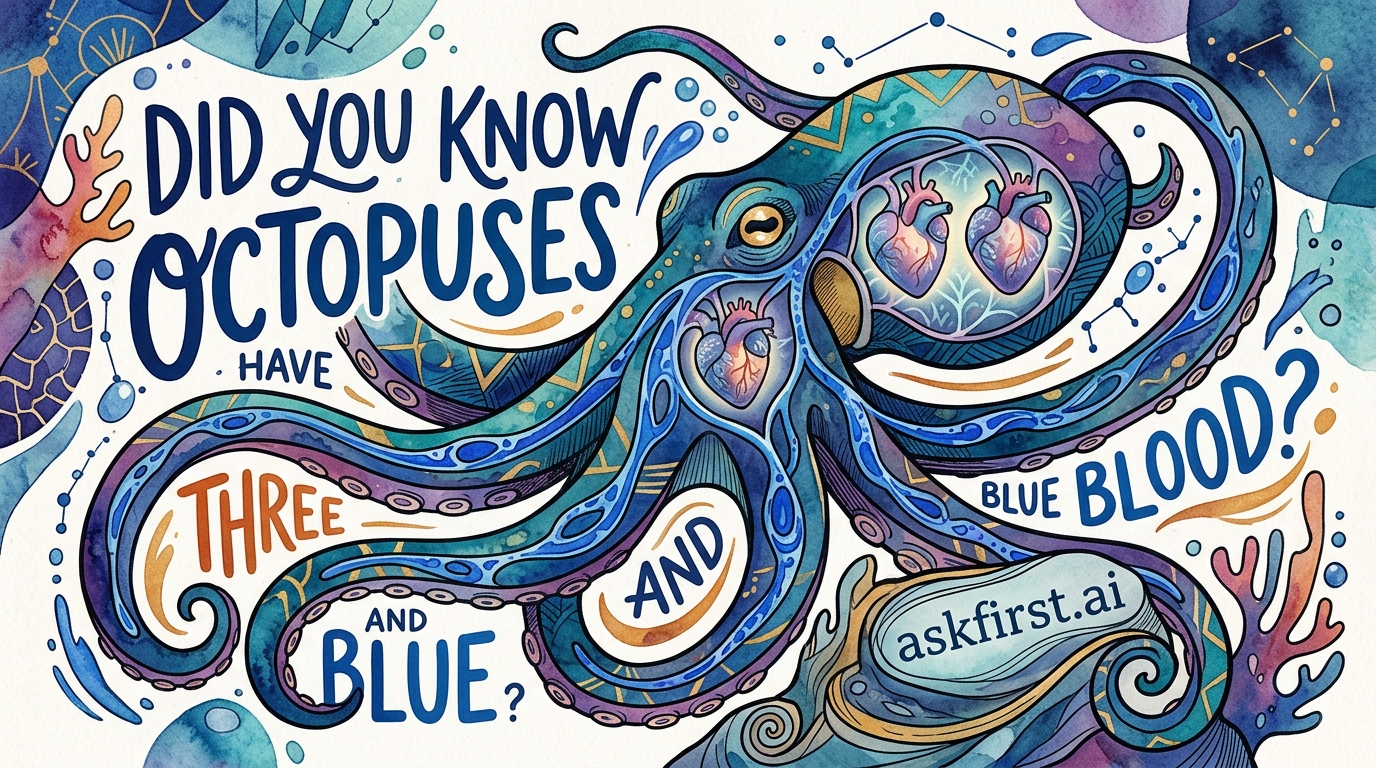
- Triple Heart System: Two hearts are dedicated exclusively to pumping blood through the gills, while the third heart circulates oxygenated blood throughout the rest of the body. Interestingly, the systemic heart stops beating when the octopus swims, which explains why they prefer crawling over swimming to conserve energy.
- The Chemistry of Blue Blood: Unlike humans, who rely on iron-based hemoglobin, octopuses utilize hemocyanin, a copper-rich protein. This transition to copper makes their blood appear vibrant blue, an adaptation that proves significantly more efficient at transporting oxygen in the frigid, low-oxygen environments of the deep ocean.
Why This Matters
Understanding these mechanisms highlights the diversity of life on Earth. These adaptations allow octopuses to thrive in extreme marine habitats where other creatures might struggle to survive. Their unique physiology remains a captivating subject of study for marine biologists worldwide, proving that reality is often far more extraordinary than fiction.