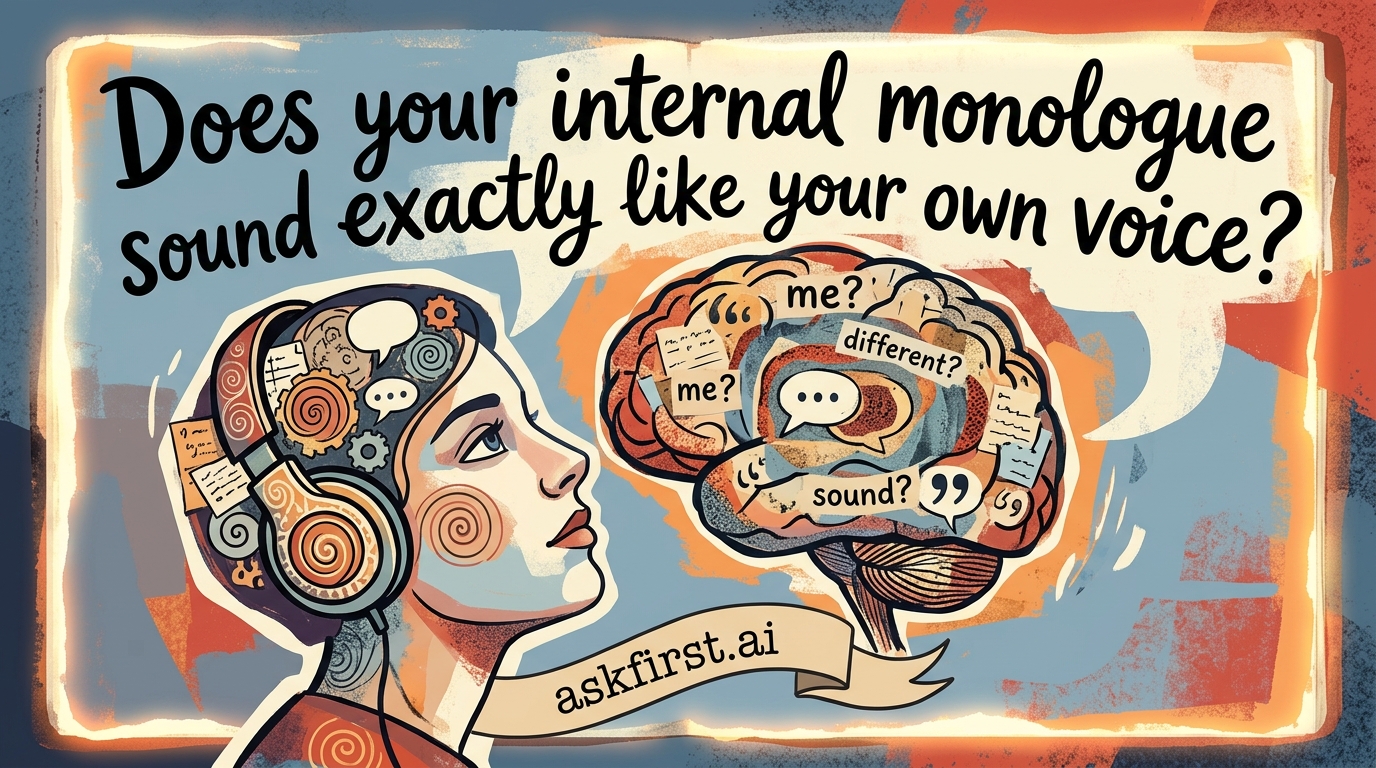
The Science of the Inner Voice
Scientific research into the inner monologue reveals a fascinating spectrum of human experience. While many individuals perceive an auditory stream resembling their own vocal characteristics, others experience thoughts as abstract concepts, images, or even silent sensations without any specific sound quality attached to them.
Why Perceptions Differ
- Cognitive Diversity: The brain utilizes various neural pathways to process language, meaning that the 'voice' heard is often a construction of internal memory rather than an exact acoustic replica.
- Neurobiological Variation: Differences in the connectivity between language centers and auditory processing regions lead to unique internal experiences.
- Vocal Simulation: For those who hear a voice, the brain simulates the motor patterns of speech, tricking the auditory cortex into interpreting thoughts as actual sound waves.
Key Takeaways
- It is highly subjective: There is no single 'correct' way to think; both verbal and visual thinkers possess identical levels of cognitive capability.
- It changes with age: Experiences of the inner voice can evolve over a lifetime based on intellectual development and environmental interactions.
- It remains a mystery: Ongoing neurological studies continue to explore how these simulated internal dialogues shape personality and self-reflection in the modern human brain.