The Marvel of Cephalopod Physiology
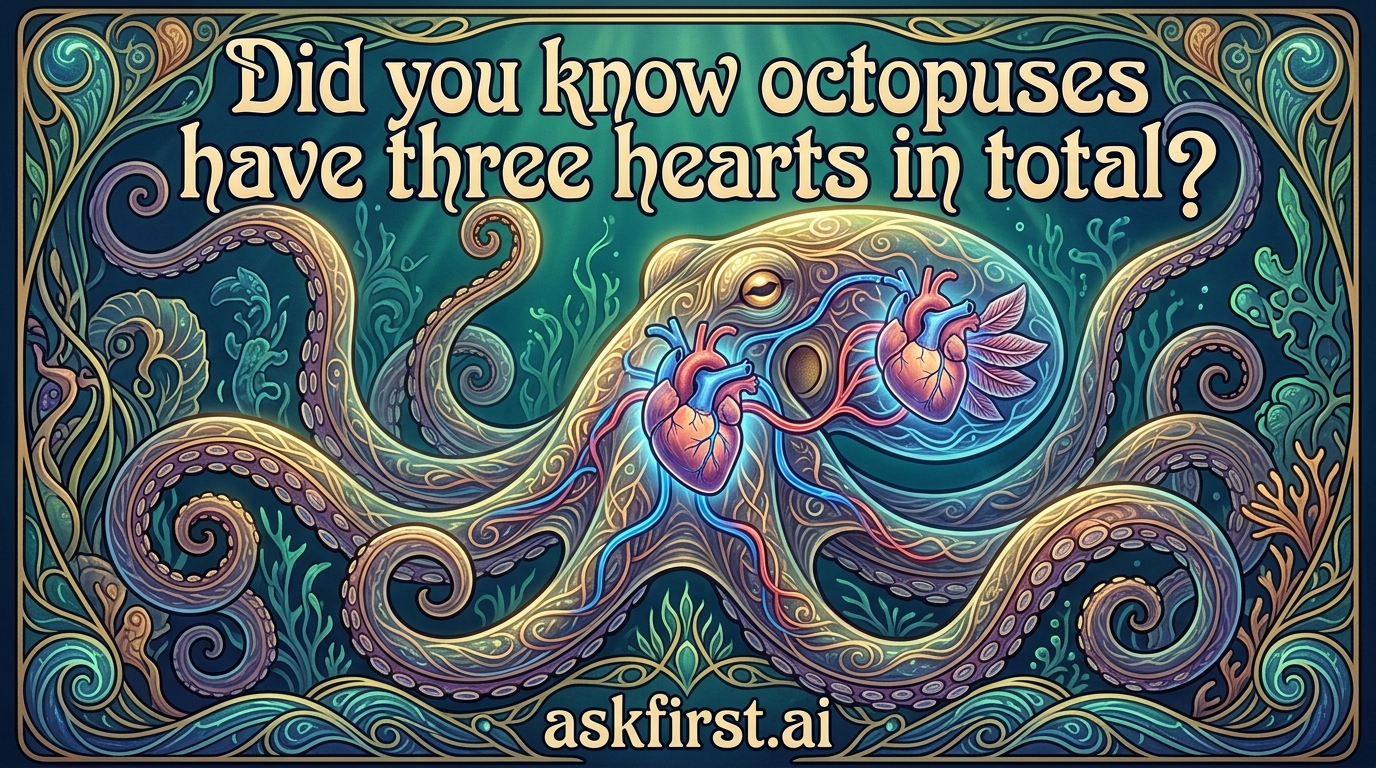
It is an extraordinary biological reality that octopuses possess three separate hearts to sustain their active lifestyles. This complex system ensures efficient oxygen distribution throughout their unique bodies:
- The Systemic Heart: This primary organ circulates oxygenated blood to the rest of the body.
- Two Branchial Hearts: These specialized hearts work exclusively to pump blood through the gills, where oxygen is collected.
Why Such Complexity?
Because octopuses use copper-based blood protein called hemocyanin rather than iron-based hemoglobin, their blood is less efficient at transporting oxygen. To compensate for this, the cephalopod requires a higher blood pressure and a dedicated pumping mechanism to push fluid through the gills. This evolutionary adaptation is a testament to nature's ingenuity in solving survival challenges beneath the ocean waves. The next time the vast intelligence of an octopus is considered, remember that its internal infrastructure is as fascinating as its camouflage abilities.