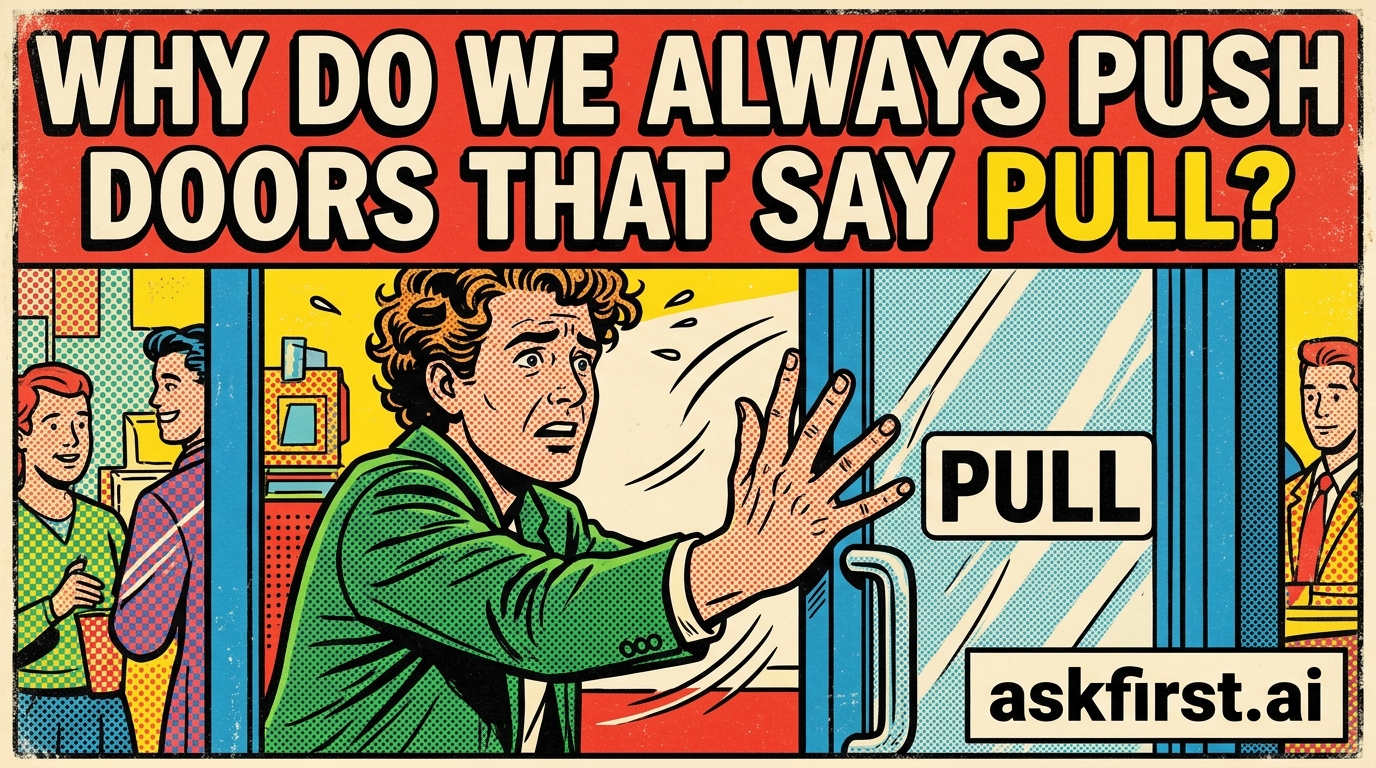
The Psychology of Design
This common struggle, often called a Norman Door, occurs because our brains rely on affordances—cues that suggest how an object should be used. When a door has a flat plate or a handle shaped like a push-bar, our subconscious ignores the sign and follows the visual instruction provided by the hardware instead.
Why Our Brains Fail
- Visual Primacy: Humans prioritize visual cues over text because processing shapes and depth is faster than reading.
- Cognitive Load: When walking, the brain is in a low-power mode. It predicts the door's function based on the immediate aesthetic, bypassing the 'Pull' label entirely.
- Design Mismatch: If a door requires a pull but features a design element that screams 'push,' the conflict creates a momentary cognitive glitch.
Engineering the Solution
To resolve this, architects must ensure that the physical form follows the function. If a door must be pulled, it should feature a vertical handle or a tactile pull-bar. When the hardware matches the action required, users stop struggling, illustrating that effective communication is found in design, not just signage.