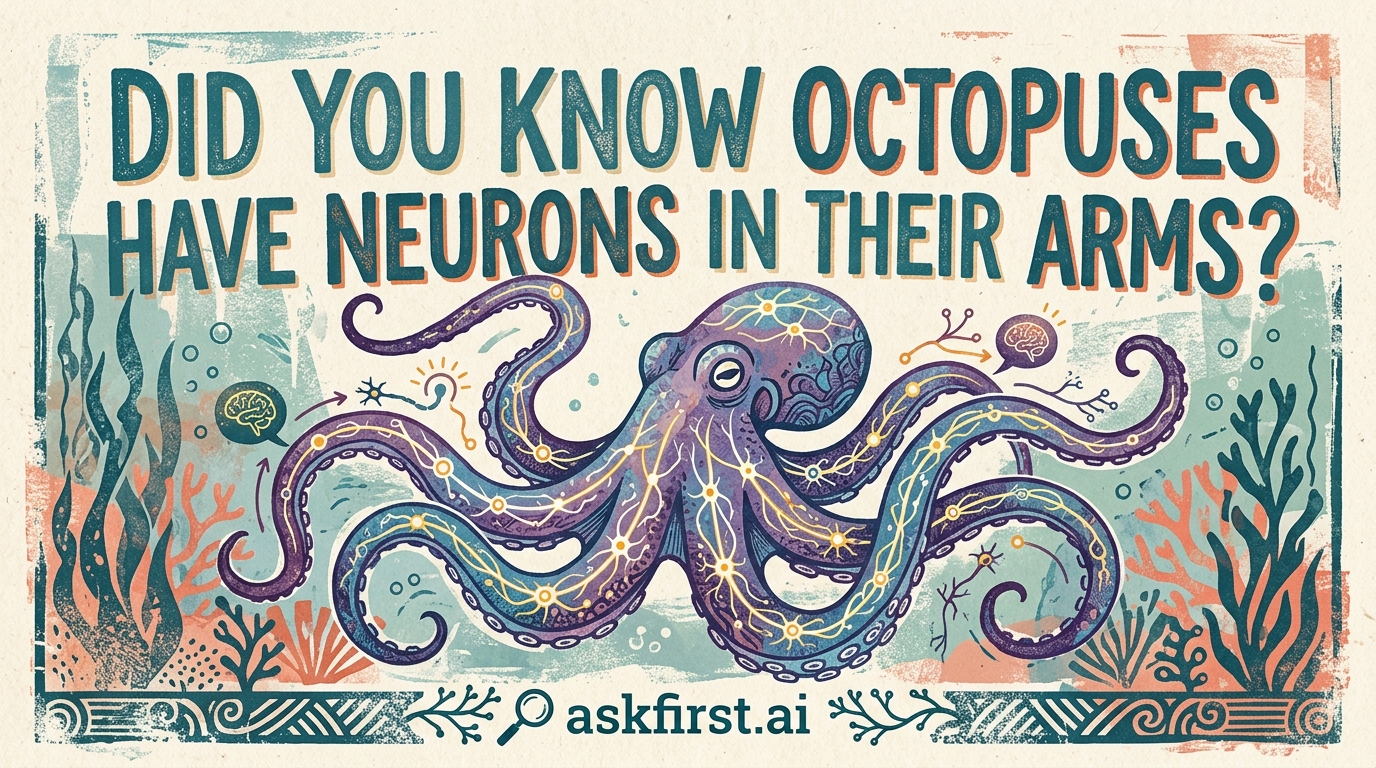
The Distributed Intelligence of Octopuses
It is a captivating biological reality that octopuses possess a highly sophisticated, decentralized nervous system. Unlike humans, who rely on a centralized brain for nearly all motor functions, the octopus distributes its neural power across its entire body.
How It Functions
- Neural Distribution: Roughly two-thirds of an octopus’s total neurons are located within its eight arms, not its head.
- Autonomous Movement: Each arm can perform complex tasks, such as foraging for food or exploring crevices, without direct input from the central brain.
- Sensory Processing: The arms can touch, taste, and react to stimuli independently, allowing the creature to multitask in ways that seem almost alien to observers.
Why This Matters
This unique evolutionary adaptation demonstrates that intelligence does not always require a centralized processor. By allowing the arms to act as 'local brains,' the octopus saves significant energy and reaction time, which is crucial for survival in the competitive depths of the ocean. This fascinating biological strategy continues to inspire robotics researchers working on soft-bodied AI and autonomous navigation systems today.