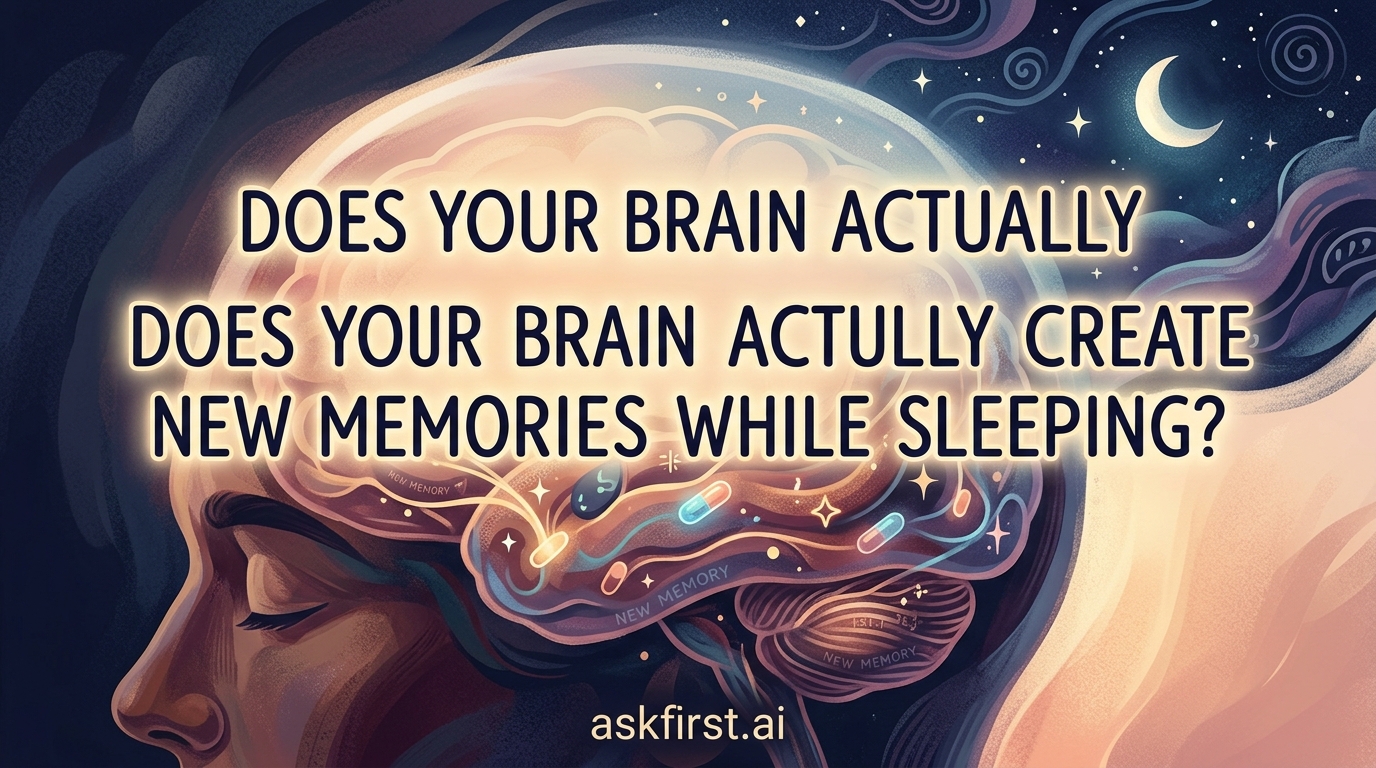
The Science of Nocturnal Memory Processing
Recent neurological research confirms that the brain is remarkably active during sleep. Rather than merely creating new memories from scratch, the brain acts as a dynamic processor. It undergoes a vital transition called memory consolidation, where information gathered throughout the day is transformed into long-term storage.
Key Mechanisms During Sleep:
- Synaptic Homeostasis: The brain reviews neural connections to determine which experiences are essential and which can be discarded.
- Replay Phenomenon: Neural pathways activated during learning are frequently 'replayed' at high speeds during REM cycles, effectively cementing skills or facts.
- Integration: New information is cross-referenced with existing knowledge, fostering creative problem-solving and deeper understanding.
Conclusion: While the brain is not creating memories out of thin air, sleep is the critical phase where raw data becomes a permanent part of the human cognitive landscape. Without this nocturnal reorganization, the capacity to retain information would be severely compromised, proving that quality rest is an indispensable tool for intellectual growth and memory retention.