The Distributed Intelligence of Octopuses
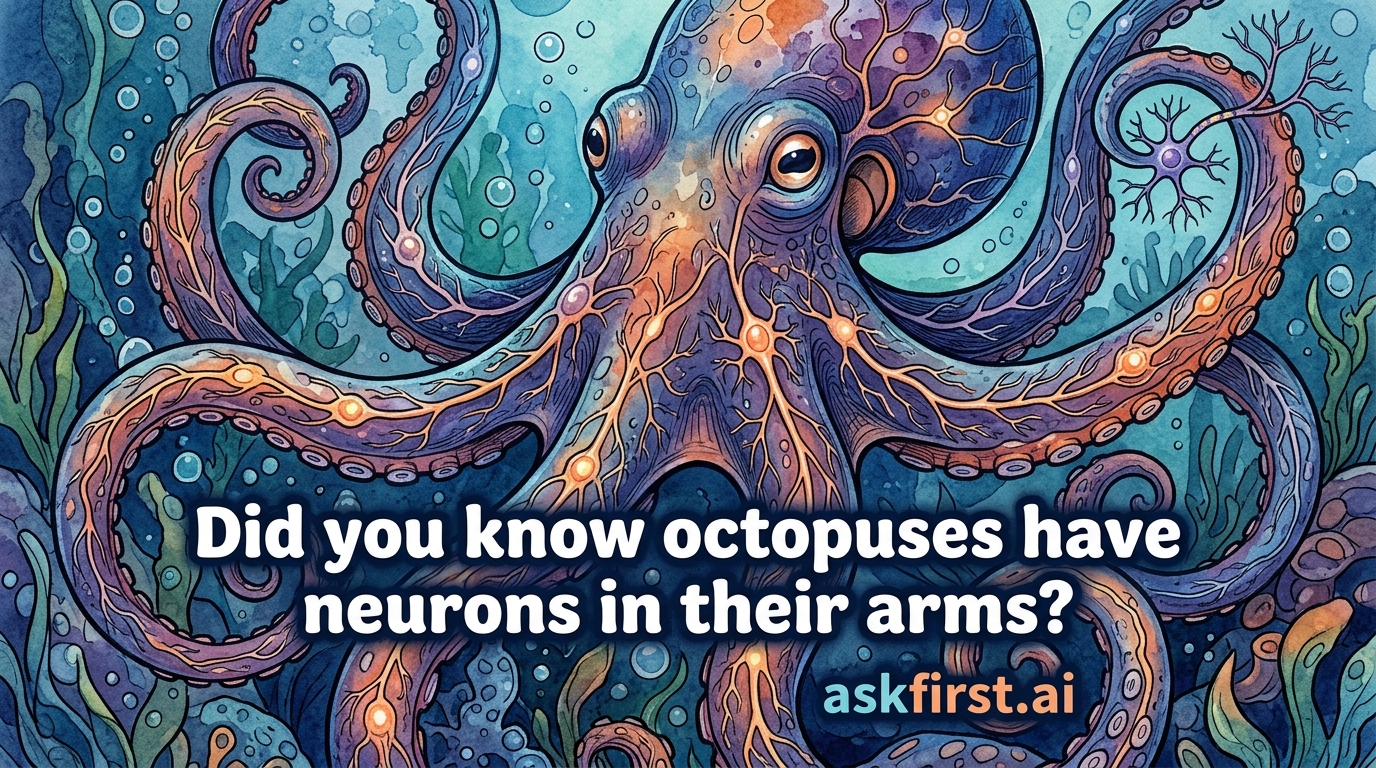
It is a fascinating biological fact that two-thirds of an octopus's neurons are located in its arms rather than its brain. This unique physiological structure allows the creature to operate with a form of decentralized intelligence that is entirely alien to humans.
- Autonomous Reflexes: Each arm can independently explore, touch, and taste the environment without receiving constant instructions from the central brain.
- Sensory Processing: The suckers contain highly specialized chemoreceptors that allow the limb to process sensory data locally, facilitating rapid reactions.
Why This Matters for Science
This phenomenon serves as a masterclass in evolutionary adaptation. Because these arms operate semi-autonomously, the octopus can multitask—tasting the seafloor, shifting its camouflage, and exploring crevices simultaneously. Researchers study this extraordinary decentralized nervous system to gain insights into soft robotics and modular artificial intelligence designs. Understanding how these invertebrates solve complex spatial problems without a centralized command center remains a pinnacle of marine biology research that continues to inspire engineers and scientists across the globe.