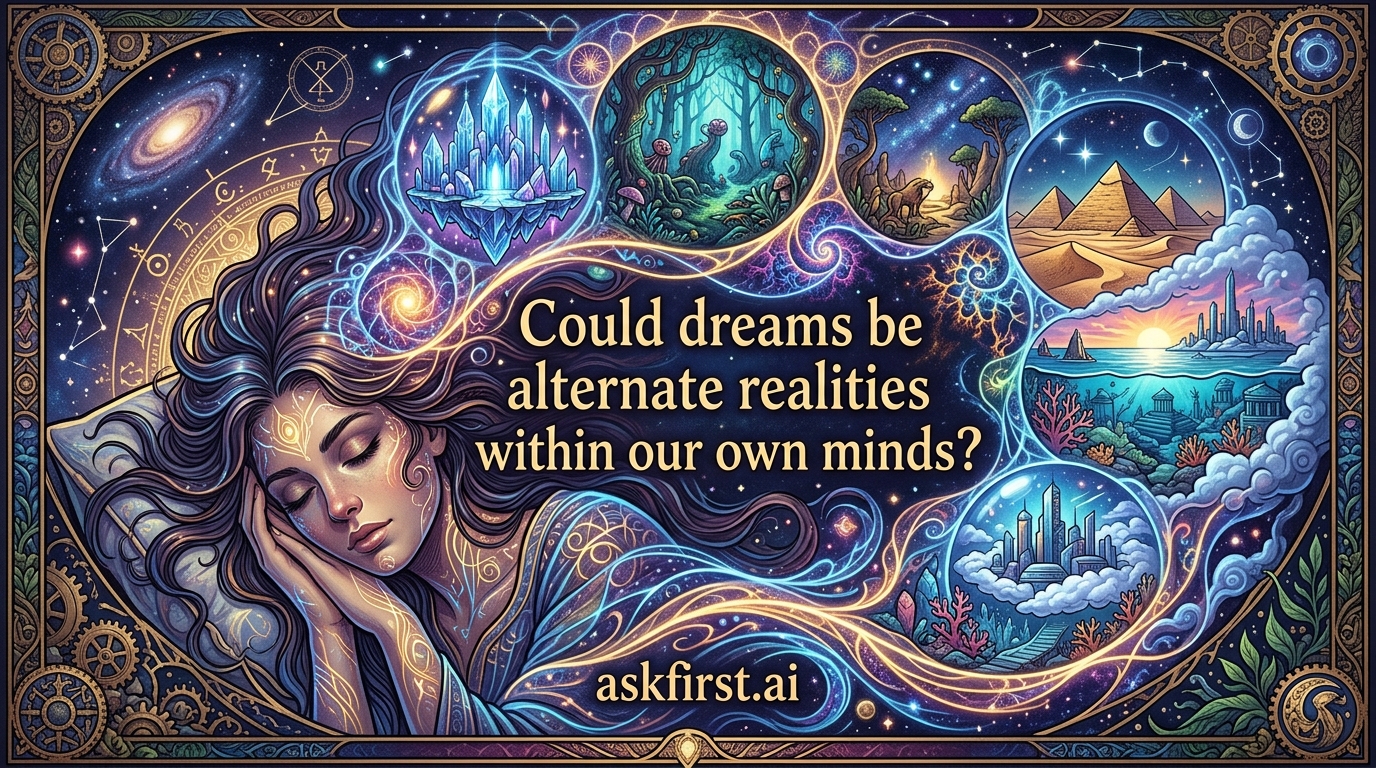
The Science of Dreaming
While neuroscientists classify dreaming as a byproduct of REM sleep—a process used for memory consolidation and emotional regulation—the concept of dreams as alternate realities remains a captivating scientific hypothesis. Modern research suggests:
- Synaptic Reorganization: Dreams may represent the brain firing complex neural pathways to reorganize information, creating vivid simulations that feel indistinguishable from waking life.
- Cognitive Complexity: The brain's ability to generate realistic physics, characters, and emotions suggests a profound level of cognitive autonomy that mirrors the complexity of our external existence.
Psychological Perspectives
Beyond mere biology, some theories explore if these mental landscapes offer a gateway to subconscious depth. If the brain creates a fully realized world, it effectively demonstrates that consciousness does not require external sensory input to manifest a reality. Consequently, exploring these dream states provides a fascinating lens into the limitless potential of the human mind, turning every night into a journey through uncharted intellectual territories.