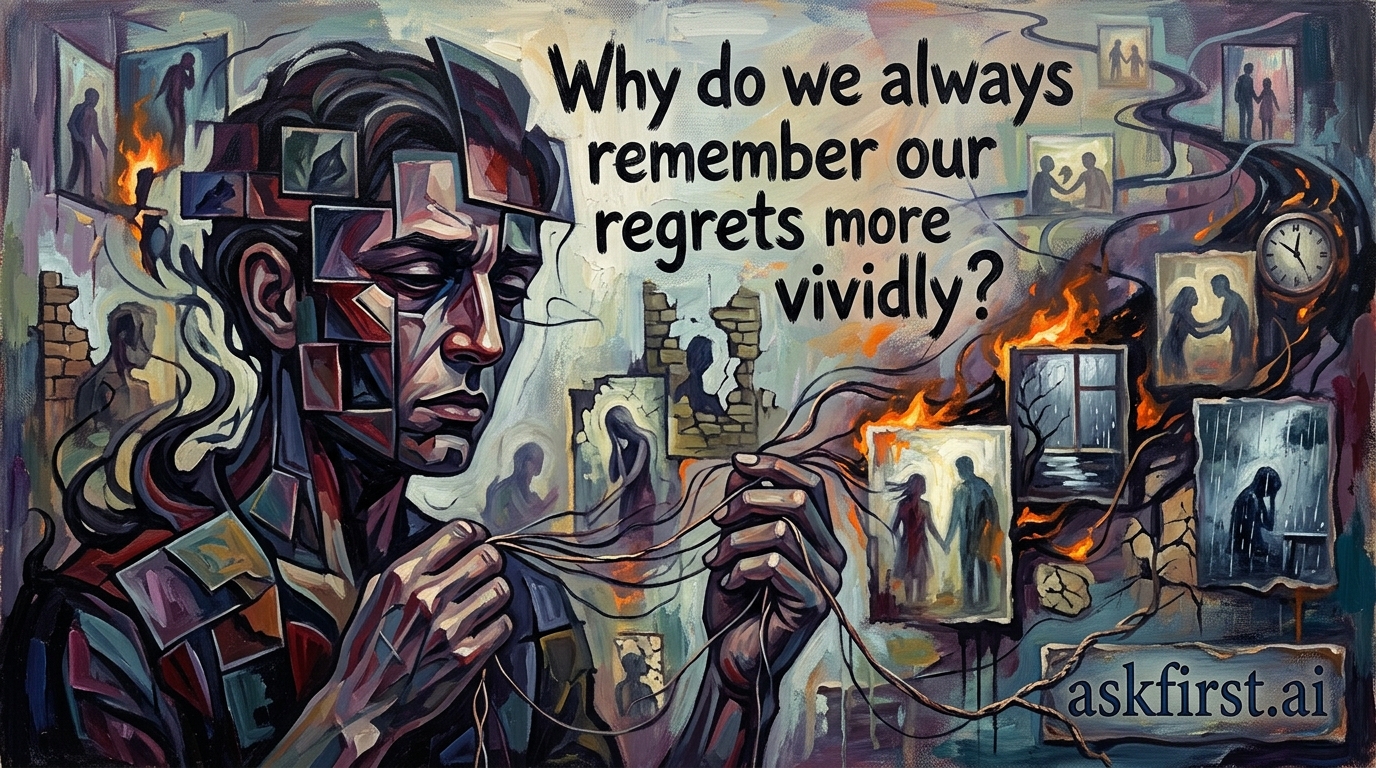
The Psychology of Persistent Memory
The human brain utilizes the Zeigarnik Effect to prioritize unfinished tasks or unresolved experiences. When a situation remains incomplete or carries a heavy emotional weight, the brain keeps that memory readily accessible in the working memory to ensure we eventually find closure.
Why Regrets Stick:
- Cognitive Salience: Regrets often represent deviations from personal values, causing the brain to flag them as "lessons" to avoid repeating identical mistakes in the future.
- Enhanced Encoding: Emotional intensity significantly boosts memory consolidation in the amygdala, making neural pathways associated with regrets far stronger than those of mundane daily events.
- Simulation Theory: The mind constantly runs "counterfactual thinking," or simulations of alternative outcomes, to refine decision-making processes for long-term success.
Harnessing the Insight
Rather than viewing these vivid memories as burdens, understand them as cognitive survival tools. By analyzing these experiences objectively, individuals can transform regret into actionable wisdom, effectively repurposing past discomfort into future mastery and improved personal navigation.