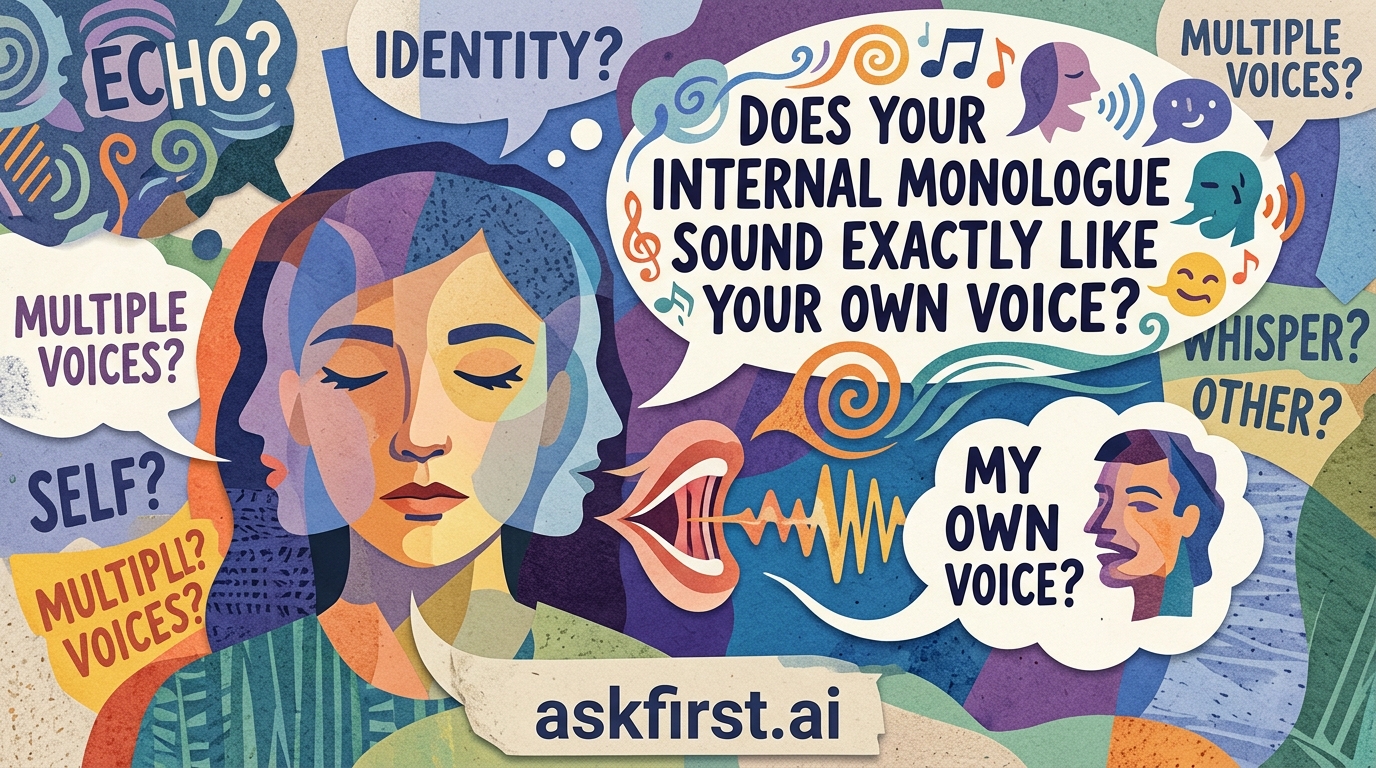
The Science of the Inner Voice
Many individuals assume that their internal dialogue is a direct audio recording of their physical vocal apparatus. However, cognitive science suggests this is an illusion of perception. While the experience feels like auditory speech, it is actually a complex neural simulation created by the brain.
Key Neuropsychological Perspectives
- Motor Simulation: Research indicates that the brain activates areas associated with motor planning—specifically those used for speech production—even without actual vocalization.
- Subjective Variance: Internal monologues often lack the precise acoustic signatures of one's physical voice, such as pitch fluctuations or resonance, instead manifesting as a more abstract, linguistic stream of consciousness.
- Neurodiversity: Not all people possess an internal monologue. Studies reveal that many individuals process thoughts through visual imagery, conceptual patterns, or non-verbal sensory data, illustrating that an audible inner voice is not a universal human trait.
Why This Phenomenon Matters
Understanding the mechanics of the internal narrative provides profound insights into human consciousness. By recognizing that the inner voice is a construct rather than a recording, people can better regulate their self-talk, mitigate cognitive biases, and appreciate the immense diversity in how human minds operate across the global population.