The Mechanism of Sensory Gating
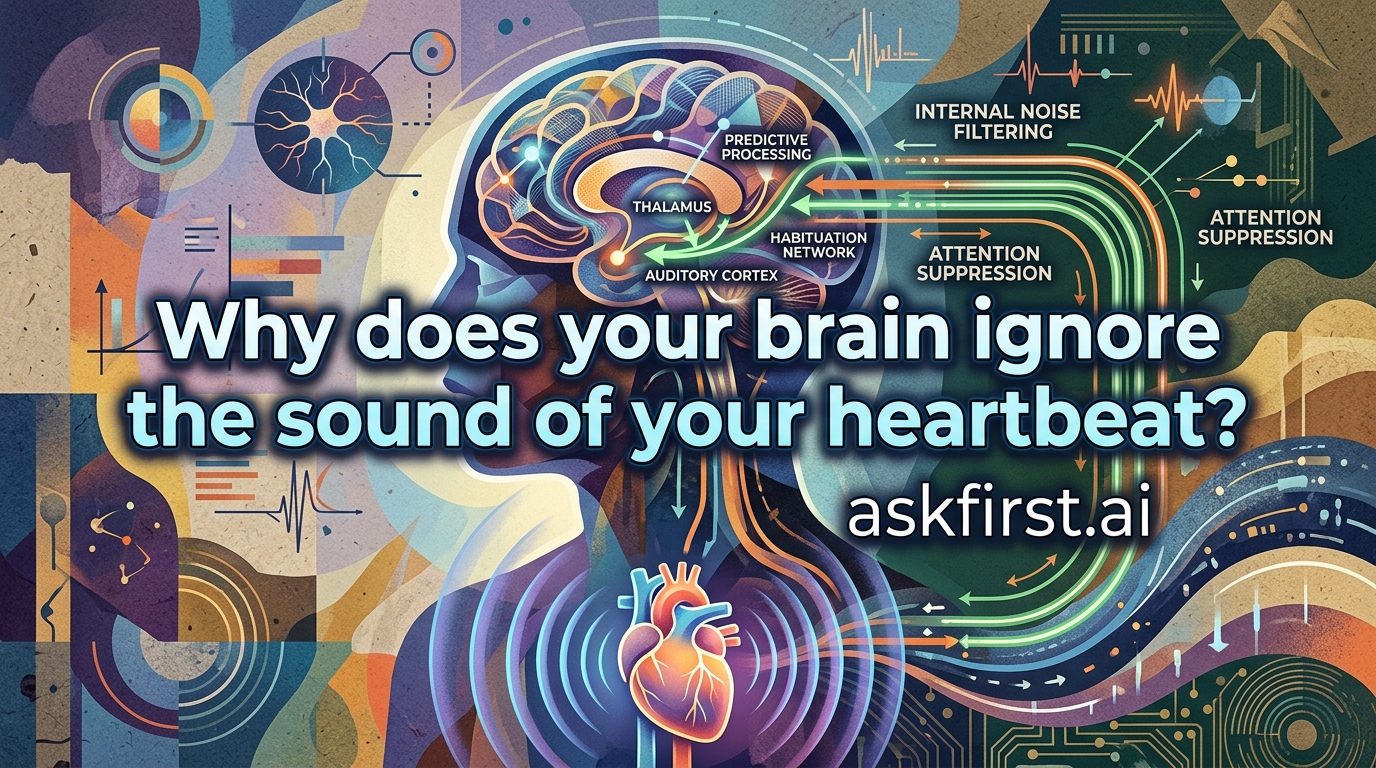
The brain employs a sophisticated neurological process known as sensory gating to filter out redundant or constant internal stimuli. Because the heartbeat is a rhythmic, predictable sound occurring from birth, the nervous system classifies it as 'background noise' to prioritize processing more urgent external information.
Why This Matters
- Efficiency: By suppressing the heartbeat, the brain conserves energy and computational resources.
- Attention Allocation: This filter prevents cognitive overload, allowing individuals to focus on complex auditory cues in their environment.
- Habituation: Through repetition, the brain learns that the internal pulse is not a threat, essentially 'muting' the sound via the thalamus.
When this suppression fails—such as during moments of extreme silence or heightened stress—individuals may experience autophony, where they suddenly become acutely aware of their own pulse, providing a fascinating glimpse into the incredible protective measures of human biology.