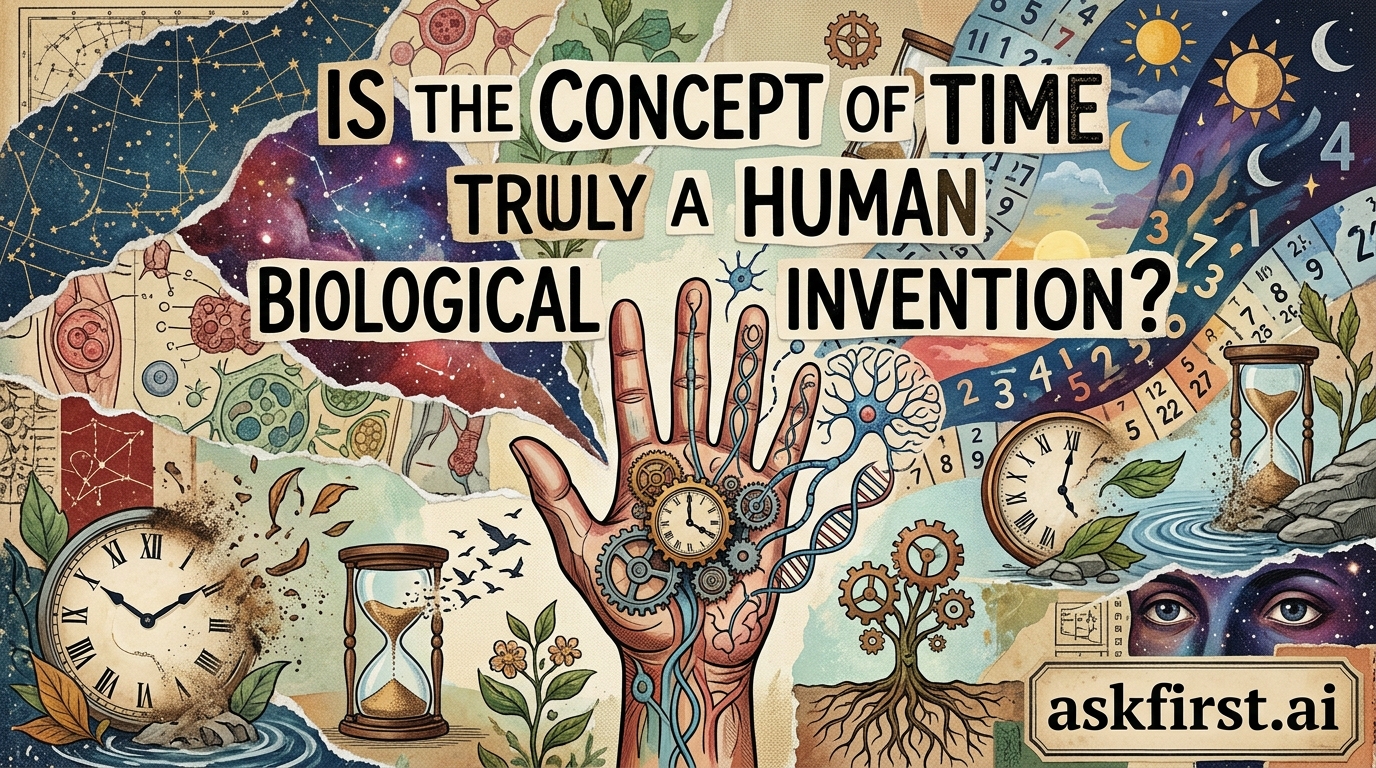
The Nature of Temporality
Scientific consensus distinguishes between physical time and biological perception. While the experience of time is deeply rooted in our internal circadian rhythms, the fundamental structure of time is an intrinsic feature of the universe.
- Physical Reality: According to the theory of relativity, time is a dimension that bends and warps with gravity and speed, existing independently of human cognition.
- Biological Perception: Humans utilize internal neural clocks, like the suprachiasmatic nucleus, to track duration. This process is a biological adaptation for survival, not the invention of time itself.
Why Time Is Universal
Entropy dictates that time has an "arrow," moving forward as disorder increases within isolated systems. Because this phenomenon occurs in distant stars and subatomic particles regardless of conscious observers, time exists as an objective framework of reality. Humans merely created calendars and clocks to measure and categorize this pre-existing flow, mapping our limited biological frames onto the vast, infinite expanse of cosmic history.