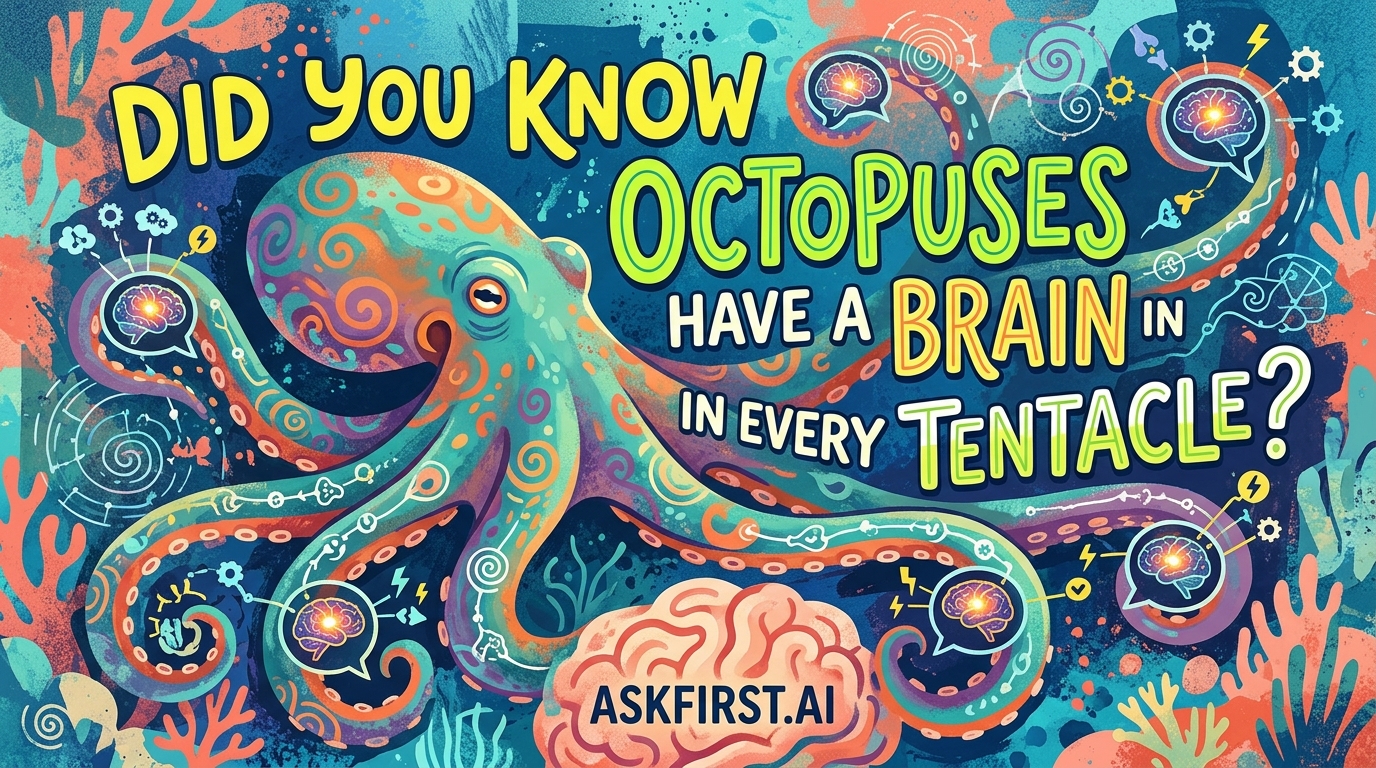
The Neural Marvel of the Octopus
While octopuses possess a central brain, they exhibit a decentralized nervous system that defies traditional biological understanding. Each of their eight arms contains a cluster of neurons known as a peripheral ganglion.
How Distributed Cognition Works
- Autonomy in Motion: These arm-brains allow tentacles to touch, taste, and react to surroundings without consulting the central brain first.
- Efficiency in Exploration: This unique biological design enables the creature to perform complex tasks simultaneously across multiple arms while moving through dense underwater environments.
- Reflexive Action: Sensory input gathered by suckers travels directly to the local arm ganglion, triggering rapid muscle responses that save crucial milliseconds.
This incredible evolutionary adaptation demonstrates that intelligence does not always require a singular, centralized command center. Instead, nature has crafted a sophisticated, parallel-processing machine that remains one of the most fascinating examples of cognitive architecture in the animal kingdom.