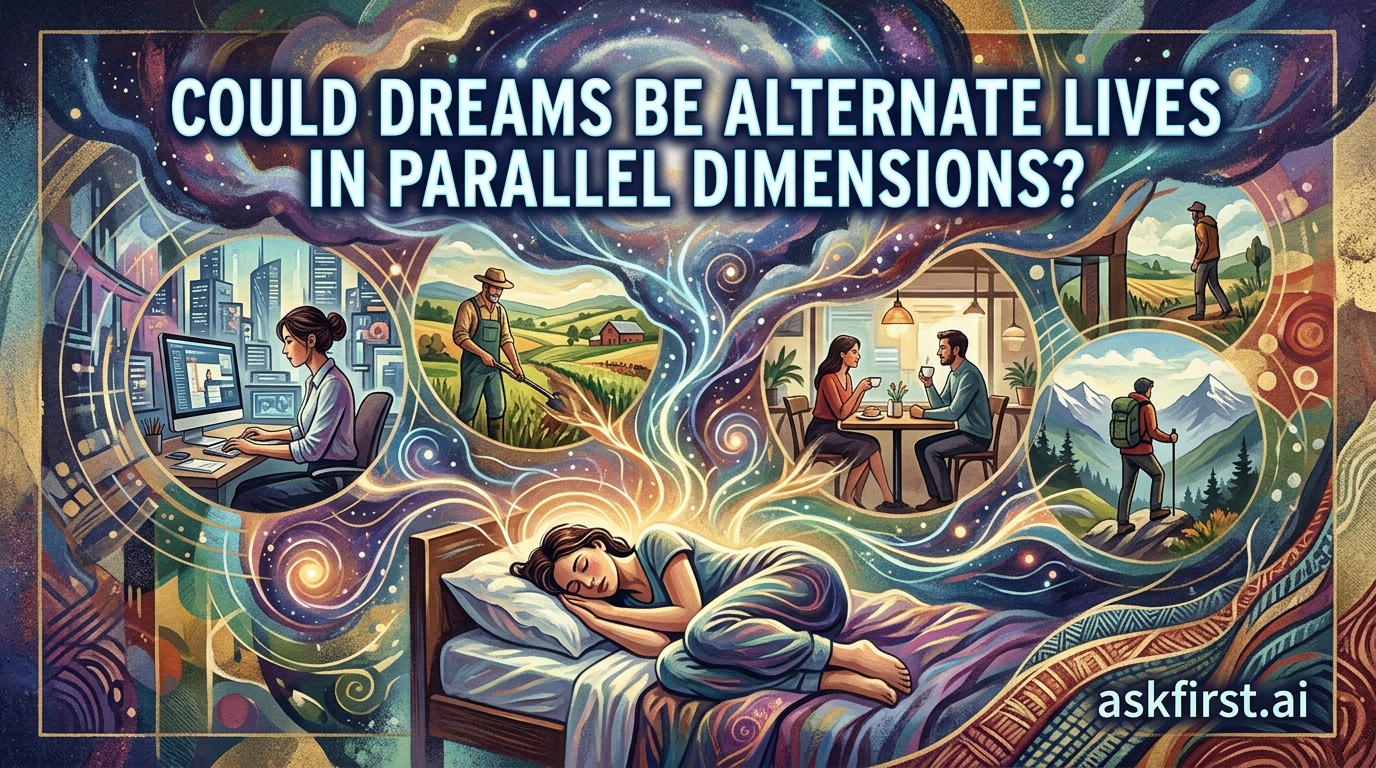
The Multiverse Theory of Dreaming
While science generally classifies dreams as the brain's way of processing subconscious emotions and memory consolidation, the multiverse hypothesis offers a fascinating perspective. This theory suggests that the choices made or paths not taken in this reality manifest as fully realized experiences elsewhere.
- The Connectivity Concept: Some theoretical physicists propose that parallel dimensions share vibrational signatures, which might allow consciousness to bridge these gaps during the REM sleep state.
- Cognitive Processing: Dreaming often features familiar faces in strange settings, which proponents of the dimensional theory argue could represent versions of those people living out different life trajectories.
- Lucidity and Awareness: Engaging in lucid dreaming provides a unique window where observers report feeling a distinct sense of 'location' rather than mere fantasy, fueling the belief that the dreamer is actually observing a functional, physical reality.
Scientific Perspective vs. Speculation
Mainstream neurology emphasizes that neurochemical processes, specifically the interaction between the amygdala and the prefrontal cortex, account for the vivid imagery experienced during sleep. However, the mystery of consciousness remains one of the greatest frontiers in science. Whether dreams are biological simulations or gateways to other dimensions, they serve as a powerful testament to the infinite complexity of the human mind and the vast, unknown structure of our cosmos.