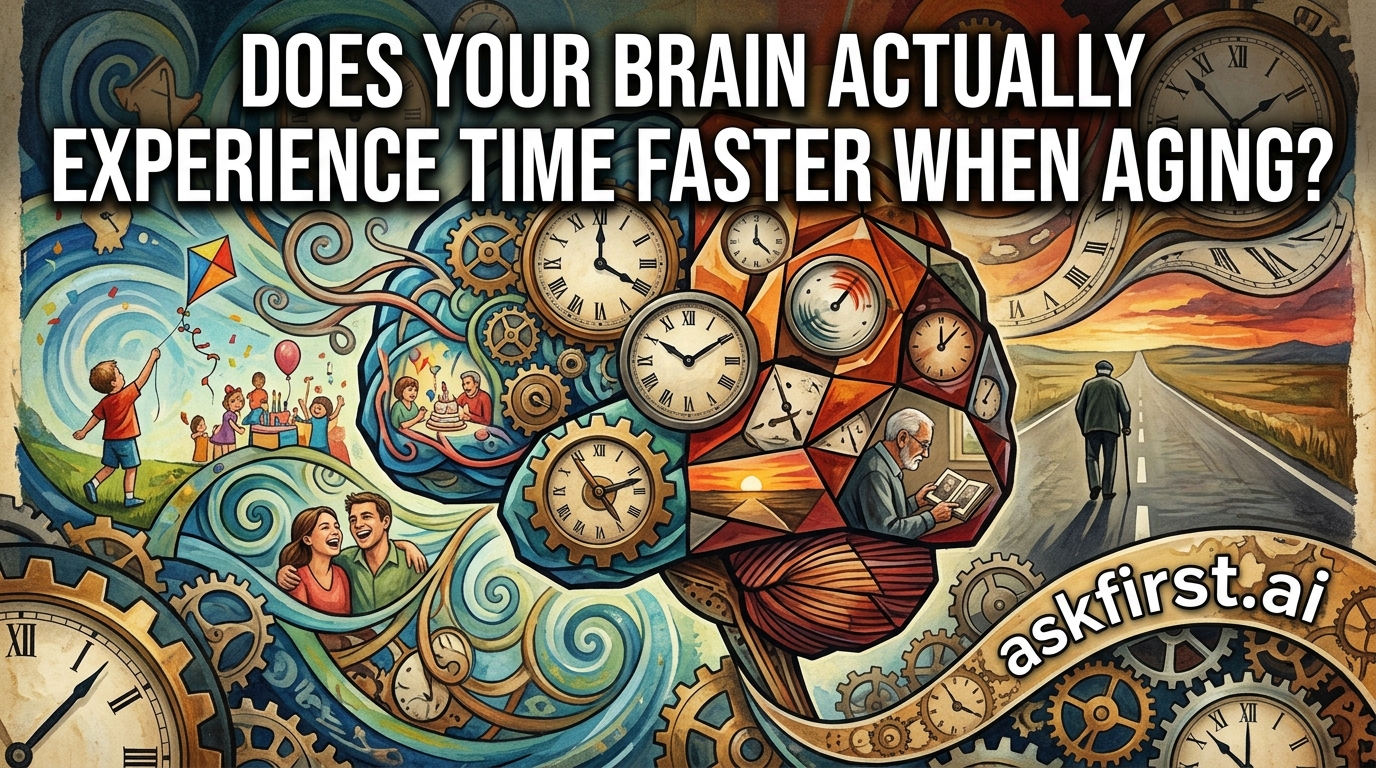
The Perception of Time
The sensation that time speeds up as humans grow older is a well-documented psychological phenomenon known as the proportional theory. While clocks tick at the same rate, the biological perception of time is fundamentally linked to how the brain processes information.
Why It Happens
- Novelty and Memory: In childhood, almost every experience is new, causing the brain to encode vast amounts of data. This high density of new memories makes time feel expanded.
- Neural Processing: As adults, the brain relies on familiar routines. Because these patterns require less intensive data processing, the subjective experience of duration compresses.
- Metabolic Rate: Some scientists suggest that metabolic changes influence neural firing rates, impacting how rapidly information is integrated into conscious awareness.
How to Slow Down Perception
To combat the feeling of rapid acceleration, one must actively introduce novelty into daily life. Learning new skills, traveling to unfamiliar locations, and engaging in challenging physical activities force the brain to increase its sampling rate of the environment. By flooding the neural network with unique sensory input, life can once again feel long, rich, and deeply expanded, regardless of one's chronological age.