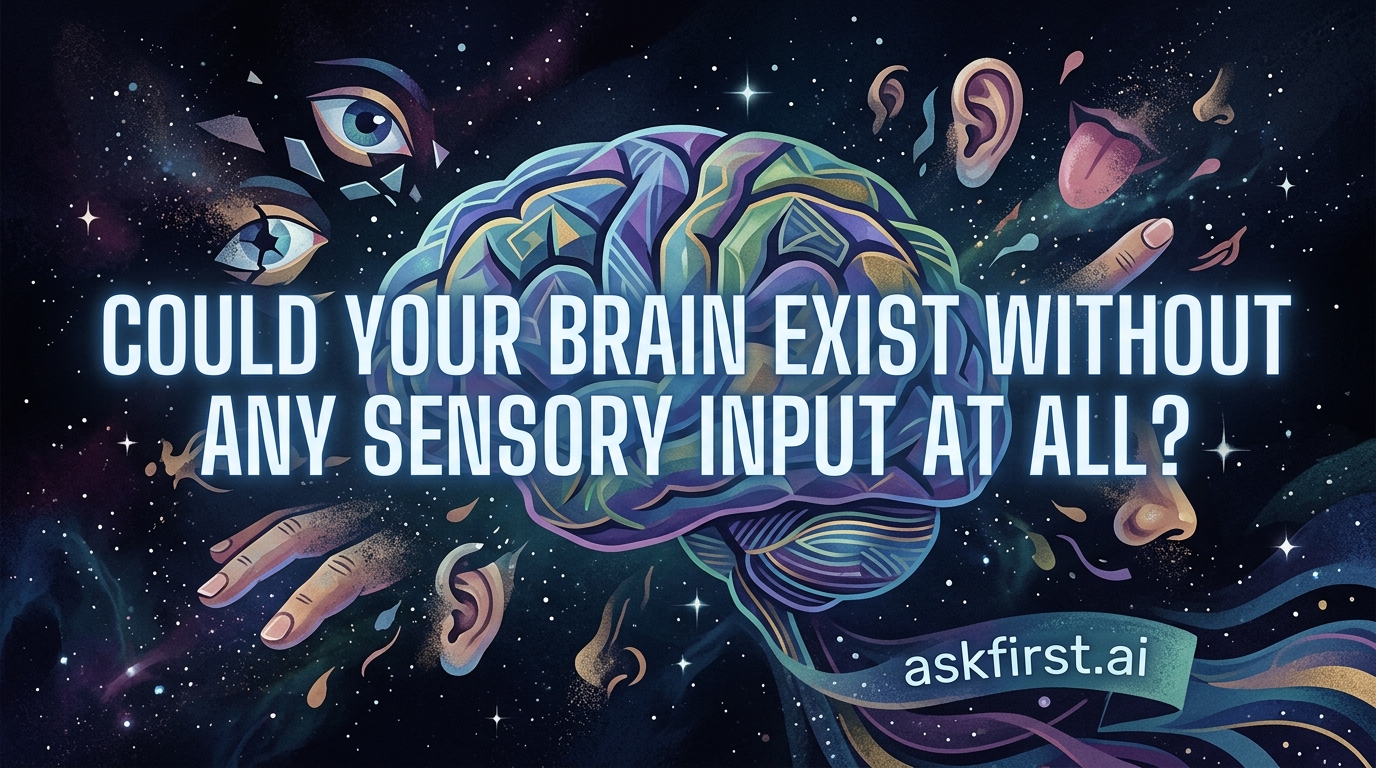
The Theoretical Possibility
Scientifically speaking, the human brain functions as an information-processing machine that requires constant stimulation to maintain coherence. If all sensory inputs were removed—a state often called sensory deprivation—the brain would not immediately cease to exist, but it would face profound physiological and psychological shifts.
Critical Factors of Survival
Internal Homeostasis: Even without external data, the brain must regulate internal processes like heart rate, respiration, and hormone production to maintain life. These biological signals provide a baseline of "internal" input that prevents total system shutdown.
Cognitive Hallucinations: When deprived of external data, the brain often attempts to create its own reality. Studies on isolated subjects demonstrate that the mind begins to generate internal imagery, sounds, and vivid narratives to compensate for the lack of objective input.
Neural Plasticity: The absence of stimuli would force the brain to reorganize itself. Prolonged isolation would lead to significant changes in how neurons fire, potentially causing long-term degradation of cognitive clarity and mental stability.
The Final Verdict
While a physical brain could technically survive in a vacuum of input, it would quickly detach from reality. Without the constant feedback loop between the external world and internal cognition, the "self" becomes impossible to sustain, leading to a state of perpetual, fragmented dreaming. Therefore, while existence continues, conscious identity would be fundamentally compromised.