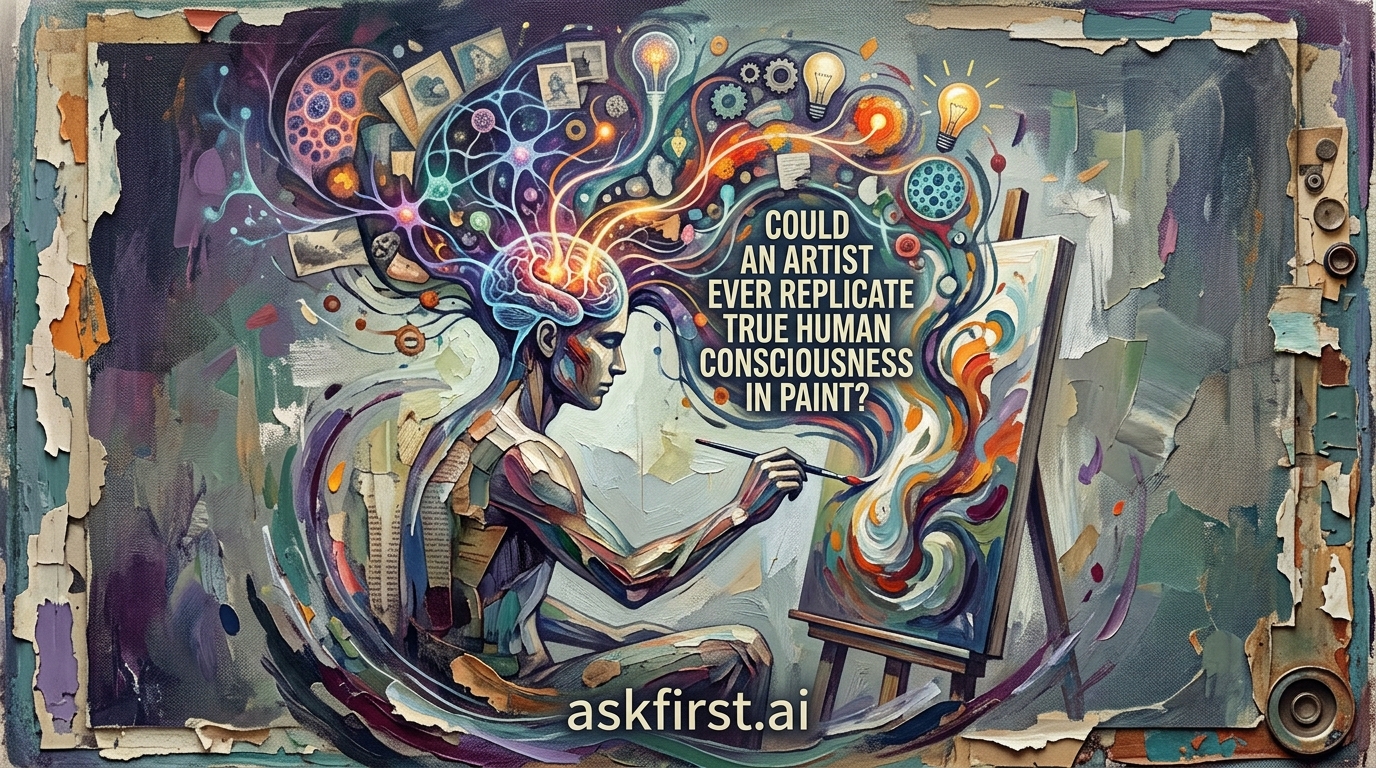
The Intersection of Art and Sentience
While artistic mastery allows for the breathtaking simulation of human emotion and physical likeness, the replication of true consciousness in paint remains a theoretical boundary. Consciousness involves subjective experience and self-awareness, which are fundamentally internal biological processes rather than external manifestations on a canvas.
- The Medium Limitation: Paint functions as a medium of representation, reflecting the creator's perception rather than establishing an autonomous mind.
- The Biological Requirement: Most modern neuroscientific theories posit that consciousness arises from complex, dynamic neural activity within living systems.
- Technological Projection: Humans often experience pareidolia, projecting consciousness onto artistic works, which demonstrates human empathy rather than a quality inherent in the pigment itself.
Ultimately, while art captures the essence and spirit of human experience, it acts as a mirror for the viewer’s own consciousness. Creating a sentient painting would require moving beyond art into the realm of synthetic biology and advanced cognitive engineering, forever bridging the gap between aesthetic inspiration and genuine, independent living awareness.