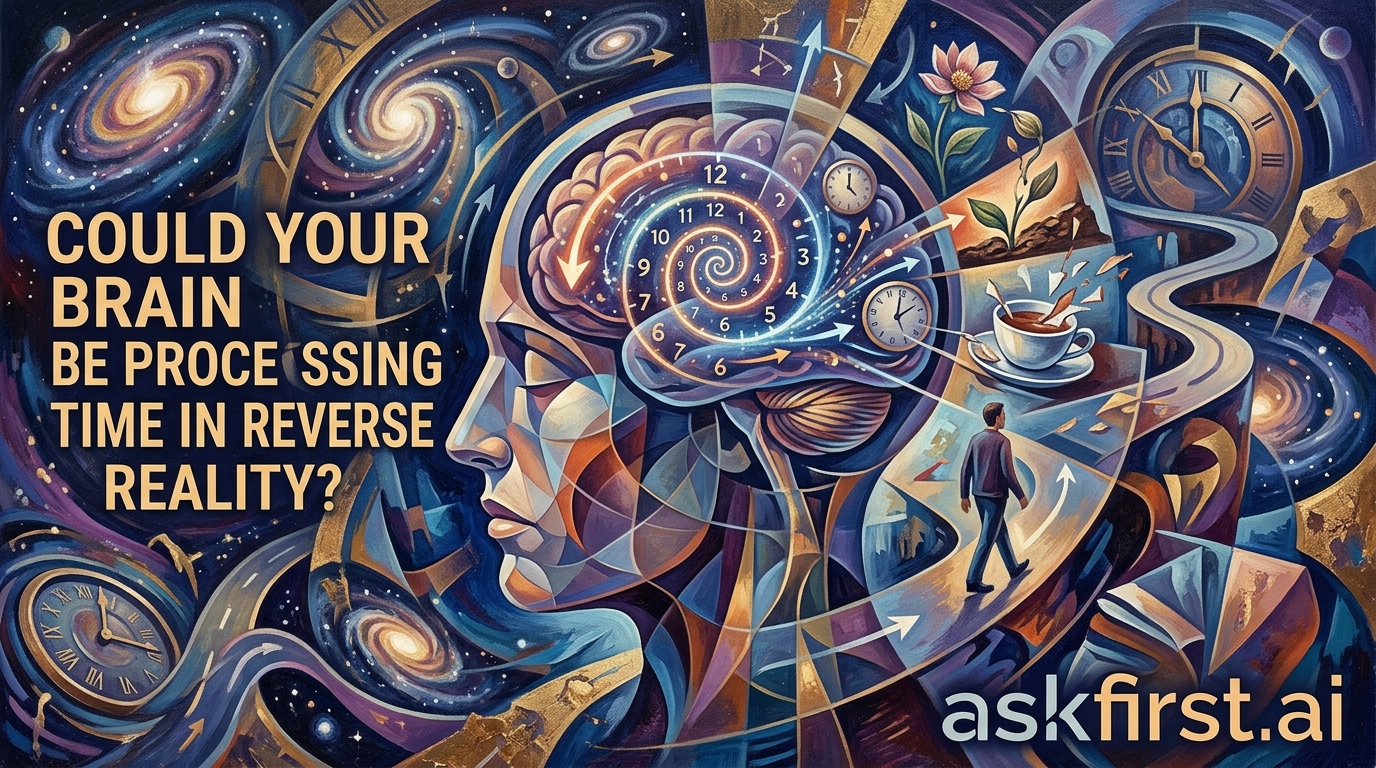
The Temporal Perception Paradox
Recent investigations into neurobiology suggest that the human brain does not perceive events instantaneously. Instead, temporal synthesis occurs, where the brain actively constructs a narrative of "now" by integrating sensory data over a window of approximately 80 milliseconds. This implies that consciousness operates on a slight delay relative to external reality.
Key Theoretical Frameworks
- Predictive Processing: The brain generates constant simulations of the immediate future, which the sensory inputs then calibrate. This mechanism creates the illusion of a seamless present while technically living in a feedback loop.
- Retrospective Labeling: Scientific models propose that the brain labels incoming data retroactively. Your perception of an event is actually a reconstruction of the signal after it has already occurred, effectively anchoring your consciousness to the past.
Why This Matters
By processing information in this manner, the brain effectively filters the chaos of raw physical reality into a coherent, linear experience. While time flows forward in the universe, the biological machinery inside your head works through complex neural buffering, proving that the "present" is truly a brilliant psychological construct.