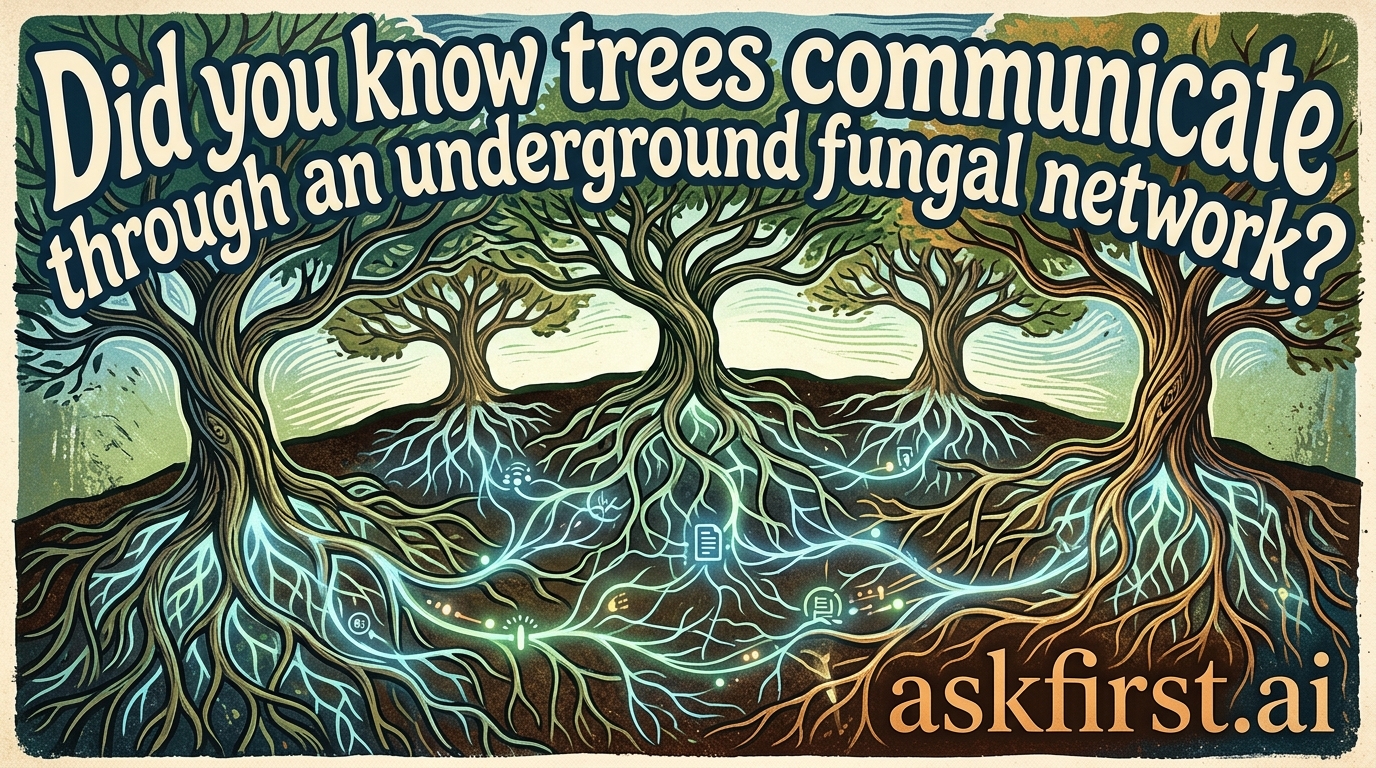
The Wood Wide Web: Nature’s Secret Infrastructure
Yes, forests are far more interactive than they appear! Beneath the soil lies a complex mycorrhizal network, a symbiotic relationship between tree roots and fungal mycelia. This subterranean superhighway allows trees to exchange resources and information with one another, effectively functioning as a cooperative social community.
Key Mechanisms of Forest Connectivity
- Resource Sharing: Larger, older trees—often called Mother Trees—can identify their kin and send excess sugar or nutrients to younger seedlings struggling in the shade.
- Warning Signals: When a tree is attacked by insects, it releases chemical signals into the network, triggering neighboring trees to boost their own internal defenses.
- Symbiotic Exchange: Fungi provide essential minerals like phosphorus and nitrogen to the trees in return for carbon-rich sugars produced through photosynthesis.
This incredible discovery redefines the concept of forest ecology. Rather than viewing nature as a place of constant competition, scientists now recognize it as a collaborative system where survival depends on interconnectedness and communication. This biological internet ensures the stability and long-term health of forest ecosystems worldwide.