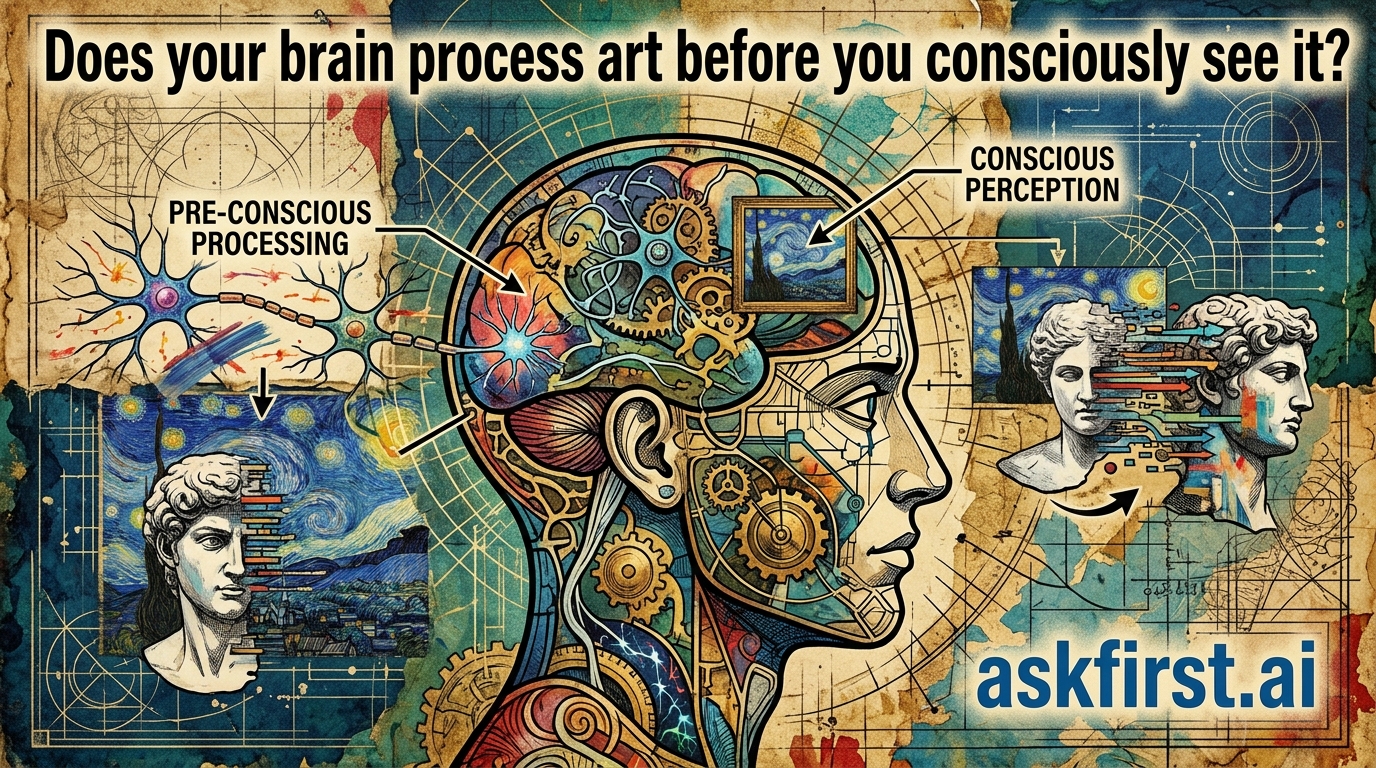
The Science of Subconscious Perception
Scientific research suggests that the human brain processes visual stimuli, including complex art, long before the conscious mind becomes aware of the image. This phenomenon relies on the visual pathway which bifurcates almost immediately upon entering the brain.
How It Works
- The Fast Track: Information travels rapidly to the amygdala and other limbic structures. These areas handle emotional response and pattern recognition at lightning speed, often initiating a 'gut reaction' before the frontal cortex even registers the content.
- The Conscious Delay: The secondary, slower route delivers data to the visual cortex. This is where detailed recognition, interpretation, and conscious awareness occur, typically milliseconds after the initial subconscious emotional impact.
Why This Matters
This cognitive architecture allows humans to react to potential beauty, danger, or social cues instantly. Art effectively 'hacks' this system by stimulating the subconscious emotional pathways, creating profound feelings of awe or curiosity before the analytical mind has the chance to categorize the piece as a simple painting or sculpture.