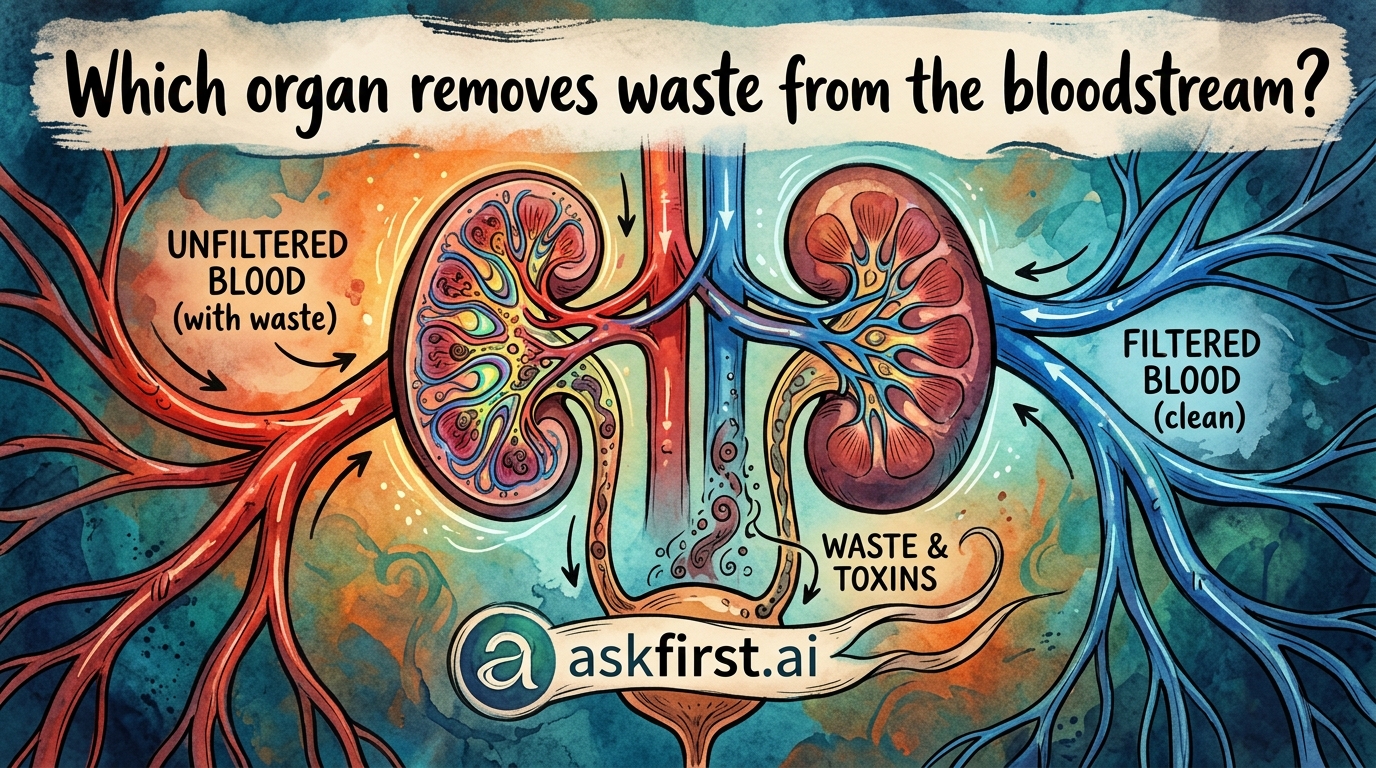
The primary organs responsible for removing waste from the bloodstream are the kidneys.
Here is how they function and which other organs assist in the process:
The Kidneys: These two bean-shaped organs act as a highly sophisticated filtration system. They filter your entire blood supply multiple times a day, removing urea, excess salts, water, and other metabolic waste products. These waste materials are then converted into urine, which travels to the bladder for excretion.
The Liver: While the kidneys focus on water-soluble waste, the liver is responsible for detoxifying the blood. It breaks down harmful substances, such as toxins, drugs, and alcohol, and processes nutrients so they can be safely used or excreted by the body.
The Lungs: They play a vital role by removing carbon dioxide, a waste product of cellular respiration, from the blood as you exhale.
The Skin: Through the process of sweating, the skin helps eliminate small amounts of waste products, such as excess salts and water, directly from the body.