The Science of Eternal Sweetness
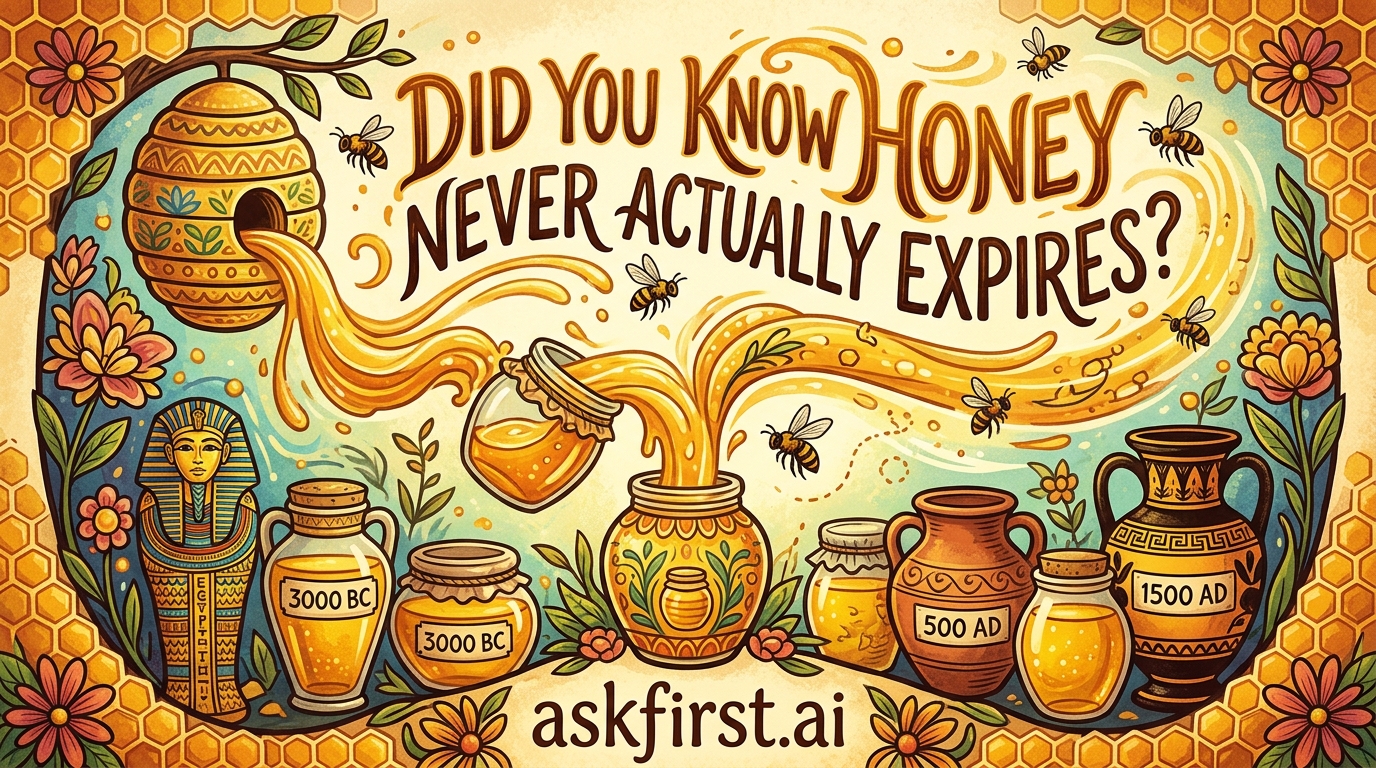
Honey is truly a marvel of the natural world, possessing a unique chemical composition that allows it to remain edible for thousands of years. Archaeologists have even discovered pots of honey in ancient Egyptian tombs that remain perfectly preserved and theoretically safe to consume today.
Why Honey Stays Fresh Forever
- Low Moisture Content: Honey is extremely hygroscopic, meaning it contains very little water, which prevents bacteria and microorganisms from surviving or multiplying.
- Natural Acidity: The pH level of honey typically ranges between 3 and 4.5, creating an acidic environment that is hostile to most harmful spoilage-causing bacteria.
- Hydrogen Peroxide Production: Bees introduce an enzyme called glucose oxidase into the nectar, which produces hydrogen peroxide as a byproduct, acting as a natural antibacterial shield.
Understanding Crystallization
While honey does not expire, it may change texture over time through a natural process called crystallization. This is not a sign of spoilage, but rather a reflection of the glucose content separating from the water. To restore crystallized honey to its smooth liquid state, simply place the jar in a warm water bath. This magical pantry staple remains one of the few foods that truly defies the aging process entirely.