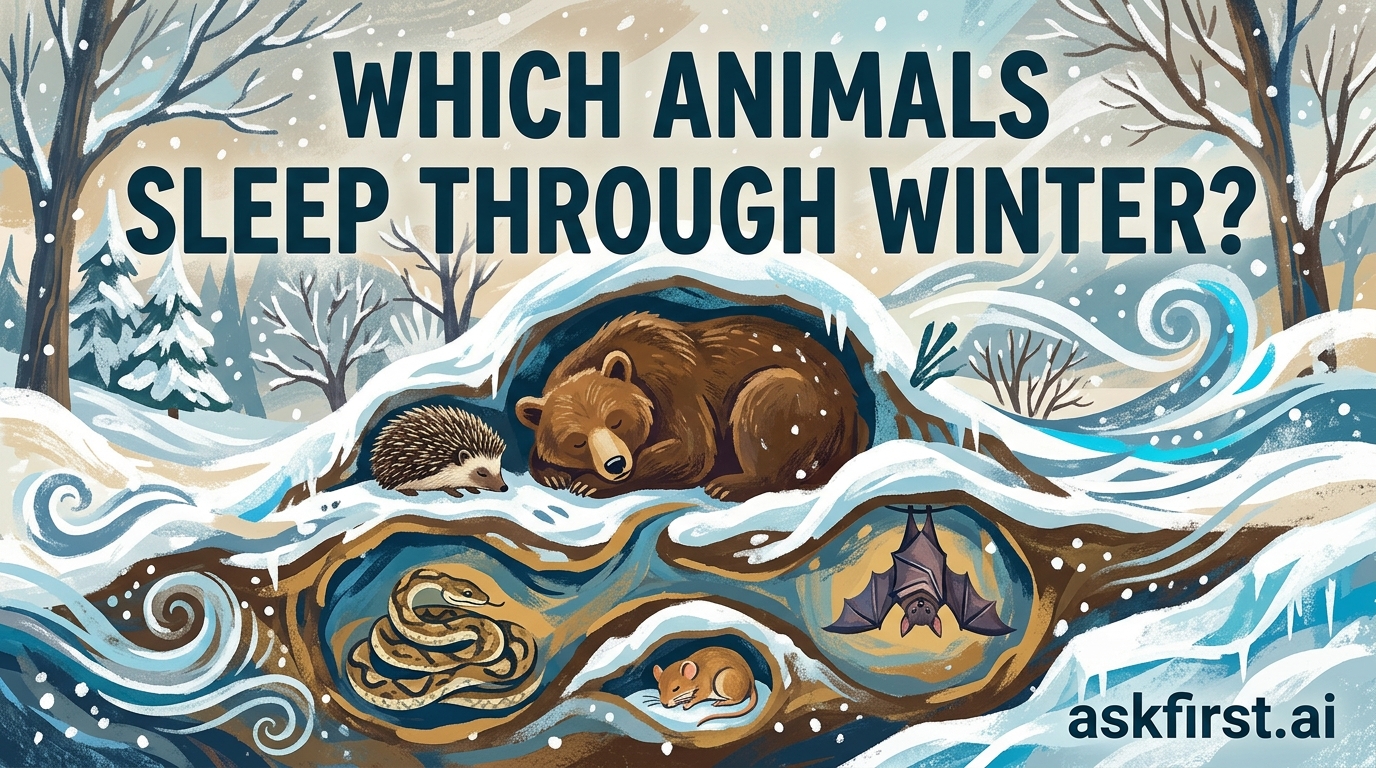
Hibernation: The Science of Winter Dormancy
Hibernation is a sophisticated physiological state characterized by a significant reduction in metabolic rate, body temperature, and heart rate, allowing animals to survive periods of extreme cold and food scarcity. While colloquially referred to as "sleeping through winter," true hibernation is a complex biological adaptation distinct from normal sleep.
1. Defining Hibernation vs. Torpor
It is essential to distinguish between true hibernators and those that enter torpor.
- True Hibernation: Involves profound physiological suppression. For example, the body temperature of an Arctic ground squirrel can drop below freezing (sub-zero) without tissue damage.
- Torpor: A shorter-term energy-saving state. Many animals, such as bears, exhibit "carnivore lethargy," where they remain in a state of light dormancy but can be roused quickly. They do not drop their body temperatures as drastically as deep hibernators.
2. Notable Animal Species
Many species across various taxonomic classes have evolved to survive winter through metabolic depression.
Mammals
- Rodents: The Arctic Ground Squirrel is the gold standard for hibernation, capable of surviving temperatures as low as -2.9°C. Hedgehogs and dormice are also classic hibernators that seek out insulated burrows to wait out the frost.
- Bears: While often cited as hibernators, bears are technically "super-torpor" animals. They survive on stored fat reserves, do not urinate or defecate for months, and maintain enough body heat to allow for the birth of cubs during the winter months.
- Bats: Many temperate bat species, such as the Little Brown Bat, enter deep hibernation in caves (hibernacula) where the temperature remains stable, drastically slowing their heart rate to as few as five beats per minute.
Reptiles and Amphibians
- Wood Frogs: These amphibians are biological marvels; they allow their blood and tissues to partially freeze, relying on high concentrations of glucose (a natural antifreeze) to prevent cellular rupture.
- Snakes and Turtles: Often referred to as brumation, these ectotherms rely on ambient environmental temperatures. They seek out "hibernacula" below the frost line to avoid freezing solid.
3. The Biological Process: A Step-by-Step Guide
Animals prepare for hibernation through a specific cycle:
- Hyperphagia: During late summer and autumn, animals experience an intense hunger drive, consuming massive amounts of food to build adipose tissue (fat).
- Selection of Hibernaculum: Animals seek protected environments—burrows, hollow logs, or deep caves—that provide thermal stability.
- Metabolic Suppression: Once the environmental trigger (day length or temperature drop) occurs, the endocrine system signals the body to lower the metabolic rate by up to 98%.
- Arousal: Periodic "arousal" events occur throughout the winter. Animals briefly raise their body temperature to restore immune function or eliminate metabolic waste before returning to dormancy.
4. Pros and Cons of Hibernation
- Pros: Survival in habitats where food is non-existent; protection from winter predators; energy conservation.
- Cons: Vulnerability to predation while dormant; high risk of death if fat stores are insufficient; susceptibility to changing climate patterns (e.g., waking too early due to unseasonably warm weather).
5. Future Trends and Research
Climate change poses a significant threat to hibernating species. Unpredictable winters cause animals to wake prematurely, leading to mass starvation. Scientists are currently studying the genetic triggers of hibernation, hoping to apply these mechanisms to human medicine, specifically for long-duration space travel or trauma surgery, where inducing a "suspended animation" state could save lives.