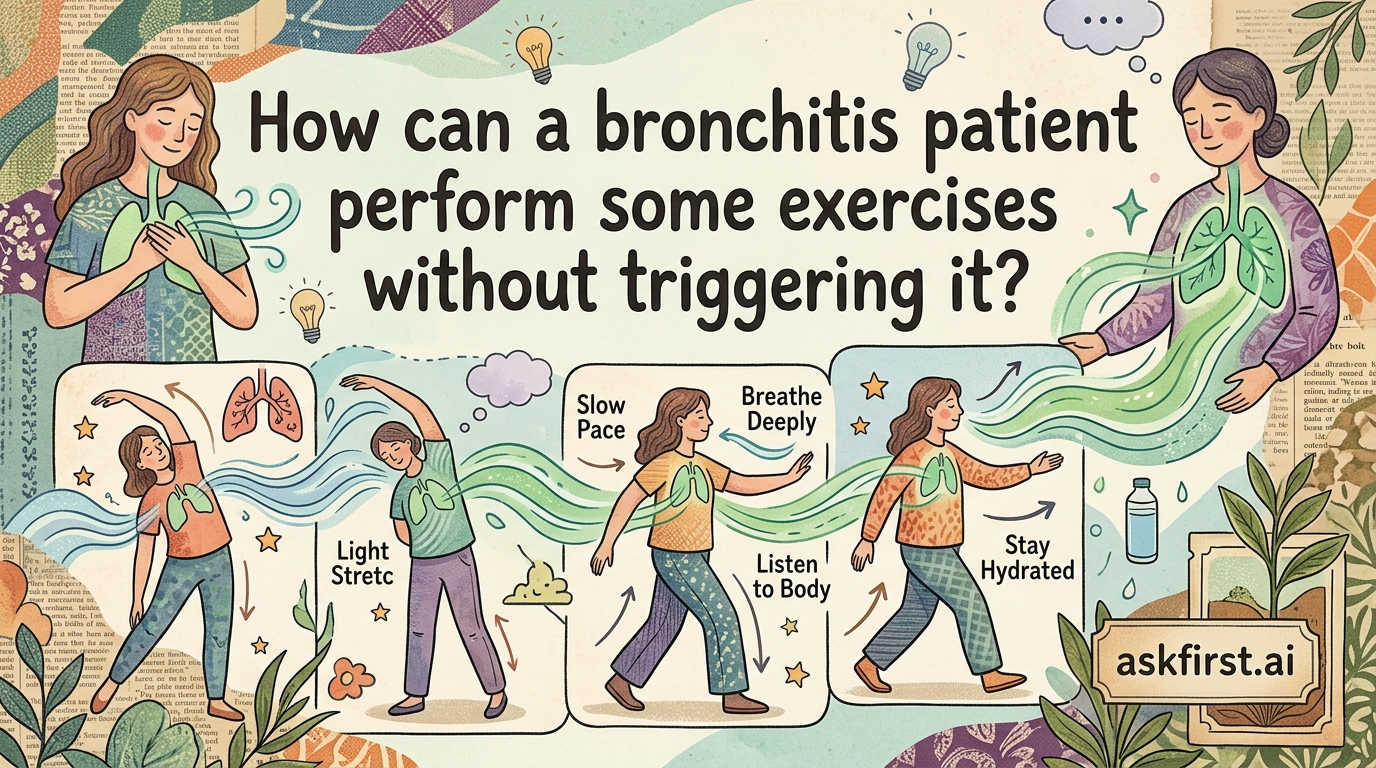
Managing bronchitis while attempting to maintain physical fitness requires a delicate balance between restorative movement and the preservation of respiratory health. Bronchitis, whether acute (often viral) or chronic (such as in COPD), causes inflammation of the bronchial tubes, leading to mucus production, coughing, and significant airway sensitivity. The primary challenge is that exercise increases the body’s demand for oxygen, which forces the lungs to work harder, potentially triggering bronchospasms or debilitating coughing fits.
Understanding the Physiological Constraints
When you have bronchitis, your airways are already narrowed due to inflammation and excess phlegm. According to Dr. Noah Lechtzin in The Johns Hopkins Guide to Pulmonary Health, physical exertion can exacerbate symptoms because rapid, deep breathing—especially in cool or dry air—can irritate the bronchial lining. The goal of exercising with bronchitis is not to reach peak cardiovascular output, but to improve circulation and reduce systemic inflammation without stressing the pulmonary system.
Prioritizing Low-Intensity, Controlled Movement
The golden rule for exercising with bronchitis is to keep the heart rate in a range where you can still comfortably hold a conversation. If you are gasping for air, you are triggering the very system that is currently compromised.
- Gentle Walking: Instead of brisk power walking, opt for a slow, rhythmic stroll. Focus on maintaining a steady pace that does not cause you to breathe through your mouth. Mouth breathing bypasses the nose's natural filtering and humidifying system, which can introduce cold, dry air directly into the inflamed bronchi.
- Restorative Yoga: Focus on floor-based poses that emphasize gentle stretching rather than "power" flows. In Yoga for Respiratory Health by Dr. Timothy McCall, he suggests avoiding inversions (where the heart is above the head) if you have a persistent cough, as this can increase pressure in the chest and trigger spasms. Instead, prioritize seated forward folds and gentle spinal twists, which help open the thoracic cavity without requiring heavy aerobic effort.
- Seated Calisthenics: If standing feels taxing, perform simple arm circles or leg extensions while seated in a sturdy chair. This keeps the blood flowing without the oxygen demand required by full-body stabilization.
Environmental Control: The Critical Variable
The environment in which you exercise is often more important than the exercise itself when you are recovering from a respiratory ailment.
- Humidity and Temperature: Avoid exercising in cold, dry air. Cold air is a potent trigger for bronchoconstriction. If you must exercise indoors, ensure the air is warm and slightly humid. If you have access to a humidifier, keep it running in your workout space.
- Air Quality: Avoid areas with high pollen, dust, or pollution. If you are prone to exercise-induced asthma—a common complication of bronchitis—consult your physician about using a short-acting beta-agonist (inhaler) roughly 15 to 20 minutes before beginning your session, as recommended in the clinical guidelines published by the American Thoracic Society.
- The "Talk Test": If you cannot say a complete sentence without stopping to breathe, you are working too hard. Scale back immediately.
Paced Breathing Techniques
Integrating Paced Breathing or Pursed-Lip Breathing can significantly improve your tolerance to movement. Pursed-lip breathing, a technique often taught in pulmonary rehabilitation programs, involves inhaling through the nose for two seconds and exhaling slowly through pursed lips for four seconds. This technique, highlighted in The Pulmonary Rehabilitation Handbook by Dr. Linda Nici, creates a small amount of backpressure in the airways, which keeps them open longer and allows for more efficient carbon dioxide expulsion. Practice this during your walks or stretches to keep your respiratory rate stable.
When to Stop Immediately
It is vital to recognize the "red flags" that indicate your body is not ready for physical activity. If you experience any of the following, cease activity immediately and consult your healthcare provider:
- Wheezing: This indicates that your airways are actively narrowing.
- Chest Pain: Any tightness or stabbing sensation in the chest area can signal cardiac strain or severe pulmonary distress.
- Increased Phlegm Color: If your mucus changes from clear or white to yellow, green, or contains blood, this suggests a secondary infection that requires medical intervention.
- Dizziness or Lightheadedness: This is a clear sign of insufficient oxygenation.
Conclusion
Exercising with bronchitis is not about "pushing through the pain." It is about maintaining mobility while respecting the inflammatory state of your respiratory tract. By focusing on low-intensity, rhythmic movements, controlling the temperature and humidity of your environment, and utilizing pursed-lip breathing, you can support your recovery process rather than hinder it. Always remember that rest is a form of active recovery; if your body demands sleep or stillness, give it that, as the repair of the bronchial lining is the most important physiological task your body is currently undertaking. Always consult with your primary care physician or a pulmonologist before starting any exercise regimen while recovering from a respiratory illness to ensure that your specific lung function is ready for the added stress.