The Psychological and Physiological Mechanics of the Clinical Encounter
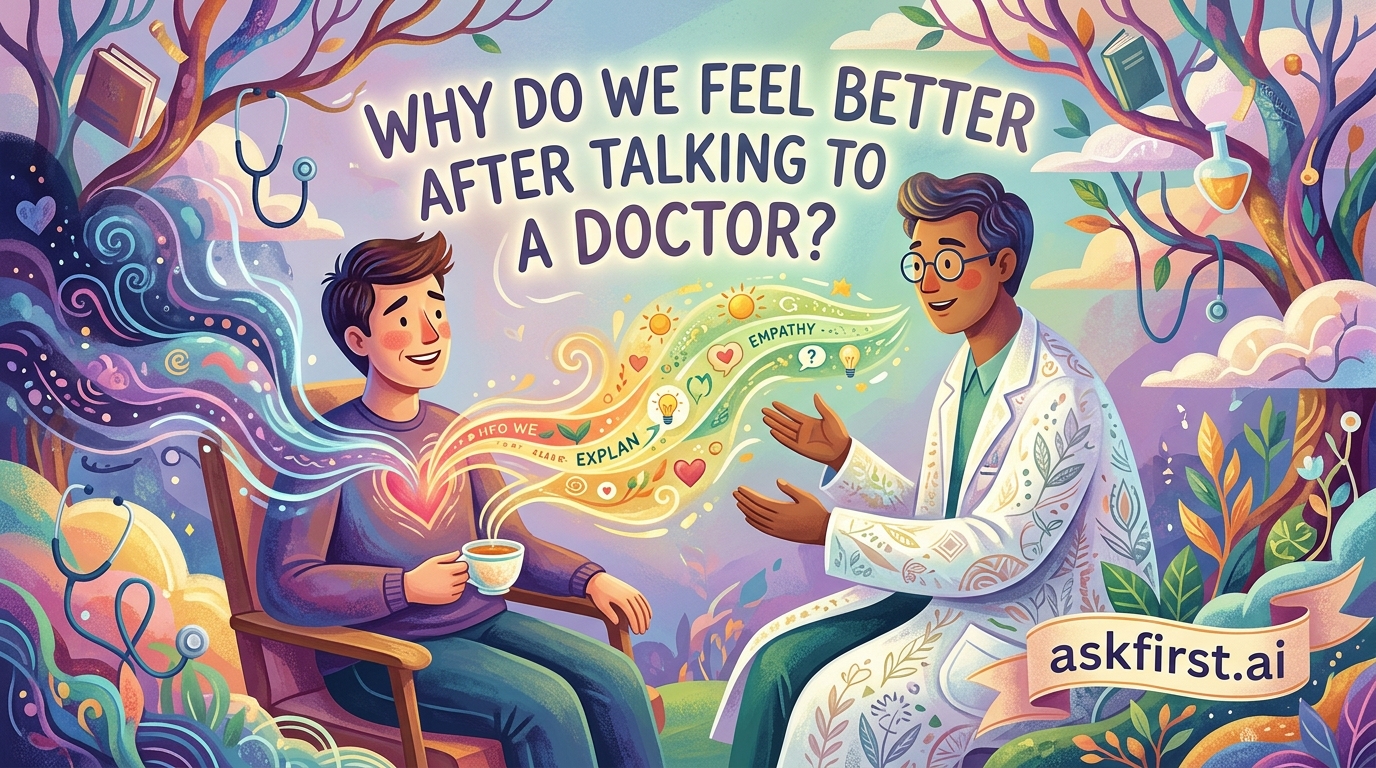
The phenomenon of feeling better after visiting a doctor is rarely attributed to a single cause. Instead, it is a complex intersection of neurobiology, social psychology, and the symbolic power of the medical profession. When a patient leaves a consultation room feeling a sense of relief—even before the medication has taken effect or the diagnostic results are returned—they are experiencing the "clinical effect." This experience is rooted in human evolution, the dynamics of professional trust, and the tangible reduction of cognitive uncertainty.
The Neurobiology of the Therapeutic Alliance
At the core of the relief felt during a medical consultation is the therapeutic alliance. According to Dr. Jerome Frank, a psychiatrist and author of the seminal work Persuasion and Healing, the medical encounter functions as a ritual that mobilizes the patient’s expectation of recovery. When a patient interacts with a physician, the brain’s prefrontal cortex, which is often overwhelmed by the "noise" of health anxiety, begins to settle.
Research published in The New England Journal of Medicine highlights that the mere act of being heard by an authority figure triggers the release of endogenous opioids and dopamine. This neurochemical response is not just "in the head"; it is a physiological regulation of the autonomic nervous system. When a doctor listens attentively, the patient’s heart rate often slows, and cortisol levels—the primary stress hormone—begin to normalize. This is effectively a biological manifestation of feeling "held" or cared for, which provides an immediate analgesic effect on the psyche.
The Cognitive Reduction of Uncertainty
Human beings are evolutionarily wired to fear the unknown. When someone suffers from unexplained symptoms, the brain enters a state of hyper-vigilance, constantly scanning for threats. This state of uncertainty is often more exhausting than the physical symptoms themselves.
By providing a diagnosis, or even a professional opinion that rules out catastrophic illness, the doctor acts as an information filter. In his book The Checklist Manifesto, Atul Gawande explains how the structured nature of a medical visit creates a sense of order. When a doctor labels an illness, they are giving the patient a "map" for their suffering. Even if the news is not entirely positive, knowing the name and trajectory of a condition allows the patient to shift from a state of reactive panic to a state of proactive management. This transition from "What is happening to me?" to "Here is the plan" is a powerful psychological shift that reduces the cognitive load on the patient significantly.
The Ritual of the Examination
The physical examination is one of the most underrated components of the healing process. In the modern era of high-tech diagnostics, the hands-on aspect of medicine—palpation, listening to the heart, checking reflexes—retains a profound symbolic significance.
Dr. Abraham Verghese, a professor at Stanford University School of Medicine and author of Cutting for Stone, has long argued that the physical exam is a ritual that validates the patient’s humanity. When a physician touches a patient, it signals a commitment to their wellbeing. This ritualistic interaction creates a "sacred space" where the patient feels validated. This validation is essential; it confirms that the patient’s internal experience of pain or discomfort is recognized by an objective, expert observer. When a patient feels "seen," the isolation of illness begins to break, which is a critical step in the recovery process.
The Power of Authority and the Placebo Effect
We must acknowledge the role of the placebo effect, which, in a clinical setting, is essentially the "contextual effect." As noted by Dr. Ted Kaptchuk of Harvard Medical School, the placebo effect is not merely a trick of the mind but a robust physiological response to the context of care.
The white coat, the sterile environment of the clinic, the diplomas on the wall, and the authoritative tone of the physician all serve as sensory cues that prime the body to expect relief. If the patient trusts the institution of medicine, these cues trigger a top-down modulation of the nervous system. The belief that "this professional knows how to fix me" is a potent catalyst for symptom improvement. It is a form of social conditioning that has been reinforced over centuries of human interaction with healers.
Conclusion: Beyond the Prescription Pad
The relief we feel after talking to a doctor is a multidimensional experience that transcends the medicinal value of the advice given. It is a synthesis of being heard, having our fears validated, and being guided by an expert through a chaotic health crisis. While the medical intervention (the pill, the surgery, or the therapy) is the primary engine of recovery, the consultation itself is the catalyst that stabilizes the patient.
Ultimately, the doctor-patient relationship serves as a bridge between the frightening, subjective world of illness and the structured, objective world of medical science. By providing clarity, empathy, and professional presence, the physician does more than treat a disease; they restore the patient’s sense of agency, allowing them to feel better simply by virtue of no longer facing their burden alone.