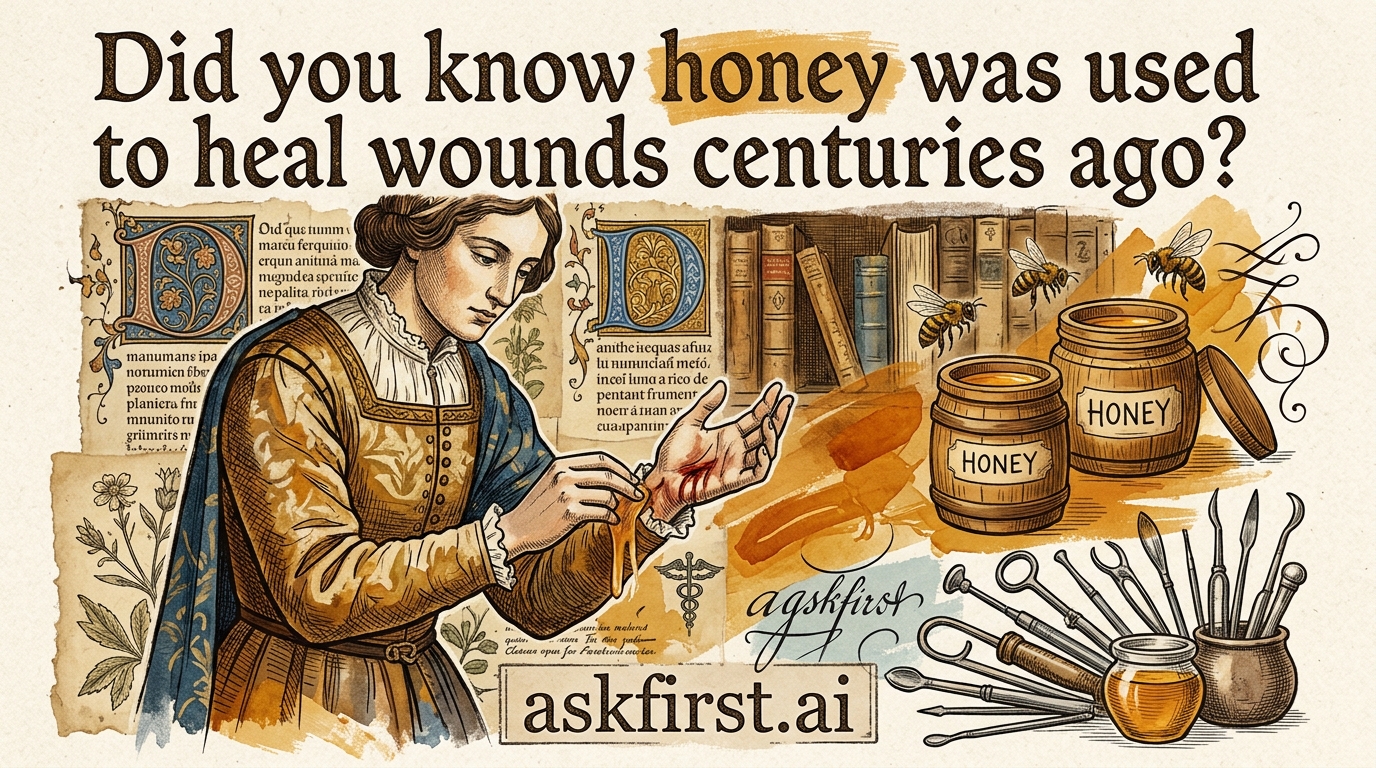
The Golden Elixir of Antiquity: A Historical Perspective on Wound Healing For thousands of years, civilizations across the globe have looked toward the beehive as a pharmacy rather than just a source of sweetness. Long before the era of modern antibiotics and synthetic bandages, honey was the gold standard for clinical wound care. From the ancient Egyptians to the scholars of Ayurveda, this viscous substance was revered as a miraculous tool for restoring skin integrity. ### The Biological Alchemy of Honey How does a substance produced by bees manage to cure infections? The efficacy of medicinal-grade honey, such as Manuka honey, lies in its complex biochemical profile. It is not merely a sugar syrup; it is a sophisticated therapeutic agent defined by several key properties:
- Osmotic Effect: Honey has a high sugar concentration and low water content. When applied to a wound, it draws water out of bacterial cells through osmosis, essentially dehydrating the pathogens and preventing their reproduction.
- Low pH Levels: With a pH typically ranging between 3.2 and 4.5, honey creates an acidic environment that is unfavorable for the growth of many harmful bacteria.
- Hydrogen Peroxide Production: Upon contact with the moist environment of a wound, an enzyme found in honey, glucose oxidase, produces low-level, steady releases of hydrogen peroxide. This acts as a gentle, non-damaging antiseptic.
- Non-Peroxide Factors: Particularly in Manuka honey, compounds such as methylglyoxal (MGO) provide exceptional antibacterial power that remains active even when other enzymes are neutralized.