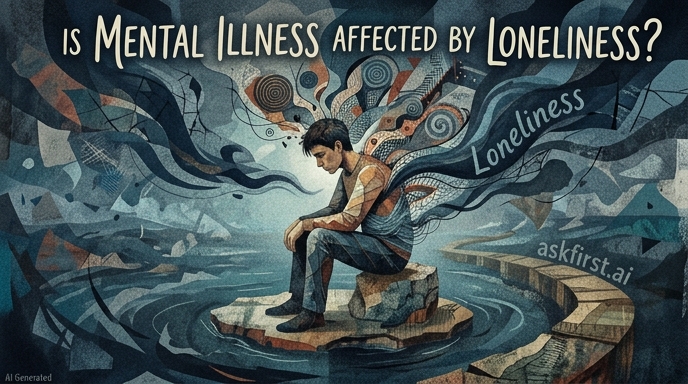
The intersection between loneliness and mental health is one of the most critical areas of study in modern psychology and psychiatry. Far from being a mere fleeting emotion or a social inconvenience, loneliness acts as a profound biological and psychological stressor. It functions as a systemic disruptor that can trigger, exacerbate, and sustain a wide array of mental health conditions. Understanding this relationship requires a deep dive into the physiological, neurological, and behavioral mechanisms that link social isolation to clinical pathology.
The Biological Mechanism: The Stress Response
At its core, loneliness is perceived by the brain as an evolutionary threat. For our ancestors, isolation from the tribe meant an increased risk of predation and starvation. Consequently, the human brain is hardwired to experience loneliness as a form of physical pain. When an individual experiences chronic loneliness, the body enters a state of perpetual "fight or flight."
The hypothalamic-pituitary-adrenal (HPA) axis is activated, leading to the sustained release of cortisol, the primary stress hormone. While cortisol is useful in short bursts to help us escape danger, chronic elevation is toxic to the brain. It causes inflammation, damages neural pathways, and impairs the prefrontal cortex—the area of the brain responsible for emotional regulation and executive decision-making. This biological state creates a fertile ground for the development of clinical depression and generalized anxiety disorder.
The Neurological Impact
Loneliness is not just a feeling; it is a measurable state of neurological arousal. Research using functional MRI (fMRI) scans has demonstrated that lonely individuals show heightened activity in the amygdala, the brain's fear center. This hyper-vigilance means that lonely individuals are more likely to interpret neutral social cues as hostile or rejecting.
This creates a self-reinforcing feedback loop:
- Hyper-vigilance: The individual perceives social interactions as threatening.
- Social Withdrawal: To avoid perceived rejection, the individual retreats further from social contact.
- Cognitive Decline: Prolonged isolation is linked to reduced neuroplasticity, which increases the risk of cognitive impairment and accelerates the symptoms of dementia and other neurodegenerative conditions.
Loneliness and Clinical Depression
There is a bidirectional relationship between loneliness and depression. While depression can cause an individual to withdraw from social circles—thereby inducing loneliness—loneliness is a statistically significant predictor of the onset of major depressive disorder.
Loneliness strips away the "social buffering" that protects individuals from life's stressors. When a person lacks a support network, they have no external mechanism to help process trauma, grief, or daily setbacks. Without this emotional validation, minor stressors accumulate into major depressive episodes. Furthermore, loneliness is associated with feelings of worthlessness and hopelessness, which are core diagnostic criteria for depression and are key precursors to suicidal ideation.
Anxiety and the Cycle of Avoidance
For those suffering from social anxiety, loneliness acts as a primary maintainer of the disorder. Anxiety often leads to avoidance behaviors, which prevent the individual from gaining the positive social reinforcement necessary to dismantle their fears. As the individual remains isolated, their social skills may atrophy, leading to an increase in self-consciousness and a decrease in self-esteem. This makes future social interactions feel even more daunting, trapping the individual in a cycle of isolation that deepens their anxiety.
Behavioral and Physical Complications
The impact of loneliness extends beyond the psyche into behavioral health, which in turn impacts mental stability:
- Sleep Disruption: Lonely individuals frequently report fragmented sleep. Poor sleep quality is a known catalyst for mood disorders, as the brain cannot adequately process emotions or recover from daily cognitive load during REM cycles.
- Substance Abuse: Many individuals attempt to self-medicate the pain of loneliness through alcohol or drug use. This provides temporary relief but ultimately alters brain chemistry, worsening the underlying mental health condition.
- Inflammation and Physical Health: Chronic loneliness increases systemic inflammation, which is increasingly recognized as a key factor in the development of mental health disorders. The body’s immune system, when constantly activated by perceived social threats, begins to damage healthy tissue, including the brain.
Breaking the Cycle
Recognizing that loneliness is a medical concern, not a character flaw, is the first step toward mitigation. Clinical interventions often focus on Cognitive Behavioral Therapy (CBT) to help patients identify and challenge the negative thought patterns that keep them isolated.
Social prescribing—where healthcare providers connect patients with community groups, volunteer organizations, or hobby-based clubs—is becoming a vital tool. By moving from passive isolation to active, low-stakes social engagement, individuals can begin to recalibrate their stress response systems and rebuild the neural connections associated with safety and belonging.
In conclusion, loneliness is an objective risk factor for mental illness. It influences the brain on a chemical, structural, and behavioral level, acting as a catalyst for depression, anxiety, and cognitive decline. Treating mental illness effectively requires an acknowledgment of the social environment; without addressing the underlying lack of connection, clinical treatment often remains incomplete.