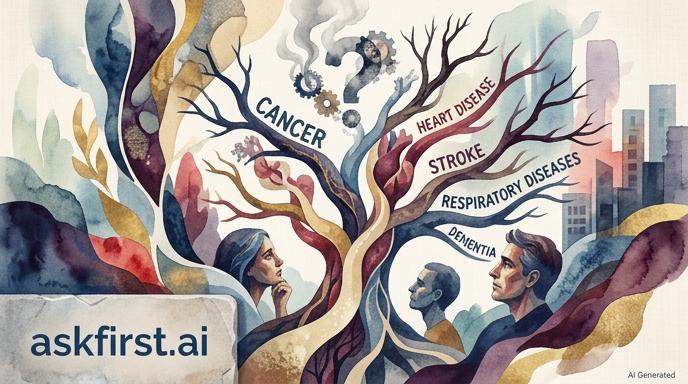
The Complexity of Mortality: Assessing Cancer as a Terminal Illness
When discussing the "deadliest" terminal illness, the conversation often centers on cancer due to its ubiquity, the psychological weight of the diagnosis, and its significant impact on global mortality statistics. However, determining which disease holds the title of "deadliest" is a complex exercise in medical data, epidemiology, and the shifting landscape of global health. While cancer is undeniably one of the leading causes of death worldwide, whether it is the "deadliest" depends heavily on how one defines the term—whether by raw mortality numbers, the speed of fatality, or the global burden of disease.
Statistical Overview: The Burden of Cancer
According to the World Health Organization (WHO), cancer is a leading cause of death globally, accounting for nearly 10 million deaths annually. This figure is staggering, and it highlights why cancer remains a primary target for medical research and public health initiatives. The term "cancer" itself is a broad umbrella covering hundreds of different diseases, each with unique biological mechanisms, treatment responses, and prognoses.
Because of this diversity, some cancers—such as pancreatic or glioblastoma—have extremely high fatality rates and short survival windows, functioning as rapidly terminal illnesses. Others, such as certain forms of prostate or breast cancer, have high survival rates and can be managed as chronic conditions for decades. Therefore, grouping all cancers into a single category of "deadly" can be misleading, as the clinical reality varies drastically depending on the specific mutation and stage of diagnosis.
Cardiovascular Disease: The Silent Rival
When examining global mortality data, cardiovascular disease (CVD) consistently outranks cancer as the leading cause of death globally. Conditions such as ischemic heart disease and stroke claim millions more lives each year than all forms of cancer combined. While many people do not classify heart disease as a "terminal illness" in the same way they do cancer—partly because it is often viewed as a manageable chronic condition—it is, in a biological sense, the most lethal physiological process currently affecting the human population.
The distinction often lies in the "terminal" label. Cancer is frequently associated with an inevitable, progressive decline once a certain stage is reached, whereas cardiovascular events can be sudden and catastrophic, or slow and degenerative. If we define "deadliest" by the sheer number of lives lost, cardiovascular disease holds the top position.
Infectious Diseases and Acute Pathogens
Historically, the deadliest illnesses were infectious. Throughout human history, plagues, tuberculosis, and malaria have decimated populations. Even today, in low-income settings, infectious diseases remain among the leading causes of death. Tuberculosis, for example, remains one of the world's deadliest infectious killers, causing more deaths annually than many types of cancer.
Unlike cancer, which is largely an endogenous failure of cellular regulation, infectious diseases represent an external biological challenge. The "deadliness" of an infection is often measured by its transmission rate and the virulence of the pathogen. While modern medicine has mitigated the impact of many infectious diseases, they remain a significant threat, particularly in regions with limited access to healthcare infrastructure.
Defining "Terminal"
The term "terminal illness" is clinically defined as an illness or condition from which recovery is expected to be impossible and which will lead to death, usually within a specified timeframe (often six months or less). By this definition, cancer is often the most visible terminal illness because of the predictability of its end-stage progression.
Many other conditions, such as end-stage renal disease, advanced chronic obstructive pulmonary disease (COPD), and late-stage dementia, are also terminal. However, the trajectory of these diseases often involves a slower, more fluctuating decline compared to the aggressive, systemic nature of metastatic cancer. Consequently, cancer remains the most prominent face of the "terminal" experience in public discourse, despite not being the only—or even the most frequent—cause of death.
The Impact of Medical Advancements
The perception of cancer as the "deadliest" is also shifting due to breakthroughs in immunotherapy, precision medicine, and early screening. We are seeing a transition where certain cancers that were once considered death sentences are now being treated as chronic, manageable conditions. This evolution suggests that the "deadliness" of an illness is not a static property but a reflection of the current technological and therapeutic era.
Conclusion
Is cancer the deadliest terminal illness? In terms of public concern, research expenditure, and the specific clinical classification of "terminal" disease, cancer is undeniably at the forefront. It is a formidable and multifaceted challenge to human longevity. However, if we look at raw data, cardiovascular disease accounts for more total deaths, and various infectious diseases remain lethal threats to global populations.
Ultimately, the "deadliest" illness is a moving target. It is defined not just by the biology of the disease, but by the effectiveness of our healthcare systems, the accessibility of treatments, and the demographic shifts of the global population. While cancer remains a primary focus of medical science, it is one piece of a much larger and more complex puzzle of human mortality.